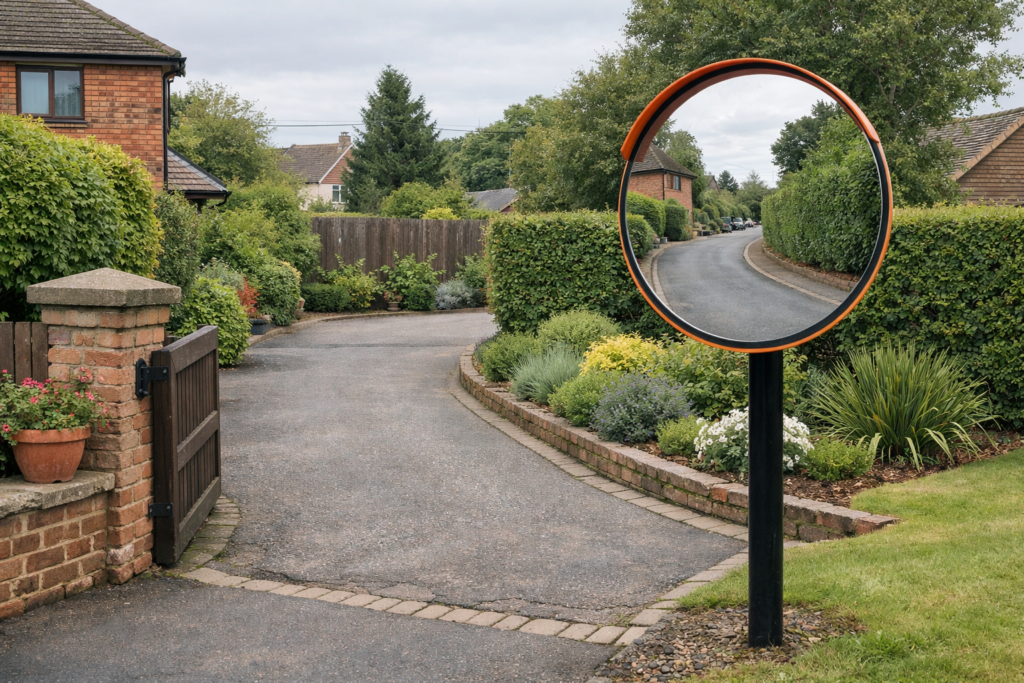
Driveway mirrors can make a real difference where visibility is poor, especially when a property sits on a blind bend, close to fast traffic or at the end of a narrow approach. They are often chosen for safety, but the best mirror for one home may be unnecessary, ineffective or even inconvenient for another.
The key question is not whether a mirror looks useful, but whether it solves a genuine access problem on your drive. That depends on the shape of your entrance, the speed of passing traffic, the distance you can see, and whether the mirror can be positioned so it helps without creating new hazards.
For homeowners weighing up their options, it is worth looking beyond the product itself and considering the whole entrance layout. In some cases, improving sightlines, changing access arrangements or combining a mirror with other driveway improvements may be a better investment than fitting one reflective panel.
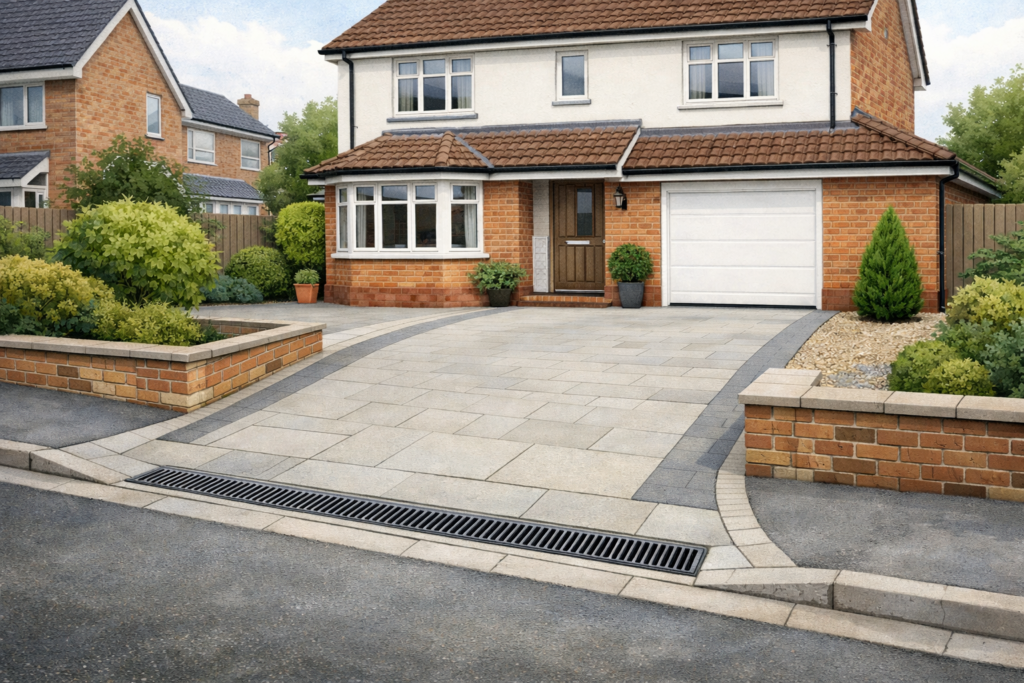
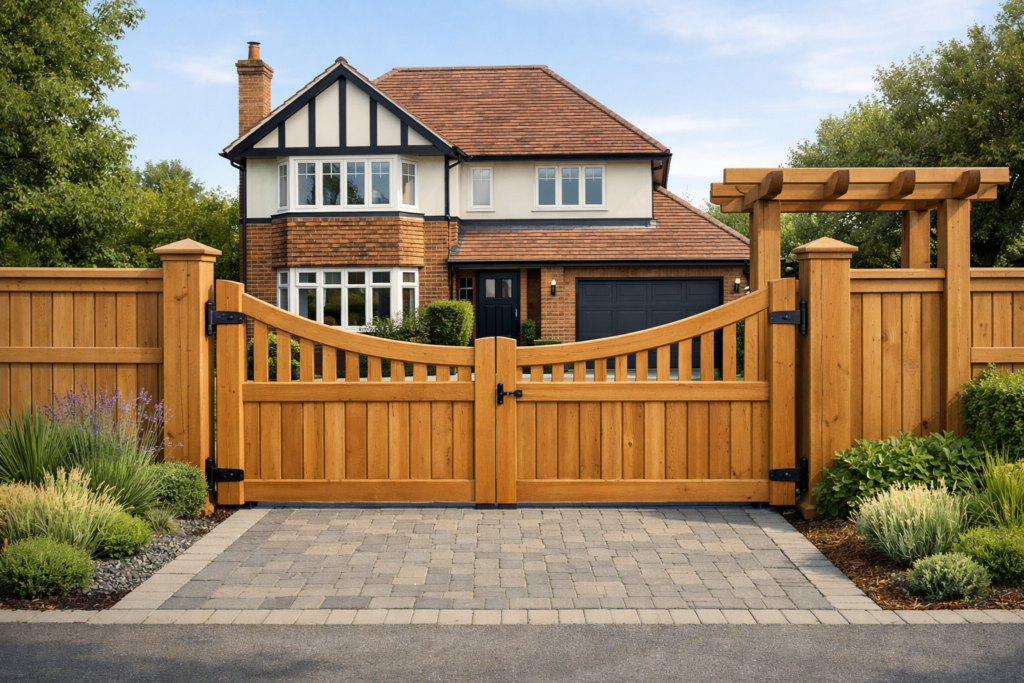
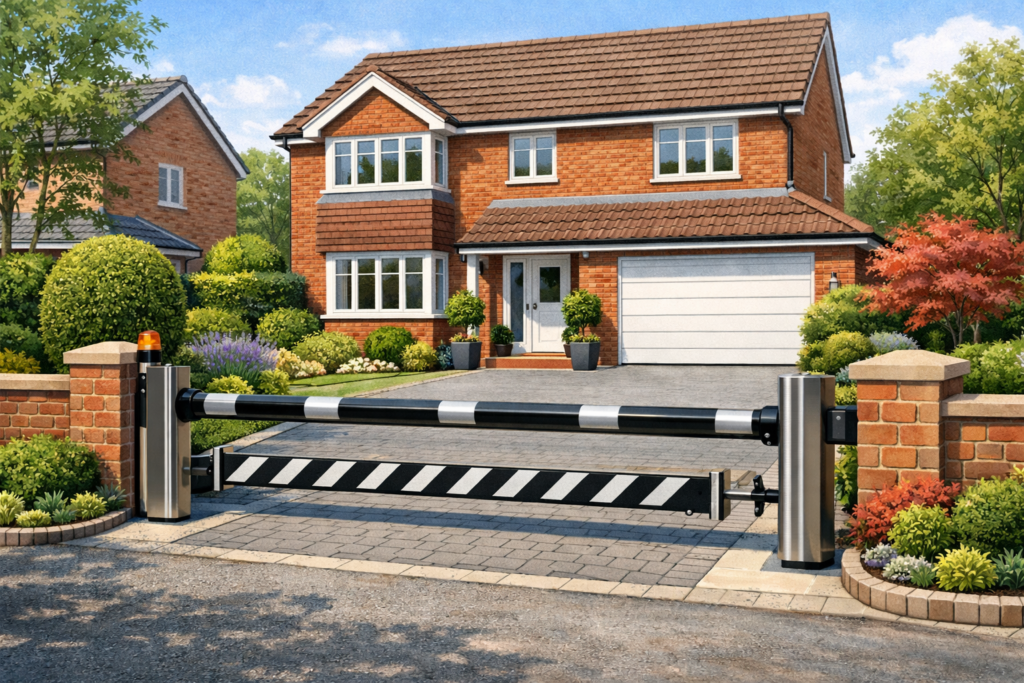
When you are planning wider changes, it can also help to think about how a mirror fits with other upgrades, such as a safer approach or a more clearly defined boundary. Related topics such as driveway access improvements and entry control solutions may be useful if visibility is only one part of the problem.
What a driveway mirror actually does
A driveway mirror gives you a wider view of areas that would otherwise be hidden by hedges, walls, parked cars or the angle of the road. It is usually convex, which means it spreads the reflected image across a broader field of vision, helping drivers and pedestrians spot movement sooner.
That wider view can be especially valuable when reversing out of a drive onto a road with limited visibility. It can also help people leaving a long private driveway where the exit point sits far from the main house and the approach is difficult to see clearly.
Although the idea is simple, the mirror is only useful when it is placed at the right height, angle and distance. Poor placement can create false confidence, distorted images or a view that is technically wide but still not where you need it.
When a driveway mirror makes sense
Some properties benefit far more than others from a driveway mirror. The most obvious cases are homes with restricted sightlines, awkward exits or regular vehicle movements near a busy road.
Driveway mirrors are often worth considering if:
- your driveway exits onto a road with poor visibility in one or both directions
- hedges, fences or walls block your view of oncoming traffic
- the drive is tight, curved or hidden from passing drivers
- you reverse out frequently and need a better sense of approaching hazards
- multiple vehicles use the drive and manoeuvres feel awkward or stressful
They are also useful where people regularly walk, cycle or push buggies out of the entrance. A better view can reduce hesitation and make the whole space feel calmer to use.
For homes that already have a generous setback from the road, good sightlines and easy turning space, a mirror may add little value. In those situations, another improvement may be more worthwhile, such as better lighting, a widened entrance or a new surface layout.
The main benefits of fitting a driveway mirror
The biggest advantage is improved awareness. Seeing more of the road or driveway before you move can reduce the chance of meeting another vehicle at the wrong moment.
Practical benefits often include:
- safer reversing and exiting
- quicker decisions when visibility is poor
- less stress for less confident drivers
- better awareness of pedestrians, cyclists and pets
- a relatively low-cost fix compared with major driveway changes
There is also a convenience factor. If you leave home at busy times, a mirror may reduce the need to inch forwards repeatedly, stop and check, and then move again. That can be particularly helpful on narrow residential roads where traffic comes quickly and gaps are limited.
In some households, a mirror is not just a comfort item but a day-to-day safety aid. It can support older drivers, shared households and homes where the drive is used more than once an hour.
Where driveway mirrors fall short
Despite their usefulness, driveway mirrors are not a cure-all. They improve what you can see, but they do not remove the risks of a poor entrance design, blind corners or fast-moving traffic.
They can also be affected by weather and dirt. Rain, frost, condensation, road spray and bird mess can quickly reduce clarity, which means the mirror needs regular cleaning to remain effective.
Common limitations include:
- distortion that makes distances harder to judge
- reflection glare in bright sunlight or low winter light
- reduced performance in fog, heavy rain or darkness
- vulnerability to vandalism or accidental damage
- the need for ongoing cleaning and occasional adjustment
It is also easy to overestimate how much a mirror can show. If your drive exits at an angle or the mirror is too small for the distance involved, you may still have blind spots. That is why site conditions matter more than the mirror itself.
How to tell if your home is a good candidate
The simplest way to judge suitability is to stand at the exit and look at what you can and cannot see without moving. If you need to pull forward into the road before you can check properly, or if the view is blocked until the last moment, a mirror may be helpful.
Think about how often the entrance is used and by whom. A mirror may be particularly valuable for a household with several drivers, visiting delivery vehicles or family members who are less confident reversing.
Ask yourself these practical questions:
- Do vehicles need to reverse out because turning space is limited?
- Does the road carry fast or unpredictable traffic?
- Are hedges, walls or parked cars restricting the view?
- Would trimming or redesigning the entrance solve the problem first?
- Could improved lighting or surfacing make a bigger difference?
If you answer yes to several of these, a mirror is worth serious consideration. If the issue is more about access design than visibility, then a broader redesign may be a better use of budget.
Installation matters more than many people realise
A driveway mirror is only effective when it is installed correctly. Positioning should take account of the driver’s eye line, the angle of reflection and the distance to the road or hazard you want to observe.
Too high, and it becomes awkward to use. Too low, and it may reflect mostly the driveway surface rather than traffic or pedestrians. Too narrow an angle can leave you watching the wrong section of road, which defeats the purpose.
It is also important to secure the mounting properly, especially in exposed areas. Wind, vibration and impact can loosen fittings over time, and a poorly fixed mirror can become a maintenance issue rather than a help.
Before fitting anything, check whether the mirror will be visible from the road in a way that could distract drivers or create glare. Good placement should help your own visibility without introducing problems for anyone else.
Choosing the right mirror for your property
Not every driveway needs the same type of mirror. The best choice depends on the length of the approach, the distance to the danger point and how much of the view you need to cover.
Useful features to look for include:
- convex design for a wider field of view
- weather-resistant materials for exposed locations
- UV-stable surfaces to reduce fading and distortion
- robust mounting hardware for windy sites
- an appropriate size for the distance you need to monitor
In some cases, a smaller mirror is enough for a short private drive. Larger entrances or longer approaches usually need a wider view, but bigger is not always better if the mirror becomes difficult to position or maintain.
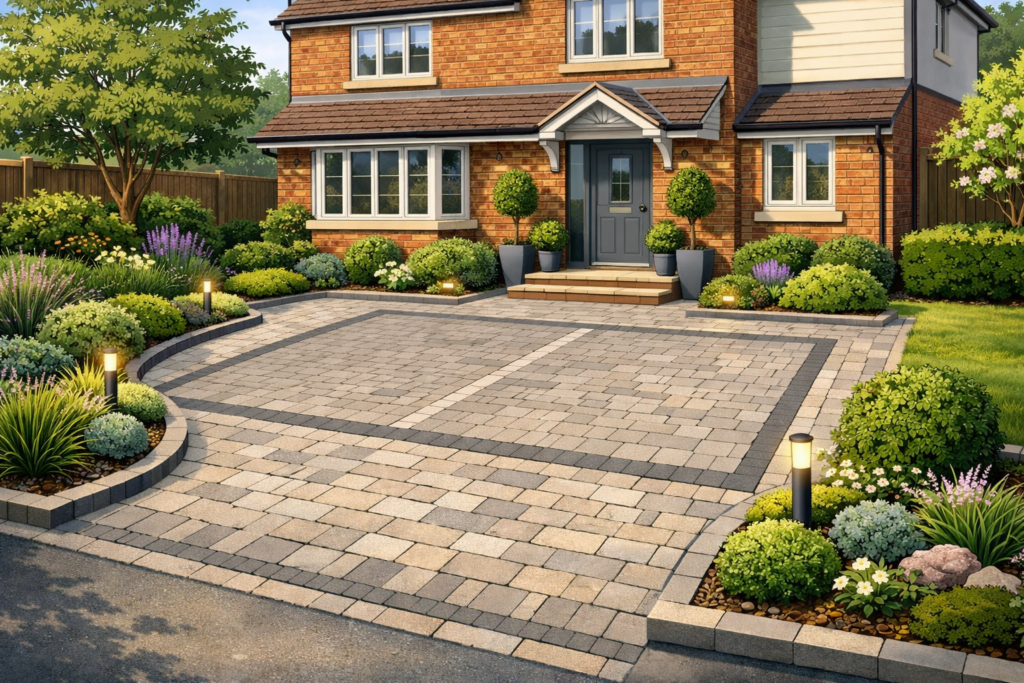
If your property is already being improved in other ways, it may be useful to think about mirrors alongside the overall driveway design. A project focused on appearance and function, such as a landscape driveway design, may offer a better all-round result if visibility and kerb appeal both matter.
When another solution may be better
Sometimes a mirror is the right answer, but there are many situations where a different improvement is more effective. If the problem is caused by overgrown planting, for example, pruning or rethinking the boundary line may restore the view without any new hardware.
Where drivers struggle mainly because the drive is awkward to enter or turn in, the issue may be layout rather than visibility. In that case, widening the entrance, improving the turning area or changing the surface could make a more lasting difference.
Consider alternatives if:
- the sightline can be improved by cutting back vegetation
- the drive is too narrow for comfortable manoeuvres
- the main issue is poor lighting rather than blind corners
- the entrance would benefit from a better turning or waiting area
- you want a solution that improves both appearance and function
For some homes, a mirror works best as part of a wider set of improvements rather than on its own. That may mean combining it with better surfacing, boundary changes or other practical features that make the entrance safer and easier to use.
Maintenance and long-term use
Driveway mirrors are not fit-and-forget items. To stay useful, they need to remain clean, aligned and undamaged throughout the year.
Leaves, mud and road grime can build up surprisingly quickly, particularly near busy roads or trees. Winter weather can also make mirrors less reliable, so they should be checked regularly when visibility matters most.
It is sensible to inspect the mirror after storms, strong winds or any work around the drive. If the angle shifts even slightly, the reflected image may no longer show the area you rely on.
Long-term, the biggest maintenance question is whether the mirror still serves a genuine purpose. If a new hedge grows, a vehicle layout changes or the entrance is redesigned, the mirror may no longer be needed in the same way.
What to think about before you buy
Before spending money, treat the mirror as part of a practical safety review rather than a quick add-on. The more clearly you understand the visibility problem, the easier it is to choose a solution that will actually help.
Focus on the approach, the road, the drivers in the household and the likely weather conditions across the year. A mirror that looks sensible in summer may be far less useful on a dark, wet January evening.
It can also help to measure the space and observe the entrance at different times of day. Morning sun, evening glare and shadows from nearby trees can all change how effective a mirror will be.
If you are already planning a larger improvement, such as a new access design or entrance layout, it may be worth reviewing the whole scheme before buying individual accessories. That way, the mirror supports the finished driveway rather than becoming an afterthought.
What We Get Asked…
Are driveway mirrors legal in the UK?
They are generally permitted, but placement should be sensible and should not create a hazard for road users. If you are unsure, check local conditions and make sure the mirror is installed in a way that does not distract drivers.
Do driveway mirrors work at night?
They can still help, but performance depends on lighting conditions. A mirror is less effective in darkness unless the area is well lit, so it should not be relied on as the only safety measure.
Can a driveway mirror replace CCTV or lighting?
No, because each serves a different purpose. A mirror improves visibility, while lighting helps you see the entrance in low light and CCTV supports security and monitoring.
How often should I clean a driveway mirror?
As often as needed to keep the reflection clear, which may mean weekly in exposed or muddy locations. If you notice streaks, spray or debris affecting the view, clean it sooner rather than later.
Our Final Thoughts
A driveway mirror is a sensible option when poor sightlines genuinely make leaving or entering the property awkward or risky. It can improve confidence, reduce hesitation and make a difficult entrance easier to manage day to day.
Even so, it works best when the location is right, the mirror is installed properly and the rest of the driveway arrangement supports safe movement. If the root problem is layout, lighting or vegetation, a mirror alone may only offer a partial fix.
The best next step is to assess your entrance honestly and decide whether the issue is visibility, access or both. If you are planning further driveway improvements, consider how the mirror would fit alongside wider changes, and choose the solution that makes the home safer, simpler and more practical to use.