A driveway can change the way a home works as much as the way it looks. In Glasgow, where weather, street parking pressures and varied property styles all play a part, the decision needs to be based on more than appearance alone.
Some homes benefit from a simple, durable entrance that handles frequent use and wet conditions well. Others need a driveway that complements period brickwork, suits a sloping plot, or improves access without taking over the front garden.
That is why choosing a new driveway is rarely a one-size-fits-all decision. The right answer depends on how much space you have, how you park, what the ground is like, and whether the finish will be practical in the long term.
If you are asking whether a driveways Glasgow solution is right for your home, the most helpful approach is to look at the benefits, the limitations, and the details that often get overlooked at the planning stage.
Why a driveway matters in Glasgow
Parking is not the same everywhere in the city. In many parts of Glasgow, on-street parking can be busy, unpredictable, or awkward for larger vehicles, making a private parking space a real convenience rather than a luxury.
Weather also matters. Heavy rain, freezing spells and the general wear of constant foot and vehicle traffic can expose weak groundwork quickly, so a driveway needs to be built properly if it is going to perform well.
A good driveway can also improve the overall feel of a property. It can make a front garden neater, create safer access to the house, and give a clearer, more welcoming entrance for visitors.
When a Glasgow driveway is a strong choice
A driveway makes sense when it solves a genuine problem. If parking is limited, access is awkward, or the front of the property is underused, converting that space can add day-to-day value.
It can also help if the current front area is muddy, uneven, or difficult to maintain. A well-designed driveway reduces the mess that often comes with grassed or loose-surfaced areas, especially during wet months.
For many homeowners, the strongest reasons are practical:
- Less dependence on street parking
- Better access for shopping, prams, or mobility needs
- A tidier frontage with lower ongoing maintenance
- Improved kerb appeal when selling or renting
If you are already considering wider external improvements, a driveway can also sit neatly alongside landscaping driveway ideas that make the whole frontage more usable.
Property type and layout make a big difference
The right driveway depends heavily on the shape and style of the property. A detached house with a generous front garden will have different options from a terraced home with limited frontage or a steeply sloped plot.
Older Glasgow homes often have character details that deserve a surface choice that feels sympathetic. More modern properties may suit cleaner lines and simpler layouts, while period homes often benefit from finishes that look established rather than overly contemporary.
Space and access matter just as much as style. If vehicles will need to turn, reverse, or pass a narrow boundary, the design needs to work for real use, not just on paper.
Kerb drop and entry width are also important. Even a good surface will feel inconvenient if getting on and off the drive is awkward or if there is not enough room to open doors safely.
Drainage should never be an afterthought
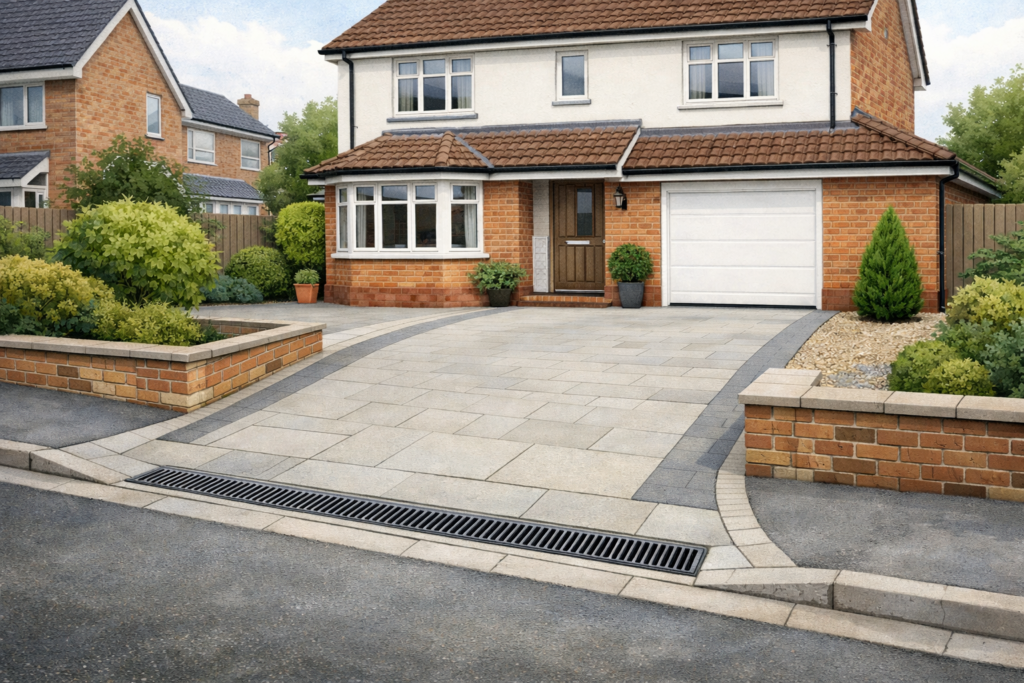
Glasgow’s rainfall makes drainage one of the most important factors in driveway planning. A surface that looks attractive but allows water to pool can quickly become slippery, messy, and difficult to maintain.
In many cases, permeable or well-drained construction is worth prioritising. This helps water move away from the surface instead of sitting on top or running towards the property.
Signs that drainage needs extra attention include:
- Water collecting near the garage or front door
- Surface run-off heading towards neighbouring land
- Existing damp patches near the entrance
- Soil that stays saturated for long periods
Good drainage is not only about comfort and appearance. It also helps protect the driveway structure itself, which can reduce future repairs and surface movement.
Choosing the right material for your home
There is no single best driveway material for every Glasgow property. The right option depends on budget, appearance, maintenance expectations and how much traffic the surface will take.
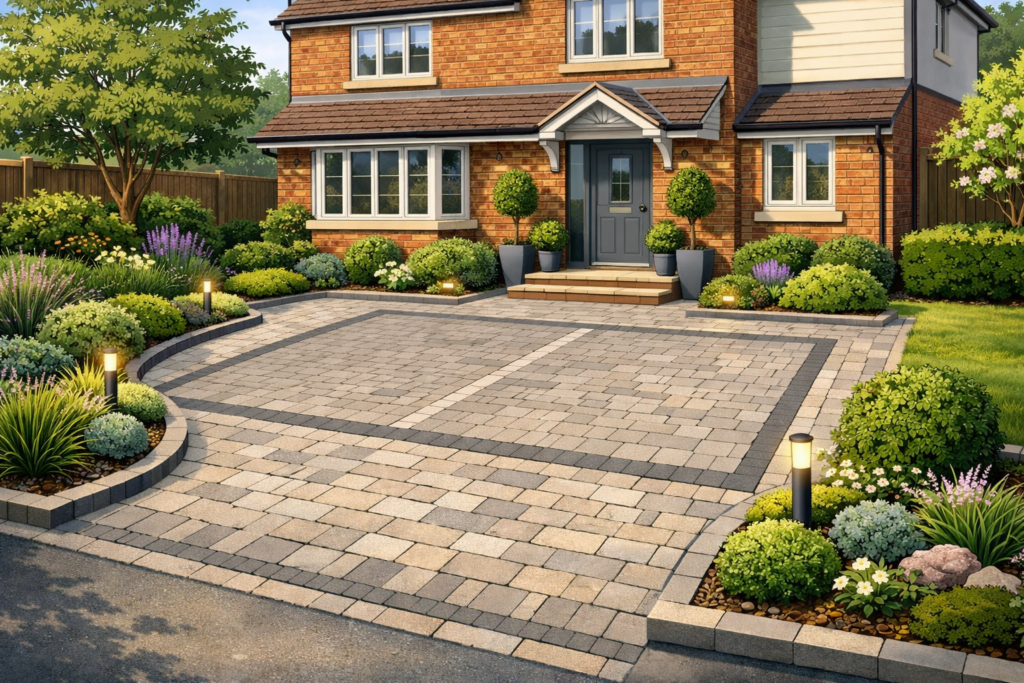
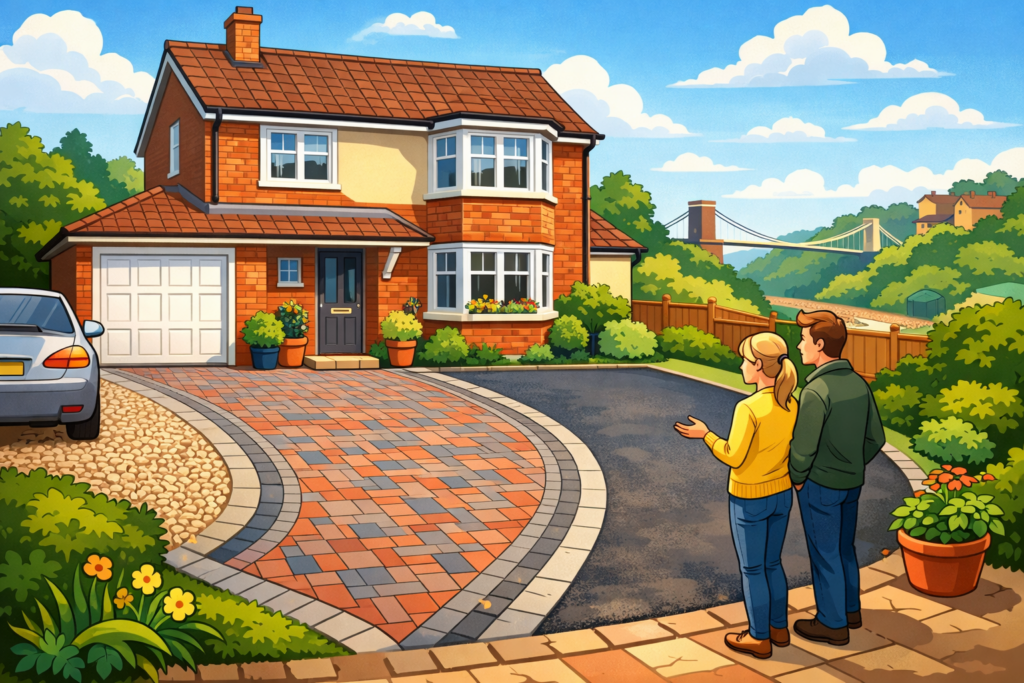
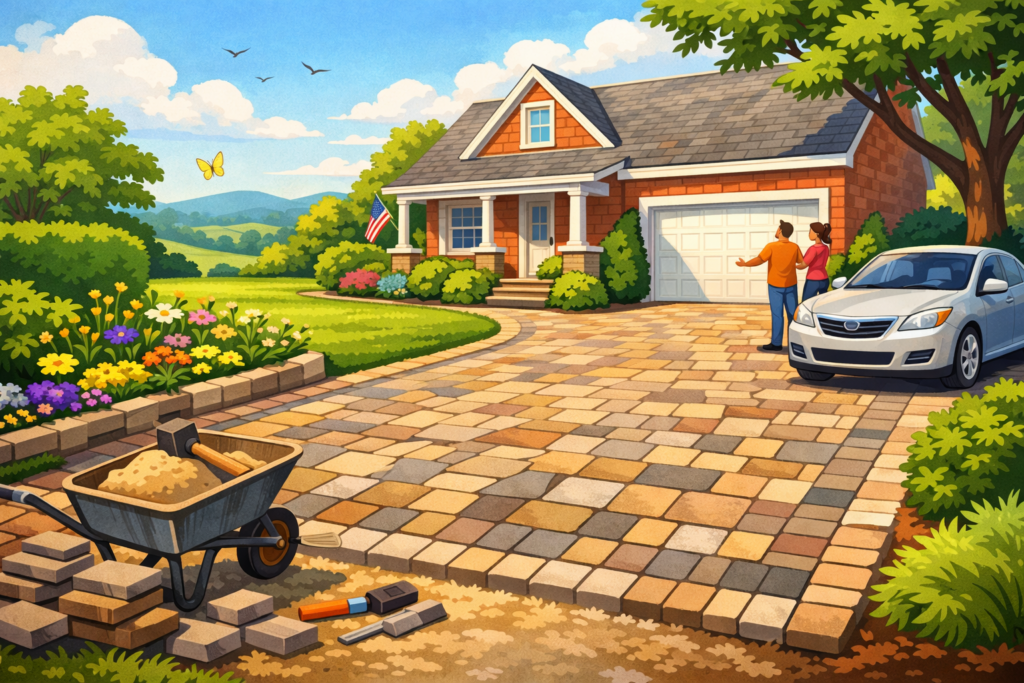
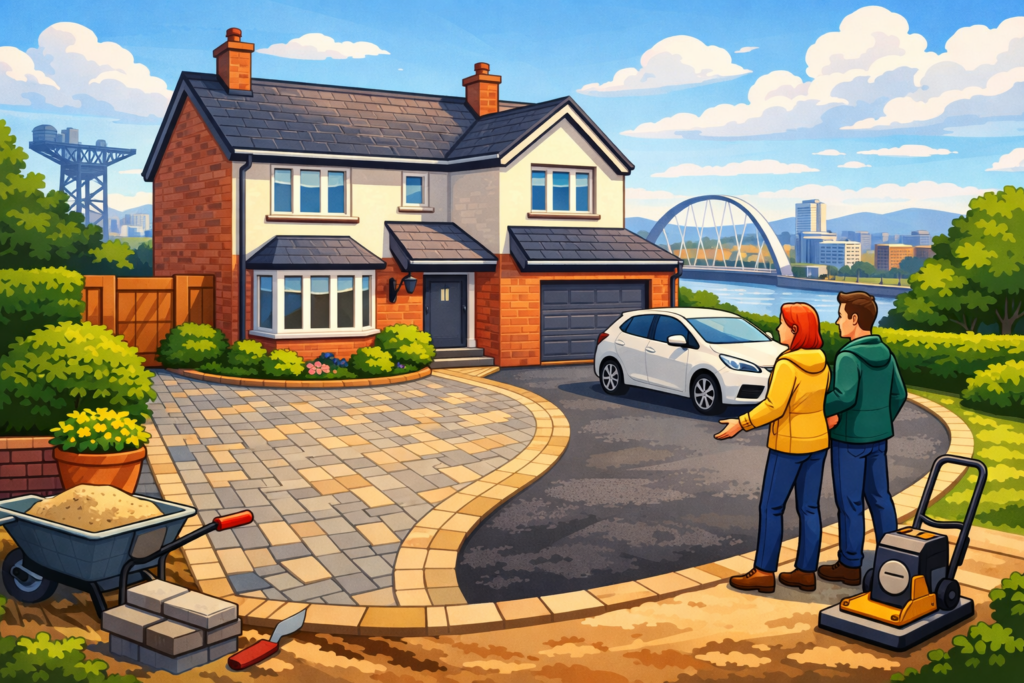
Block paving remains a popular choice because it offers flexibility in design and can suit many property styles. It also allows damaged sections to be repaired more easily than some poured surfaces.
Gravel can work well for larger or more traditional homes, especially where a softer, informal look is preferred. It is often attractive and cost-effective, although it needs edging and upkeep to remain tidy.
Tarmac is usually valued for its neat finish and practicality. It can be a sensible option for busy households, provided the groundwork and drainage are handled properly.
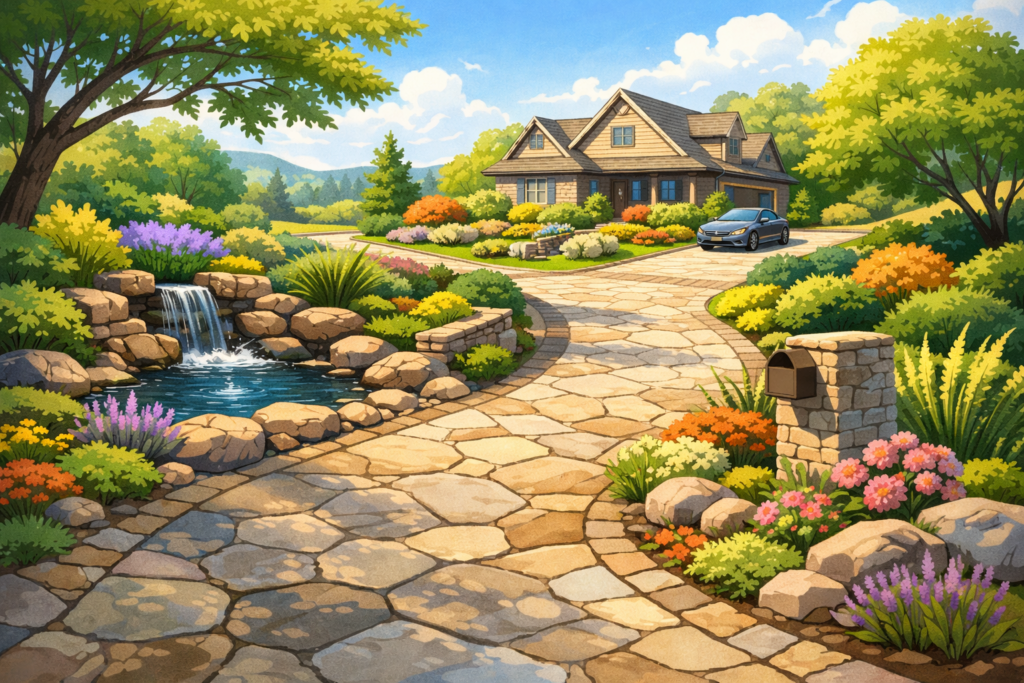
Natural stone gives a more premium appearance, but it can be a better fit for certain homes than others. If you want a more characterful finish, stone driveway options are worth considering for their appearance and durability.
For some homeowners, the appeal is not just surface performance but the way the material suits the wider setting. If that sounds like your priority, it may help to compare with Marshall driveway designs, which are often chosen for a smart, structured finish.
What to think about before committing
It is easy to focus on colour and style first, but the practical questions usually matter more in the long run. A driveway should suit your daily routine, not create extra frustration each time you park or leave the house.
Traffic levels are a good starting point. A driveway used once or twice a day has different demands from one that supports several cars, delivery vans, or frequent turning.
Maintenance expectations are also worth considering. Some surfaces need regular sweeping or re-sealing, while others need careful weed management or periodic topping up.
Budget should be realistic rather than based only on the cheapest initial quote. The lowest upfront cost is not always the best value if the surface needs more repairs later.
Planning and access issues can also affect the project. If the property sits on a corner, close to a junction, or within an area with local restrictions, it is sensible to check those details before work begins.
Common mistakes homeowners make
One of the biggest mistakes is choosing a surface that looks good but does not suit the site conditions. A material that works well on a flat, dry plot may struggle on a sloping or waterlogged one.
Another common issue is underestimating the groundwork needed. A driveway is only as reliable as what sits beneath it, so poor preparation can lead to sinking, cracking, and uneven edges.
Homeowners also sometimes overlook how the driveway will be used in winter. Surfaces can become slippery or difficult to clear if they are not selected with local conditions in mind.
Other mistakes to avoid include:
- Ignoring drainage and relying on the surface alone
- Choosing a finish that clashes with the house
- Making the drive too narrow for everyday use
- Forgetting about future access for bins, bikes, or deliveries
How to tell whether it is worth the investment
The question is not only whether a driveway looks appealing. It is whether it improves the home in a way you will notice every day.
If your current parking is stressful, if visitors struggle to park, or if the front of the house feels cluttered and difficult to manage, a driveway can be a worthwhile improvement. The practical gains often matter more than the visual ones.
It may also be a smart investment if you are planning to sell in the future. Buyers often respond well to homes that offer easy parking and a neat, well-kept entrance.
That said, a driveway is not always the best choice if front-garden space is extremely limited, if vehicle access is poor, or if the cost of altering the layout would outweigh the benefits. In those cases, it may be better to explore partial solutions, such as reworking the frontage rather than converting it entirely.
Planning for long-term value
The most successful driveways are designed with the future in mind. That means thinking beyond the immediate installation and considering how the surface will look and perform in five or ten years.
Durability, repairability and maintenance all affect long-term value. A surface that can be kept in good condition without major disruption may prove more practical than a highly decorative option that needs frequent attention.
If the home’s exterior needs broader improvement, it can be helpful to think about the driveway as part of a wider scheme. Changes to paths, planting, edging and entrance layout often work better when planned together.
For some properties, a driveway is also about presentation and landscaping balance. If you want the exterior to feel more cohesive, a professional driveways company can help shape the work so it suits the house rather than overpowering it.
Signs you should seek professional advice
Some driveway projects are straightforward, but others need specialist input. If the ground is sloped, the drainage is uncertain, or the frontage is unusually narrow, a professional assessment can prevent costly mistakes.
Advice is also valuable when you are comparing several surface types and trying to decide which is most suitable. A good contractor should explain the practical differences clearly, including how each option will behave in local weather conditions.
Professional support is especially useful when:
- The site has existing drainage problems
- There are trees, roots, or underground services nearby
- You want to combine parking with new landscaping
- The driveway needs to match an existing style of property
If you are comparing regionally relevant options, it can also be useful to look at examples such as driveways Derby projects to understand how layout and material choice affect the final result.
What We Get Asked…
Can a driveway add value to a Glasgow home?
It can, particularly where parking is limited and the frontage is improved at the same time. The increase in value depends on the property, the quality of the work and how much buyers in the area value off-street parking.
What driveway material works best in wet weather?
There is no single answer, but drainage-friendly construction is essential. Permeable surfaces, proper falls and well-built sub-bases all help a driveway cope with frequent rain.
Is a gravel driveway suitable for a city property?
It can be, provided the layout suits the property and the owner is happy with some maintenance. Gravel is often less suited to narrow drives or homes where a very tidy finish is needed.
How important is driveway maintenance?
Very important. Regular care helps preserve appearance, reduce weeds, and catch minor issues before they become expensive problems.
Our Final Thoughts
A driveways Glasgow project can be a smart improvement when it solves a real problem and suits the property as well as the street. The best results come from balancing appearance, drainage, access and long-term maintenance rather than focusing on style alone.
If your home would benefit from easier parking, a cleaner frontage or a more practical outdoor layout, a driveway may be a very sensible investment. If you are unsure, take time to compare surface types, assess the space carefully and get professional advice before making a decision.
When the right design is chosen, a driveway can make everyday life easier and the property more appealing for years to come. If you are ready to explore the options, speak to a trusted specialist and look closely at what will genuinely work for your home.