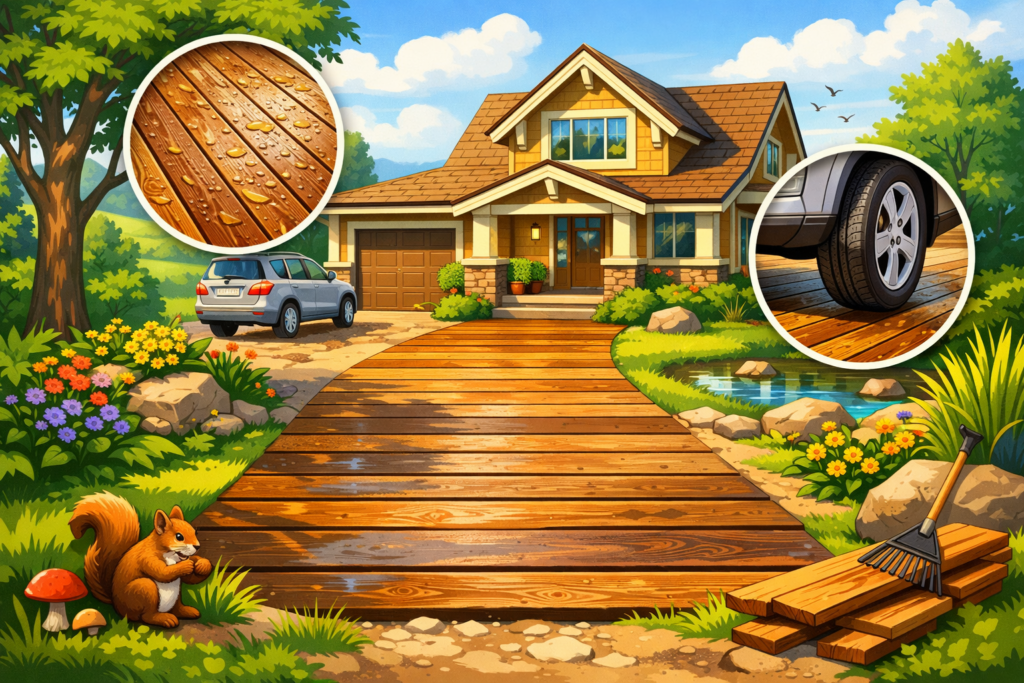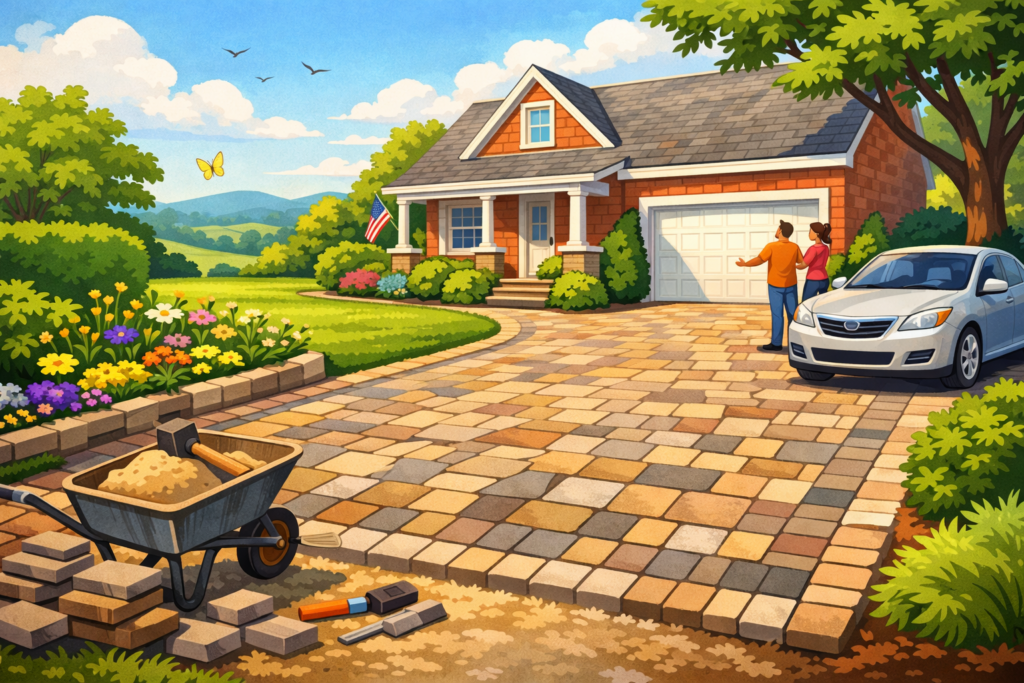
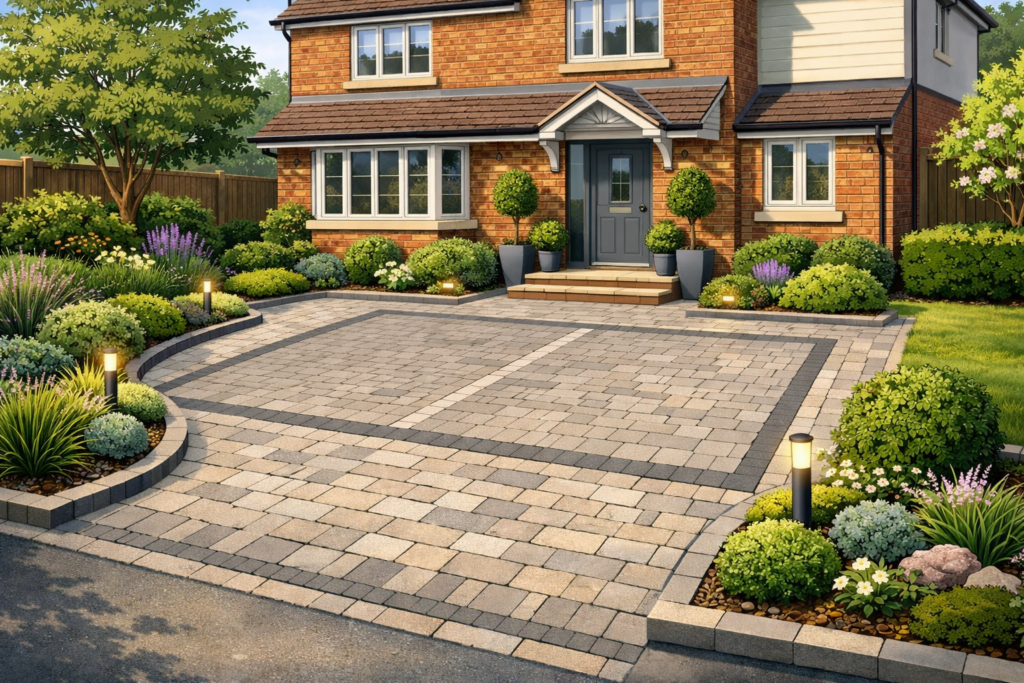
A driveway does far more than park a car. It shapes the first impression of your home, affects how easy the front of the property is to use, and can either add value or create ongoing frustration if it is poorly planned.
That is why driveway landscapes have become so popular with homeowners who want something more attractive and more practical than a plain expanse of tarmac or concrete. When done well, they can soften the frontage, improve drainage, support better access and make the whole entrance feel more considered.
They are not the right answer for every property, though. The best results come from balancing appearance with everyday function, local conditions and the amount of maintenance you are willing to take on.
What a driveway landscape actually includes
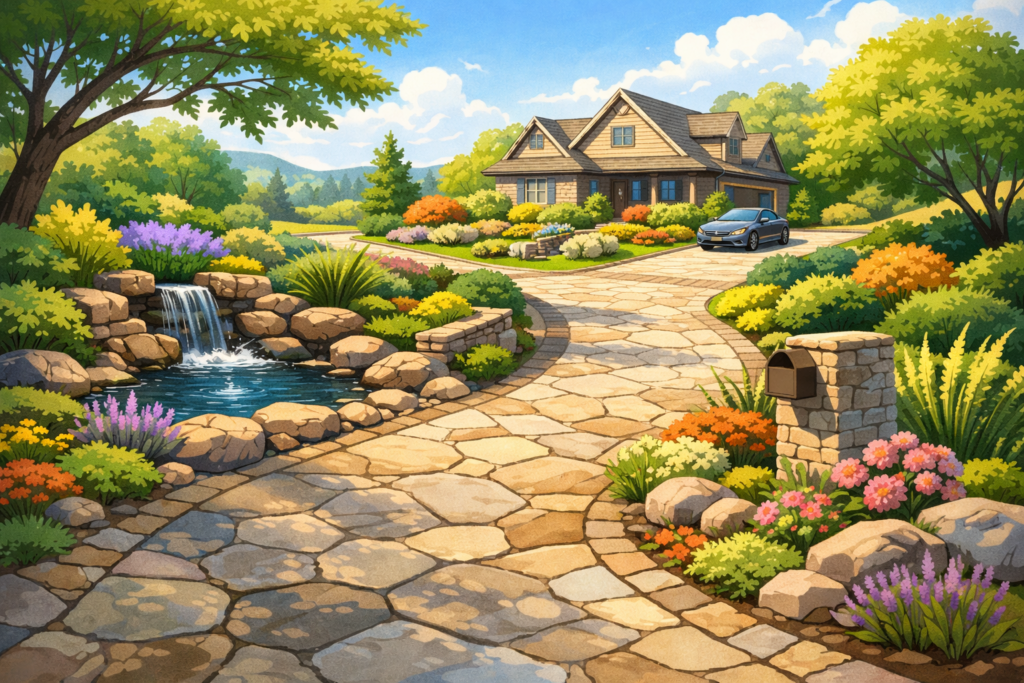
A driveway landscape is more than a surface with a few plants around the edges. It usually combines paving, edging, planting, lighting, drainage and sometimes walls, planters or retaining features to create a cohesive front garden and parking area.
Rather than treating the driveway as a separate practical strip, the design brings it into the wider look of the property. That might mean using different textures to define parking bays, adding low planting to soften hard materials, or shaping the space so vehicles and pedestrians move through it more naturally.
Common features in driveway landscapes include:
- Permeable or decorative surfacing
- Raised beds or low planting borders
- Lighting for safety and kerb appeal
- Defined edges with bricks, stone or timber
- Drainage channels or soakaway areas
- Features that frame the approach to the front door
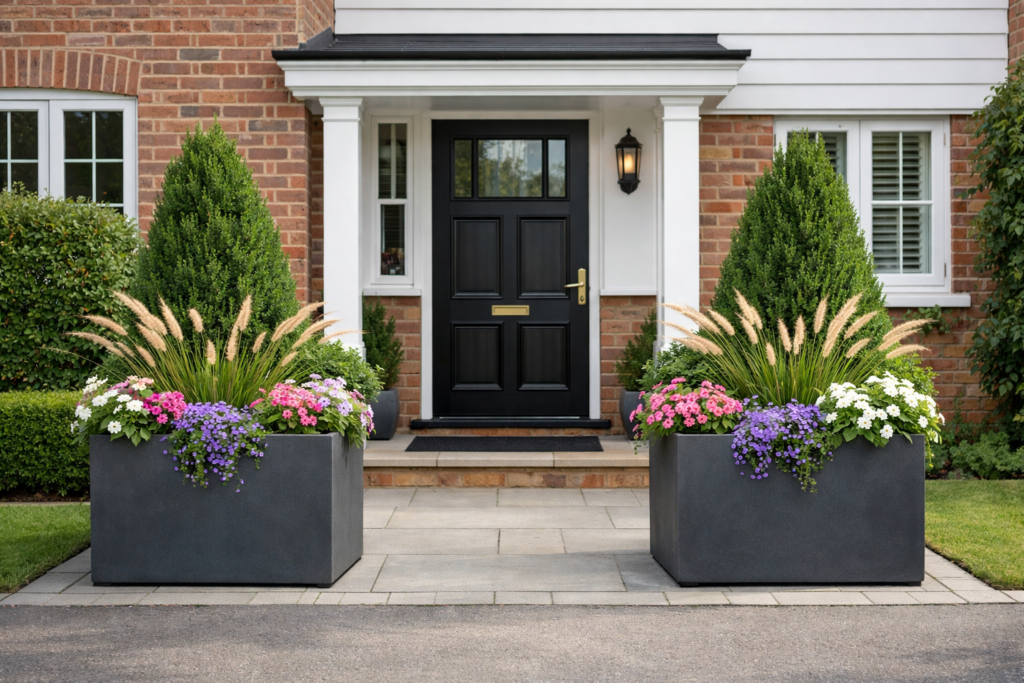
If you are comparing different entrance ideas, it can help to look at related options such as driveway planters and driveway plants, since these often work hand in hand with a landscaped layout.
Why driveway landscapes appeal to so many homeowners
The main attraction is the balance between visual improvement and practical benefit. A well-planned driveway landscape can make a modest property feel more polished, while also improving how the space works every day.
For many homes, the front garden is underused or awkwardly arranged. A landscape-led driveway can turn that dead space into something useful without making the frontage feel dominated by cars and hardstanding.
The most common advantages are:
- Improved kerb appeal and a stronger first impression
- Better use of awkward or sloping front spaces
- Clearer parking layout and safer pedestrian access
- Opportunities to manage water more effectively
- A softer, more welcoming entrance
These benefits are especially noticeable on homes where the driveway is visible from the street or where the front area feels exposed. A more considered design can also make everyday arrival and departure feel less utilitarian.
When a driveway landscape is a strong choice
Driveway landscapes work particularly well where the front of the property needs to do more than simply hold a vehicle. If the space feels bare, uneven or visually heavy, landscaping can make a significant difference.
They are often a good fit for:
- Homes with large front gardens that need structure
- Properties with long or wide driveways that look unfinished
- Frontages that need better drainage or runoff control
- Homes where kerb appeal matters for resale value
- Properties where the driveway and front garden blend together
They can also suit households that want a more welcoming and established look. In older homes especially, the right balance of paving and planting can sit more naturally with the architecture than a plain, hard surface.
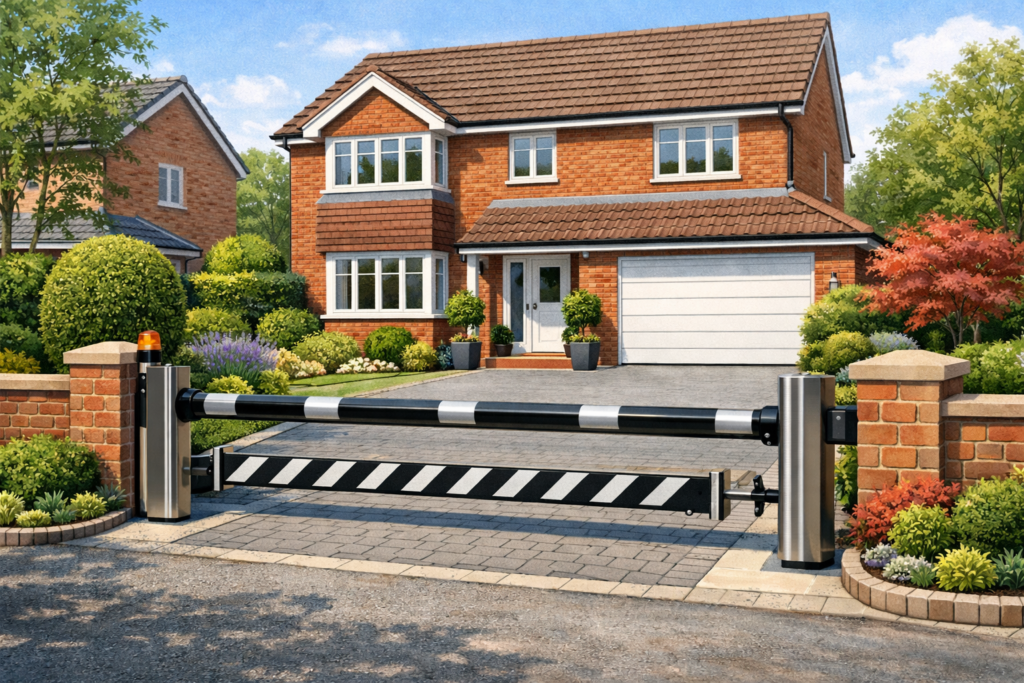
If security or access control is part of your thinking, it may also be worth considering whether driveway barriers fit into the overall design, especially on shared or open frontages.
The practical side: drainage, access and maintenance
A driveway landscape should always work in real life, not just on paper. The design needs to support vehicle movement, allow water to drain properly and remain manageable over time.
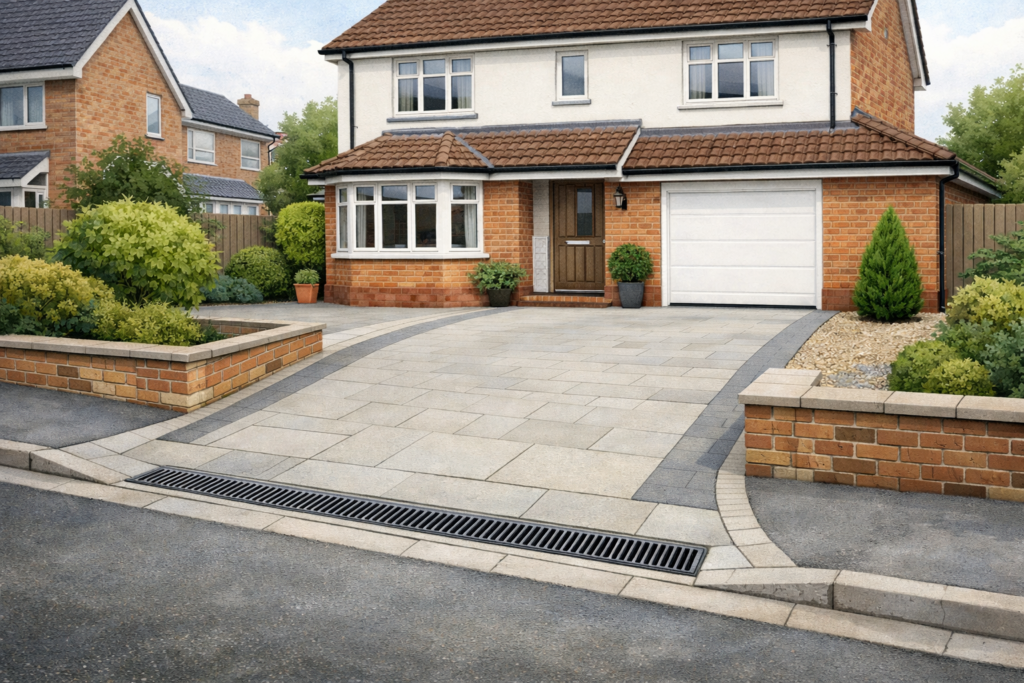
Drainage is particularly important in the UK, where heavy rainfall can quickly expose poor planning. If water pools on the surface or runs towards the house, the design may need permeable materials, channel drains or planting areas that help slow runoff.
Points worth checking before you commit include:
- Whether vehicles can turn and park without damaging planting
- How water will move across the surface in wet weather
- Whether the surface will remain safe when wet or icy
- How much pruning, weeding and cleaning the space will need
- Whether the layout still works for deliveries, bins and visitors
Low-maintenance materials and well-chosen plants usually make the biggest difference. Gravel, block paving and paved bands can all work well if they are paired with planting that does not need constant attention.
Design choices that make the biggest difference
The most successful driveway landscapes usually look simple rather than overdone. A few well-placed elements often create a better result than trying to include too many decorative features.
Good design usually starts with proportion. Large driveways need enough planting or structure to stop them feeling empty, while smaller driveways benefit from restrained features that do not reduce manoeuvring space.
Materials also matter. Natural stone, block paving, gravel, brick and edging can each give a different feel, and the choice should suit both the house and the level of use. A modern property may suit clean lines and subtle planting, while a period home may look better with softer edging and more traditional materials, such as those discussed in driveway bricks.
Useful design principles include:
- Keeping the route to the front door clear and obvious
- Using planting to soften edges, not block sightlines
- Matching materials to the house style
- Leaving enough space for opening car doors
- Using lighting to highlight paths and boundaries
Simple repetition also helps. Repeating the same plant type, edging material or paving detail can make the space feel more intentional and less cluttered.
Common mistakes to avoid
The biggest mistake is treating the driveway as a decorative project first and a functional space second. A beautiful design that is awkward to park on, difficult to maintain or prone to flooding will quickly become a problem.
Overplanting is another common issue. It can be tempting to fill every edge with shrubs and flowers, but this often makes access difficult, hides visibility and creates more maintenance than expected.
Other mistakes to watch for:
- Choosing materials that become slippery or stain easily
- Ignoring drainage and surface water flow
- Blocking sightlines when reversing or exiting
- Using plants that outgrow the space
- Creating too many surface changes that look busy
It is also easy to underestimate ongoing upkeep. Even low-maintenance designs need occasional weeding, cleaning and checking for movement or settlement, especially around the edges and drainage points.
How driveway landscapes can support property value
A thoughtful driveway landscape can make a home easier to sell because it improves the first impression before a buyer even steps inside. It suggests care, attention and a property that has been planned properly.
That said, value is not only about appearance. Buyers also notice whether the driveway feels usable, whether there is enough parking space and whether the frontage creates practical problems such as poor access or drainage.
In some cases, a landscape-led design can help a property stand out in a street where front gardens look neglected or generic. It is rarely wise to overstate the financial return, but a well-finished entrance often supports a stronger overall presentation.
If you are comparing wider landscaping approaches, our article on landscaping driveways explores how hard landscaping and planting can be combined effectively.
Are driveway landscapes right for every home?
Not always. A driveway landscape is most effective when there is enough space to give the design breathing room and when the property would benefit from a softer, more structured frontage.
Very small driveways can become cramped if too much planting or too many features are added. Likewise, homes with heavy vehicle use may need a simpler, more durable solution that prioritises easy access over decorative detail.
You may want to rethink a landscaped approach if:
- The frontage is extremely narrow
- You need maximum parking capacity
- You want the lowest possible maintenance
- The site has difficult drainage or steep levels
- There is little space for clear pedestrian routes
In those cases, a restrained design with one or two softening elements may be a better compromise than a fully landscaped arrangement. The right answer is often somewhere between plain hardstanding and a highly planted scheme.
Planning before you start
Good planning saves time, money and frustration. Before making any changes, think carefully about how the space is used now and what problems you want to solve.
Walk the area in different weather conditions if you can. Pay attention to where water sits, where people naturally move and how much turning space is actually available once cars are parked.
Questions to ask yourself include:
- Do we need more parking or better presentation?
- Will planting improve the space or reduce usability?
- How much ongoing maintenance is realistic?
- Should the design prioritise privacy, drainage or appearance?
- Does the frontage need to feel more open or more enclosed?
It is also sensible to think about how the driveway relates to the rest of the front garden. A layout that looks good from the road should still feel comfortable and practical when you step out of the car or walk to the front door.
Our Final Thoughts
Driveway landscapes can be an excellent choice for the right home. They bring together practicality and visual appeal, helping a front entrance feel more welcoming while also improving everyday use.
The best results come from careful planning, realistic maintenance expectations and a design that suits the size and style of the property. If you focus on drainage, access, proportion and materials, the finished space is far more likely to work well for years to come.
If you are considering a change, start by thinking about how you use the space now and what is missing. From there, you can decide whether a full landscape design, a simpler softened layout or a more functional hard surface is the best fit for your home.
What We Get Asked…
Do driveway landscapes need a lot of maintenance?
Not necessarily, but they do need some upkeep. The level of maintenance depends on the amount of planting, the materials used and how much debris or vehicle traffic the area gets.
Will a landscaped driveway help with drainage?
It can, if the design includes permeable surfacing, drainage channels or planting areas that help manage runoff. Poorly planned landscaping can make drainage worse, so the layout matters.
Can small driveways be landscaped?
Yes, but the design should stay simple. A small driveway often works best with compact planting, clean edging and materials that do not make the space feel crowded.
Are driveway landscapes expensive?
Costs vary widely depending on materials, drainage needs and how much planting or structural work is involved. A modest design can be manageable, while a more complex scheme will cost more to install.
What is the biggest benefit of a landscaped driveway?
The main benefit is the balance of appearance and function. A good design makes the entrance look better while also improving how the space works for parking, walking and drainage.