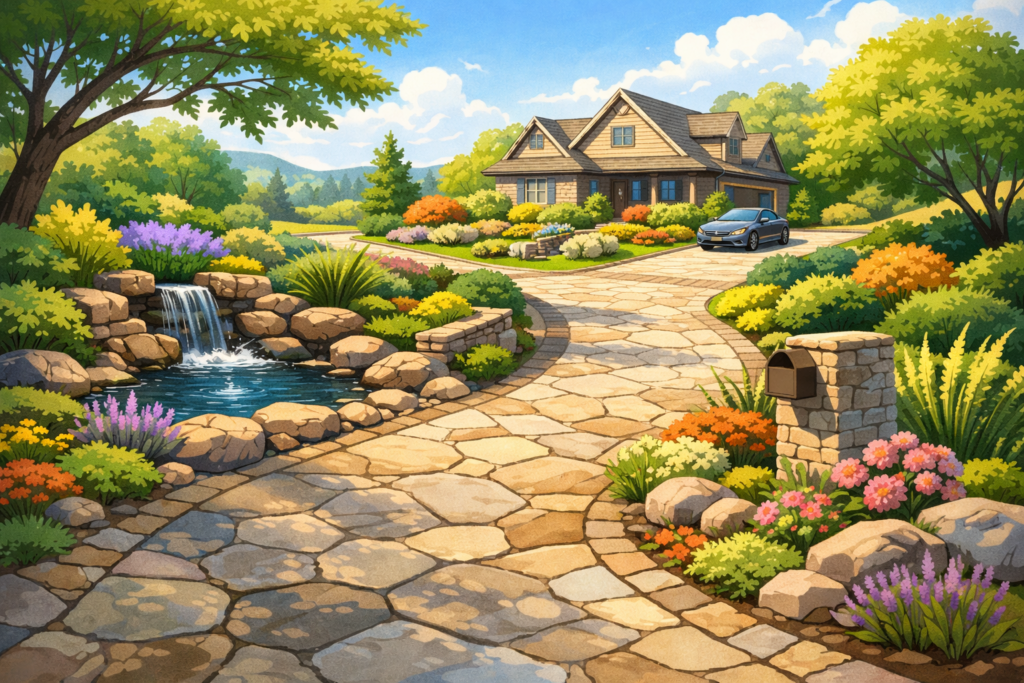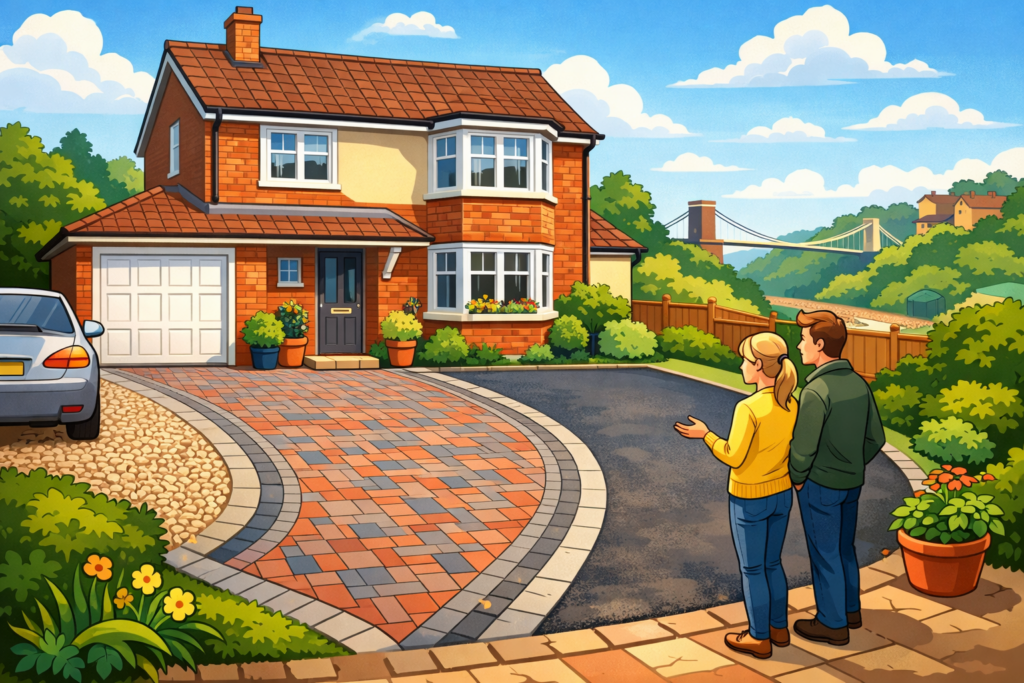

Driveway plants can make an entrance feel calmer, greener and more established. The right planting can soften straight paving lines, break up large areas of hard surfacing and help a property look cared for from the moment someone arrives.
They are not always the best choice, though. A driveway is a demanding setting, with compacted soil, reflected heat, vehicle movement, limited root space and the constant risk of damage from tyres, doors and pedestrian traffic.
That is why the question is not simply whether plants look good beside a driveway, but whether they will thrive there and support the way you use the space. With sensible plant selection and a realistic approach to maintenance, driveway planting can be one of the most effective ways to improve the front of a home.
Why driveway planting matters
The front of a house has a major effect on kerb appeal. A driveway often takes up a large share of the visible frontage, so even modest planting can change the overall balance of the property.
Plants also help to soften the feel of hard landscaping. If the area is built entirely from concrete, block paving or gravel, the result can look stark, especially around older homes or properties with little natural texture at the front.
There is a practical side too. Carefully placed greenery can guide movement, frame an entrance, and make it easier to distinguish parking areas from planting beds. For some homes, this creates a more polished layout than a broad expanse of plain surfacing ever could.
What makes driveway conditions difficult?
Not every plant can cope with the conditions beside a driveway. The ground is often poorer than it appears, especially if construction work has compacted the subsoil or stripped away the top layer that plants need to root well.
Driveways also create heat and dryness. Surfaces absorb warmth during the day and can reflect it back towards nearby plants, while rainwater may run off instead of soaking into the planting area. That means roots may need more regular watering than they would in a border farther from the house.
Damage is another common issue. Cars can clip low shrubs, reversing manoeuvres can crush stems, and winter gritting can affect soil structure. If the driveway doubles as a thoroughfare, planting must be resilient rather than delicate.
The real benefits of driveway plants
When planting is chosen carefully, the advantages are easy to see. A well-designed driveway border can make a front garden feel intentional rather than accidental.
Improved appearance: Plants can frame the driveway and add seasonal interest, which is especially useful if the surfacing is plain or newly installed.
Better visual proportions: Tall or medium-height planting can stop a wide driveway from overwhelming the frontage.
A softer welcome: Greenery creates a more inviting first impression than hard materials alone.
Potential privacy: The right shrubs can shield parts of the entrance from the road without making the space feel closed in.
Wildlife value: Pollinator-friendly planting can support bees and other beneficial insects, which is a useful bonus in urban and suburban settings.
These benefits are strongest when the planting is matched to the size of the driveway and the style of the house. A compact terraced property needs a very different approach from a detached home with a broad entrance and generous borders.
Which types of driveway plants work best?
Good driveway planting is usually about durability, tidy growth habits and year-round structure. The best choices are those that stay within bounds and do not shed excessive debris onto the surface.
Evergreen shrubs: These provide shape through winter and help maintain structure when other plants die back. Compact varieties are often better than aggressive growers.
Ornamental grasses: Grasses can look elegant and cope well with exposed or sunny positions. Many remain neat with minimal care.
Lavender and low Mediterranean plants: These suit sunny driveways and bring fragrance without becoming bulky.
Small ornamental trees: Some homes benefit from a single focal tree, provided it has non-invasive roots and enough room to grow naturally.
Perennials with clean habits: Plants that do not flop, spread excessively or drop heavy amounts of petals can be easier to maintain near paving.
If you want ideas for combining planting with other front-of-house improvements, it can help to compare your layout with landscaping driveway ideas and see how greenery works alongside surfacing choices.
How to choose plants for your driveway
The best plant is not always the prettiest one in the garden centre. It is the one that suits light levels, soil conditions, available space and how closely it sits to vehicles.
Check sunlight first: A south-facing driveway may be hot and dry, while a north-facing one may be more shaded and slower to dry after rain. That difference affects what will perform well.
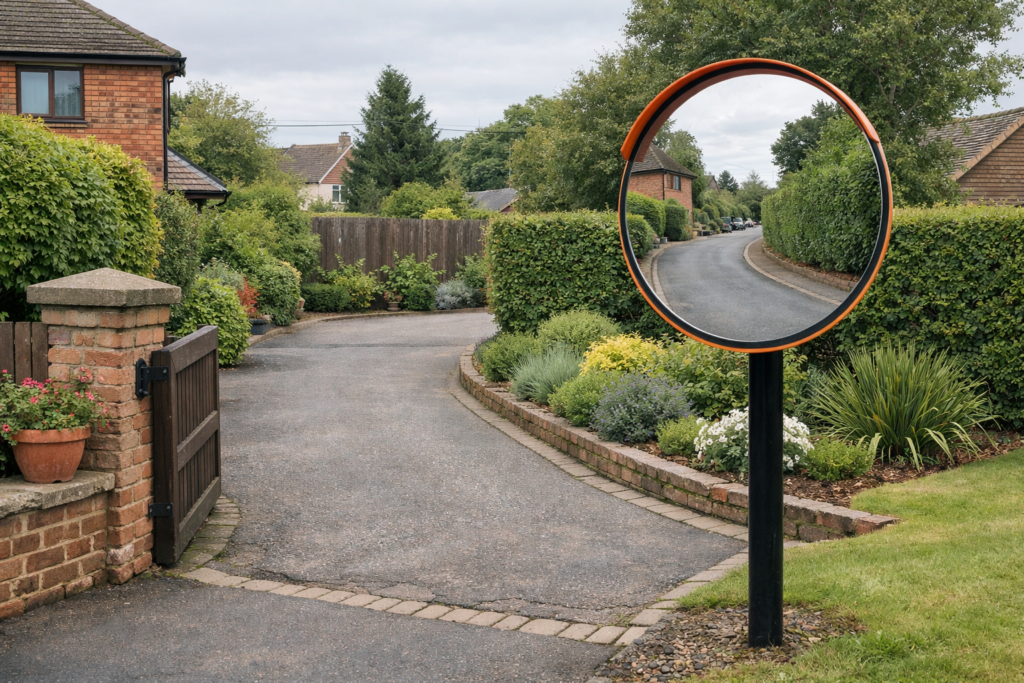
Think about width and height: Plants should not block sight lines when reversing or turning. They should also leave enough room for doors, gates and bins.
Consider root behaviour: Close planting near paving needs care, because aggressive roots can disturb surfaces or struggle in confined spaces.
Match the maintenance level: If you want a neat, low-effort entrance, choose slower-growing and less messy species rather than vigorous varieties that need frequent cutting back.
It is also worth thinking about the overall style of the home. A crisp modern driveway usually suits cleaner shapes and restrained planting, while older homes often look better with looser, more natural combinations.
Common mistakes to avoid
Many driveway planting problems come from overenthusiasm at the start. A border may look full and attractive in the first year, but become awkward, crowded or unsafe once the plants mature.
Choosing plants that grow too large: Shrubs can quickly encroach on parking space or block the view from the road.
Placing delicate plants too close to the surface: Areas beside tyres and doors need tougher planting than an ordinary front border.
Ignoring drainage: Saturated soil can be just as difficult as dry soil, especially for plants that prefer freer-draining ground.
Using plants that shed heavily: Leaves, berries, sticky sap and spent flowers can make a driveway slippery or untidy.
Failing to protect new planting: Young shrubs often need edging, temporary guards or a defined border so they do not get damaged by daily use.
A further mistake is trying to use plants as a fix for a driveway that is poorly designed. If the surface drains badly, the edging is weak or the parking layout is awkward, planting alone will not solve the issue.
Planting ideas for different driveway types
The best planting solution depends heavily on the surface material and the amount of available edge space. A wide drive with deep borders gives far more freedom than a narrow strip beside the house.
Gravel driveways: These often pair well with planting because the softer texture of the surface suits a more relaxed scheme. Border planting can stop the area feeling too loose or unfinished, especially when combined with neat edging. For more material-specific considerations, compare the benefits with a gravel driveway choice.
Tarmac and asphalt driveways: These usually look best with sharper planting lines and a strong contrast between hard and soft materials. Structured shrubs and evergreen edging often work well here.
Resin driveways: Their clean finish suits contemporary planting with a restrained colour palette. Low-maintenance plants help keep the overall look polished, and you can weigh that style against a resin driveway option.
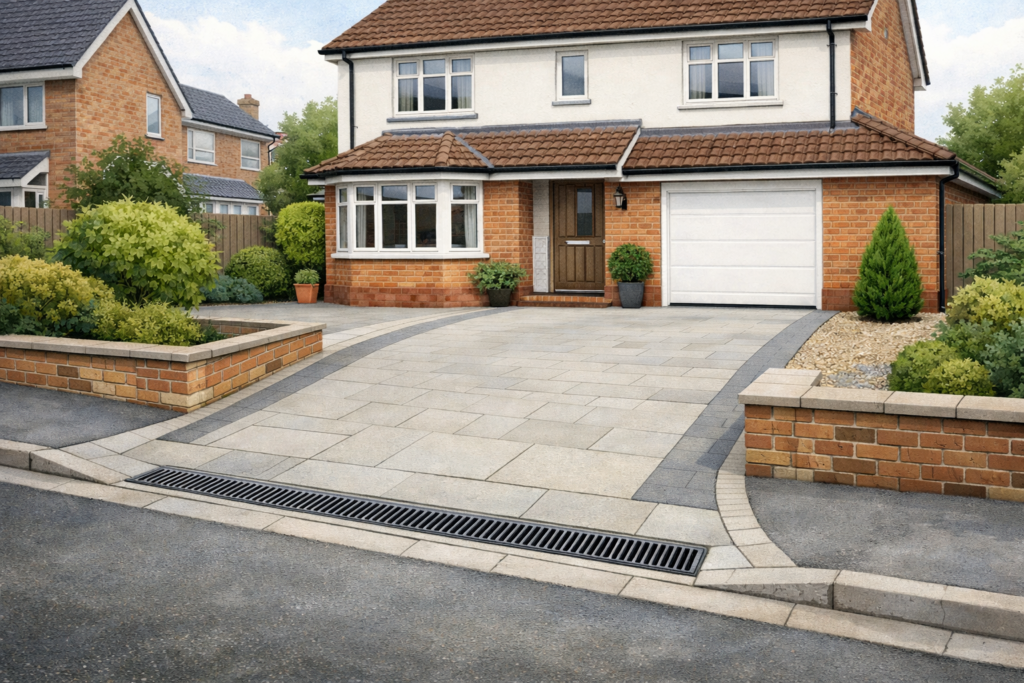
Brick or block-paved driveways: These often have a more traditional feel, so planting can be used to add charm and reduce the dominance of the paving pattern. If the paving itself is a design feature, see how it compares with driveway brick designs.
Design tips that help driveway plants work well
Good driveway planting is about control as much as beauty. The aim is to make the entrance look planned, not overgrown.
Use repetition: Repeating the same plant or a small plant palette creates order and prevents visual clutter.
Keep sight lines clear: Any planting near an exit or bend should allow drivers and pedestrians to see clearly.
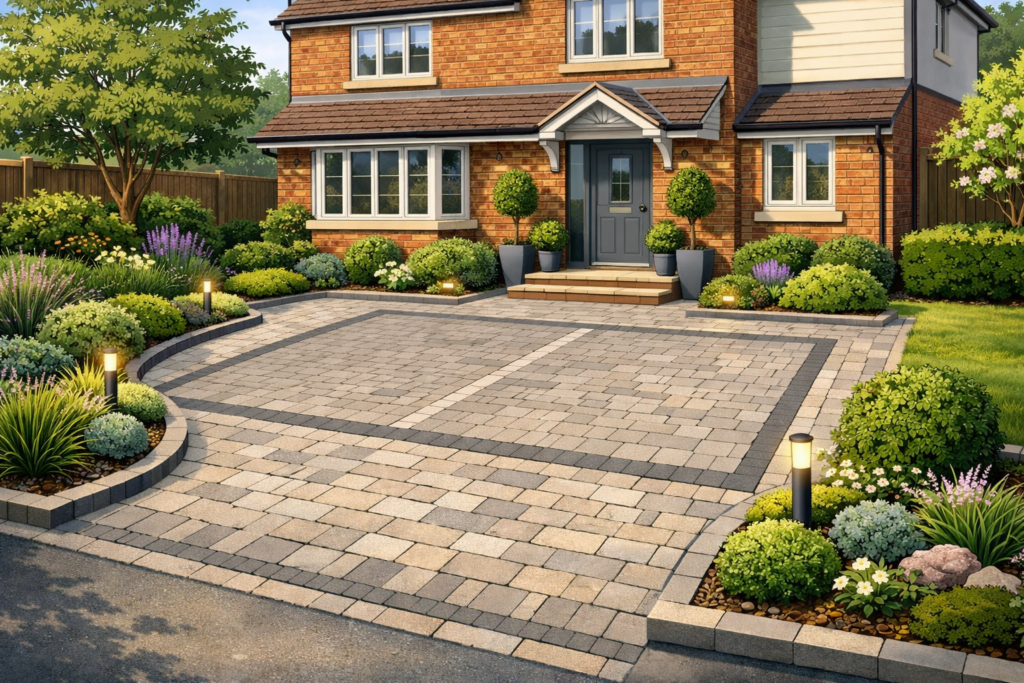
Create depth with layers: Shorter plants near the front and taller ones behind can give a border structure without blocking the view.
Choose strong edging: A defined boundary between driveway and planting helps stop soil or mulch migrating onto the surface.
Leave room for growth: A plant that looks small in the nursery may double or triple in size over time.
If you want the space to feel more cohesive, planting can also be integrated with paving, lighting and edging details. For larger projects, it is worth comparing planting with broader design changes such as landscaping a driveway so the full entrance works as one scheme.
Maintenance and long-term care
Driveway plants should be easy to maintain if they are chosen well, but they are never completely maintenance-free. Even low-care planting needs occasional trimming, feeding and checking for damage.
Regular attention matters more than dramatic interventions. Small problems such as leaning stems, weed growth or encroaching branches are much easier to manage early than after they have affected the whole driveway.
Seasonal care should also be realistic. Spring and summer may bring growth that needs shaping, while autumn can leave leaves or berries to clear away from the surface. In winter, it is sensible to protect the most exposed plants from salt and repeated freezing.
If maintenance is likely to be a problem, it is better to keep the scheme simple. A few robust shrubs in well-prepared beds usually age better than a complicated mix of delicate species that need constant attention.
When driveway plants may not be the best choice
There are situations where planting beside a driveway is more trouble than it is worth. This is especially true where the access route is very narrow, turning space is limited or visibility is already poor.
Homes with very small frontages may benefit more from a carefully finished surface and minimal planting in pots rather than beds. Properties with heavy vehicle use also need tougher, clearer layouts that are easy to navigate day after day.
Drainage can be another reason to be cautious. If the ground stays wet or the area is repeatedly compacted, some planting schemes struggle to survive long enough to justify the effort.
In those cases, it may be wiser to improve the driveway surface first, then add planting only where conditions are genuinely suitable. The decision should support everyday use rather than compete with it.
What We Get Asked…
Do driveway plants need special soil?
They often do. If the existing ground is poor or compacted, adding quality topsoil, compost and drainage material can make a noticeable difference to long-term success.
Can I plant directly next to the driveway edge?
Yes, but only with the right species and enough space. Plants placed too close to the edge are more likely to be damaged by tyres, doors and foot traffic.
Are low-maintenance plants always best?
Not always. Low-maintenance is helpful, but the plant still needs to suit the light, soil and size of the space or it will become a problem later.
Will plants damage the driveway surface?
They can if roots are too vigorous or the planting area is too tight. Proper spacing and sensible species selection reduce this risk significantly.
Is container planting a good alternative?
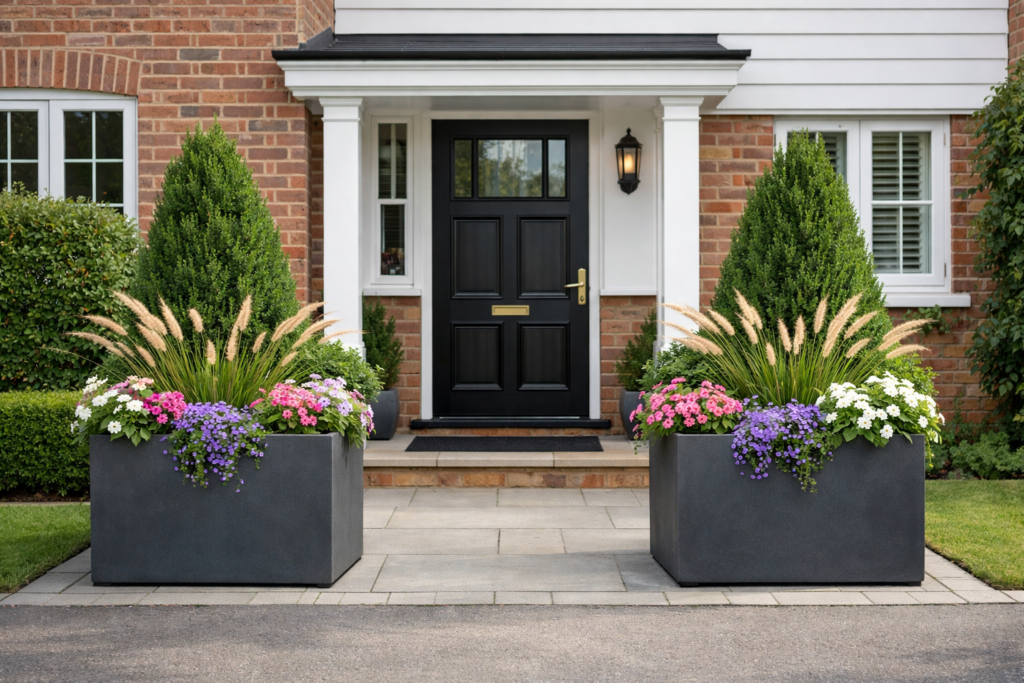
Yes, especially where beds are not practical. Large planters can soften a driveway without the same root and soil challenges, although they need watering and seasonal care.
Our Final Thoughts
Driveway plants can be an excellent choice for the right home. They add softness, colour and structure, and they can make the front of a property feel more welcoming and complete.
The key is to treat them as part of the driveway design rather than as an afterthought. If the plants suit the available space, the conditions and the way you use the entrance, they can enhance both appearance and practicality for years to come.
If you are planning changes to your front drive, start by looking at how surfacing, edging and planting can work together. For more inspiration on driveway materials and layouts, explore related options and choose the combination that fits your home best.