
A driveway does more than provide a place to park. It affects how your home looks from the street, how easy it is to get in and out each day, and how well the front of the property copes with rain, mud and wear.
For some homeowners, a new driveway is one of the best improvements they can make. For others, repairs, resurfacing or better drainage may be enough. The right answer depends on your space, budget, ground conditions and how you use the frontage every day.
Choosing the wrong surface or layout can create ongoing problems, from puddling and cracking to awkward access and higher upkeep. The better approach is to think about how the driveway will perform over time, not just how it will look on day one.
What a new driveway can change
A new driveway can transform the way a property functions. It can make parking simpler, improve access for family members and visitors, and help the front of the house feel more organised and welcoming.
Many homeowners also see a visual benefit straight away. A tired, broken or patchy driveway can drag down the whole appearance of a property, while a new surface can make the house feel more cared for and better maintained.
There are practical gains too. A well-planned installation may reduce standing water, improve safe footing and make it easier to keep the frontage tidy throughout the year.
When a new driveway makes the most sense
A new driveway is often worth considering when the existing surface has reached the point where repairs are no longer cost-effective. Repeated patching can become frustrating if the same issues keep returning.
It may also make sense if your parking needs have changed. A household with one car can sometimes manage with a smaller or simpler arrangement, but extra vehicles, larger cars or delivery access can quickly expose the limitations of an old layout.
If the current driveway creates drainage issues, that is another strong reason to review your options. Persistent puddles, soft ground and surface runoff often point to a design problem rather than a simple wear-and-tear issue.
Some homeowners also decide to replace a driveway when they want a better match for the property. For example, a more traditional home may suit driveway bricks, while a modern property may benefit from a cleaner, more minimal finish.
Signs your existing driveway is past repair
Not every flaw means a full replacement is necessary. Small cracks, light staining or a few loose areas may be repairable depending on the surface type and age.
The warning signs become more serious when problems affect the structure beneath the driveway. Sinking areas, widespread cracking, poor edges and constantly loose surfaces often suggest the base is failing as well as the top layer.
Watch for these common signs:
- Repeated pooling after rain
- Deep cracks that keep returning
- Sunken or uneven sections
- Loose gravel, blocks or aggregate
- Surface wear that exposes the sub-base
- Damage near the entrance where vehicles turn in
If several of these issues are present, a replacement may give better long-term value than continuing to repair the same faults.
How to judge the right driveway for your home
The best driveway is not always the most attractive one, and it is not always the cheapest either. The right choice balances appearance, durability, drainage, maintenance and day-to-day use.
Start with the space available. A narrow front garden, awkward turning area or steep slope can affect which materials and layouts are realistic. Some surfaces cope better with irregular shapes, while others need a more controlled installation.
Think about traffic levels. A driveway used once or twice a day has different demands from one that takes multiple cars, vans or heavier vehicles. The more traffic it sees, the more important strength and stability become.
Consider the local conditions. Shade, heavy rainfall, clay soil and freeze-thaw cycles can all affect performance. A surface that looks attractive in a dry climate may not be the best fit for a wetter part of the country.
Match the finish to the house. A driveway should support the property, not compete with it. A surface that suits the architecture and front boundary often feels more natural and lasts better visually.
Materials that are commonly worth comparing
There is no universal best material for every driveway. Each option has its own strengths, limitations and maintenance requirements, which is why comparing them carefully matters.
Concrete. Concrete is a practical choice when durability and a neat appearance are priorities. It can work well for many properties, although cracking can be an issue if the ground preparation is poor or movement is likely.
Gravel. Gravel is often chosen for its relaxed appearance, lower upfront cost and good drainage potential. It can be an appealing option for larger or more informal entrances, though it may need regular raking and topping up. If you are weighing up the pros and cons, our article on a gravel driveway explores where it works best.
Stone. Stone can create a more characterful finish and often feels well suited to older or higher-value homes. It may offer a premium look, though the overall cost and maintenance needs can be higher depending on the type chosen. You may also want to compare it with a stone driveway if appearance is a priority.
Brick. Brick driveways are popular where classic style matters. They can look smart and distinctive, but the quality of the sub-base and edge restraint is crucial if you want to avoid movement over time.
Contractor-style finishes. Some homeowners look for a simple, hard-wearing solution that prioritises function over decoration. In those cases, a practical contractor driveway approach may be a better fit than a decorative finish.
Drainage should never be an afterthought
Drainage is one of the most important parts of any driveway decision. A surface that looks excellent but sends water towards the house can cause long-term trouble and extra costs.
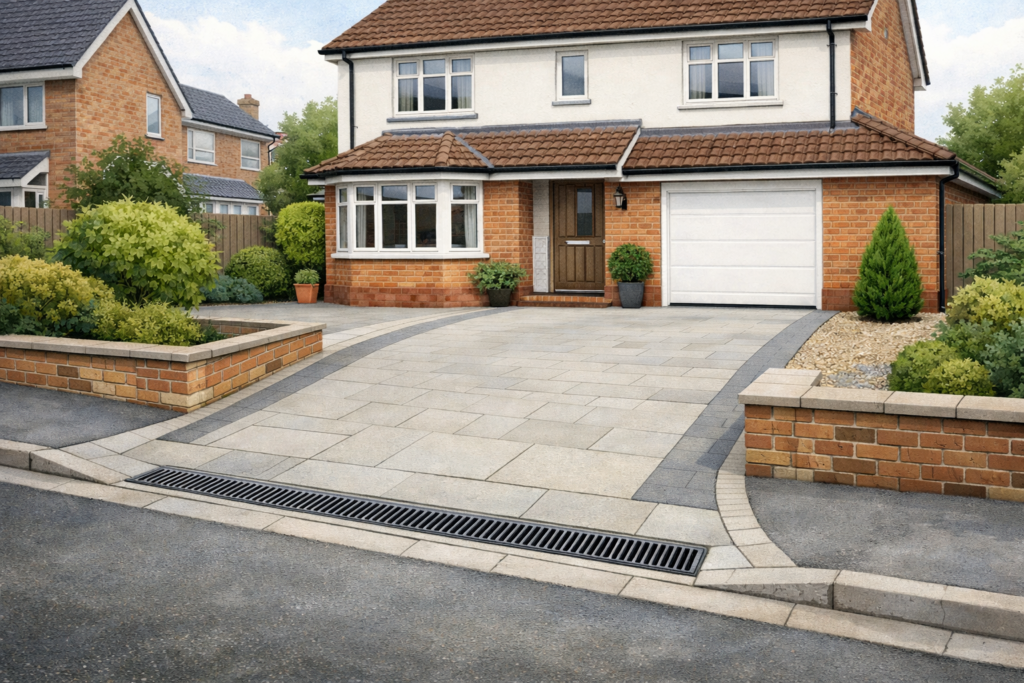
Modern driveway planning should take account of where rainwater will go. This may involve permeable materials, a suitable fall away from the property or dedicated drainage channels, depending on the site.
Homes with existing puddling or soft edges should be assessed carefully before any new work begins. Replacing the surface without fixing the drainage can leave you with the same problem, only with a more expensive finish on top.
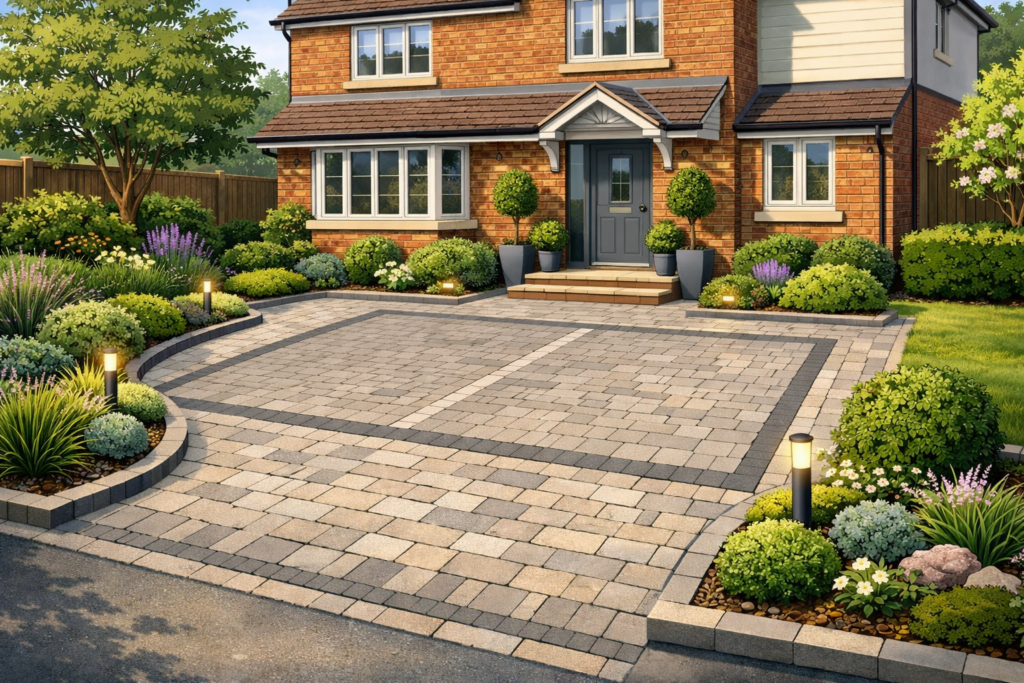
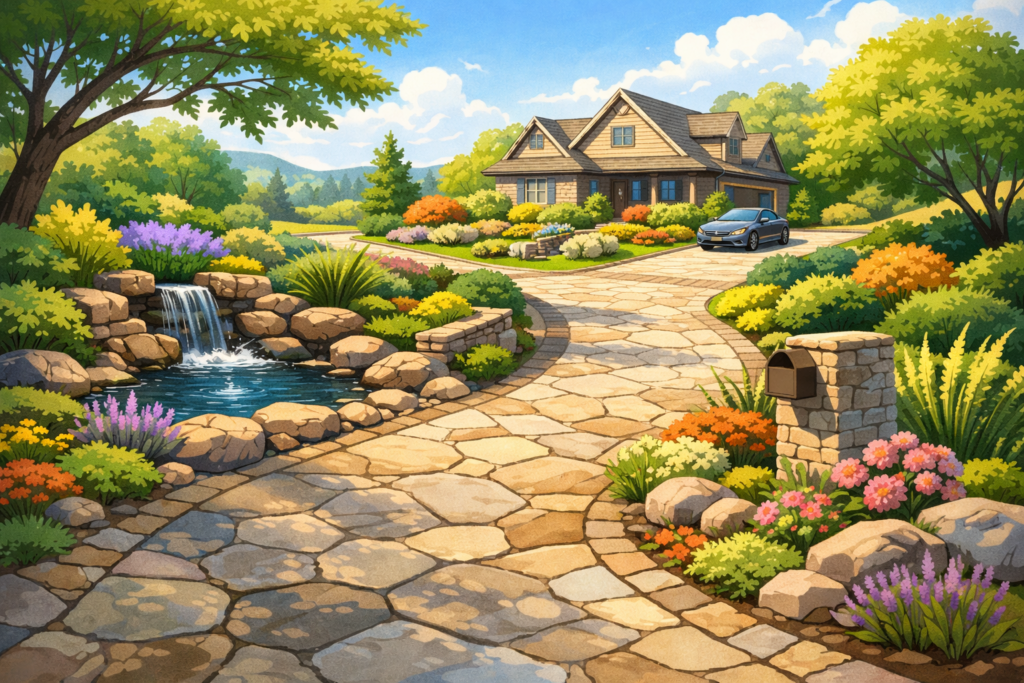
If you are considering a more planted, structured frontage, it can be useful to understand how layout and water management interact. Our article on a landscaped driveway looks at how design choices can influence both appearance and performance.
Cost versus value: what really matters
Price matters, but it should not be the only factor in your decision. A cheaper driveway that needs frequent repairs can end up costing more than a sturdier installation that lasts longer and performs better.
The key question is whether the new driveway will add enough practical and visual value to justify the spend. For some homes, the answer is clearly yes, especially when the existing surface is failing or the front of the property looks neglected.
It is also worth considering resale appeal. Buyers often notice the driveway before they step inside, and a clean, usable frontage can make a positive first impression. That does not mean every property needs a luxury finish, but it does mean the driveway should feel intentional and well kept.
Look beyond the initial quote and think about:
- Expected lifespan of the material
- Maintenance over the years
- Repair costs if something goes wrong
- Whether drainage work is included
- How well the finish fits the property
Common mistakes homeowners make
One of the most common mistakes is choosing a surface based purely on appearance. A driveway that looks attractive in a brochure may not suit your soil, traffic levels or weather exposure.
Another frequent issue is underestimating preparation work. If the base is poorly formed, no surface will perform well for long. Good ground preparation is often what separates a driveway that lasts from one that fails too soon.
Homeowners also sometimes ignore how they actually use the space. If you regularly open car doors wide, manoeuvre bins, or need room for visiting vehicles, the layout should support those needs from the outset.
Other mistakes to avoid include:
- Not planning for water runoff
- Choosing a finish that needs more upkeep than expected
- Ignoring access for builders, bins or deliveries
- Forgetting about edging and boundary details
- Assuming a small repair will fix a larger structural issue
Questions to ask before you commit
Before going ahead, it helps to look at the decision from a practical point of view. A new driveway should make life easier, not introduce new problems.
Ask yourself whether the current driveway genuinely limits you. If parking is awkward, the surface is unsafe, or the front of the house constantly looks untidy, replacement may be justified.
Consider how long you plan to stay. If you expect to remain in the property for many years, it can make sense to invest in a driveway that is more durable and suited to future needs.
Think about future use. Families often need more flexibility as children grow, vehicles change or mobility needs evolve. A good driveway should be able to cope with those changes without becoming a burden.
What a good installation should include
A driveway is only as good as the preparation behind it. Even the best material can fail if the groundwork is rushed or drainage is overlooked.
A proper installation should include a stable sub-base, sensible levels, neat edges and suitable drainage provision. The finished surface should feel solid underfoot and be able to cope with everyday use without obvious movement.
It is also worth checking that the design suits the wider frontage. The driveway should connect well with paths, entrances, gates and any planting or boundary features around it.
If you are comparing design-led options, it can help to see how different surfaces sit within the overall front garden scheme. That is particularly relevant if you are torn between simple practicality and a more decorative approach such as landscaping a driveway.
When a repair may be enough
A full replacement is not always necessary. If the surface is generally sound and the problems are localised, a focused repair or resurfacing could be the more sensible route.
Surface cleaning, re-levelling, edge repair or drainage improvements may solve the issue if the underlying structure is still stable. That can be a better use of money, especially when the driveway is otherwise functional.
The most important thing is to get an honest view of the condition. If the damage keeps returning or the base is failing, a repair may only delay the inevitable.
What We Get Asked…
How do I know if I need a new driveway rather than a repair?
If damage is widespread, the surface keeps moving or water is pooling regularly, a replacement is often the better long-term option. Small, isolated faults can sometimes be repaired, but repeated problems usually point to a deeper issue.
Will a new driveway increase the value of my home?
It can improve kerb appeal and make the property more attractive to buyers, especially if the old driveway is tired or impractical. The size of the benefit depends on location, finish and how useful the new space is.
Which driveway material is easiest to look after?
That depends on the finish you choose and how the space is used. Some surfaces need little more than occasional cleaning, while others require topping up, re-sanding or routine weed control.
Do I always need drainage work with a new driveway?
Not always, but drainage should always be assessed. If water currently sits on the surface or runs towards the house, solving that during installation is usually essential.
Our Final Thoughts
A new driveway can be a smart investment when the existing one no longer works for your household or your home. It can improve appearance, make parking easier and help the frontage perform better in daily use.
The best decision comes from looking at the whole picture: condition, drainage, layout, material choice and long-term maintenance. If those factors are considered carefully, you are far more likely to end up with a driveway that feels like a proper fit for the property.
If you are unsure which direction to take, start by assessing how your current driveway is letting you down and what you need the replacement to do differently. From there, compare the most suitable materials and speak with a trusted installer who can advise on the ground conditions and practical design.
For many homes, that extra planning is what turns a simple parking area into a lasting improvement.