A driveway does far more than provide a place to park. It sets the tone for the whole property, influences how easy it is to move around outside, and can either complement or compete with the home’s architecture. When landscaping is brought into the design, the driveway becomes part of the wider front garden rather than a separate hard surface.
That can be a big advantage, but it is not automatically the best choice for every home. A landscaped driveway needs careful planning, the right materials, and a clear idea of how the space will be used day to day. For some properties, it creates a beautiful and practical entrance; for others, it can add cost and upkeep without solving the main problems.
If you are weighing up whether a landscaped driveway suits your home, it helps to look beyond appearance alone. Drainage, access, maintenance, and how the design affects the rest of the frontage all matter just as much as the visual finish.
What a landscaped driveway really means
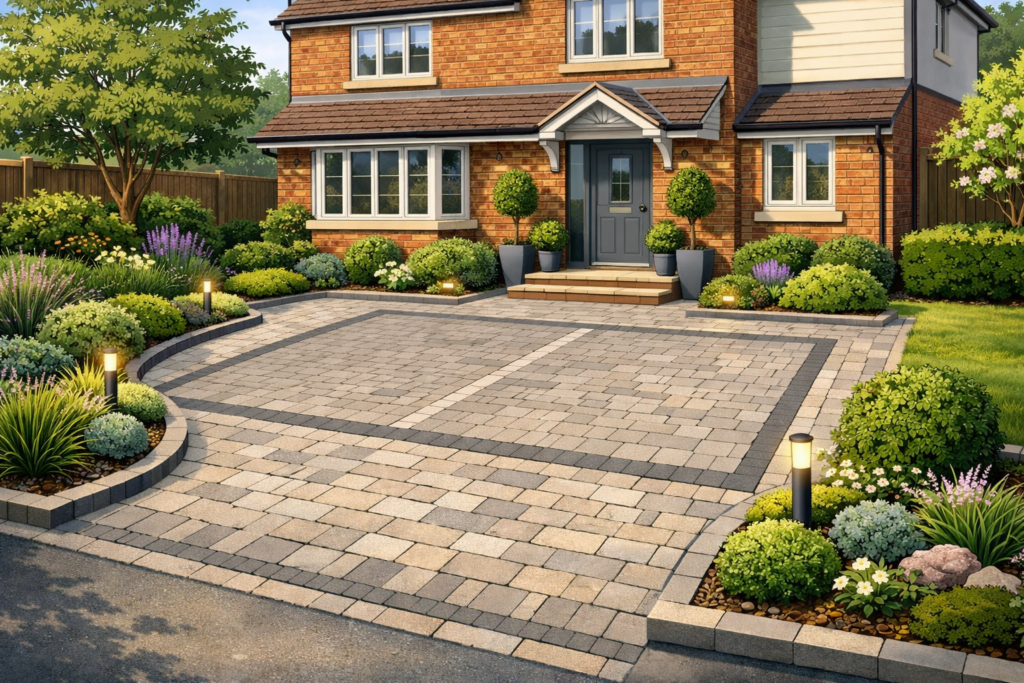
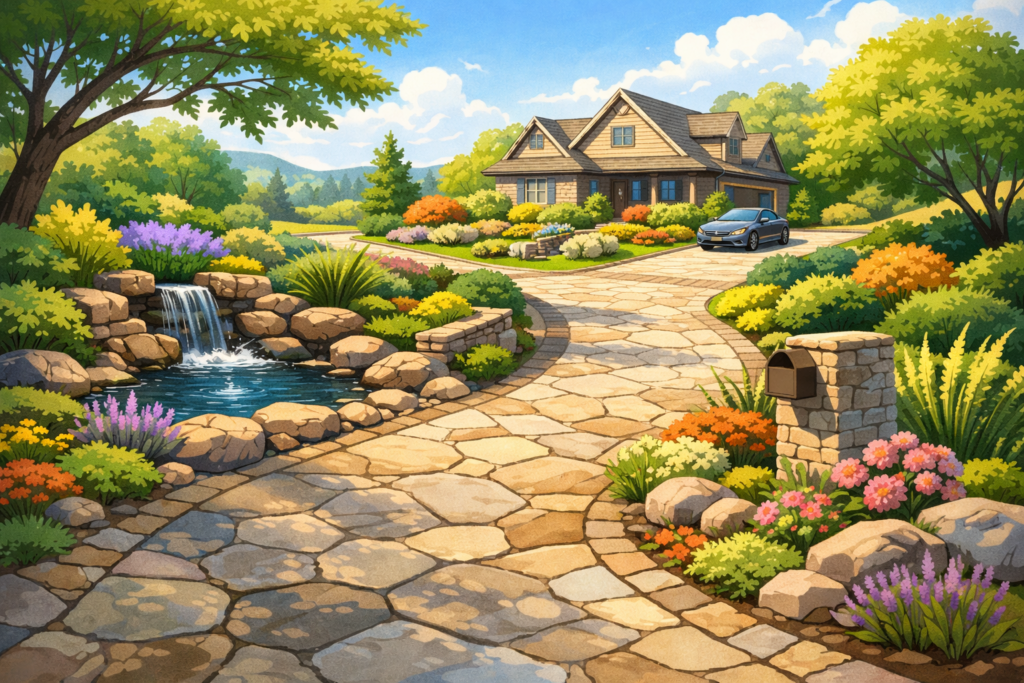
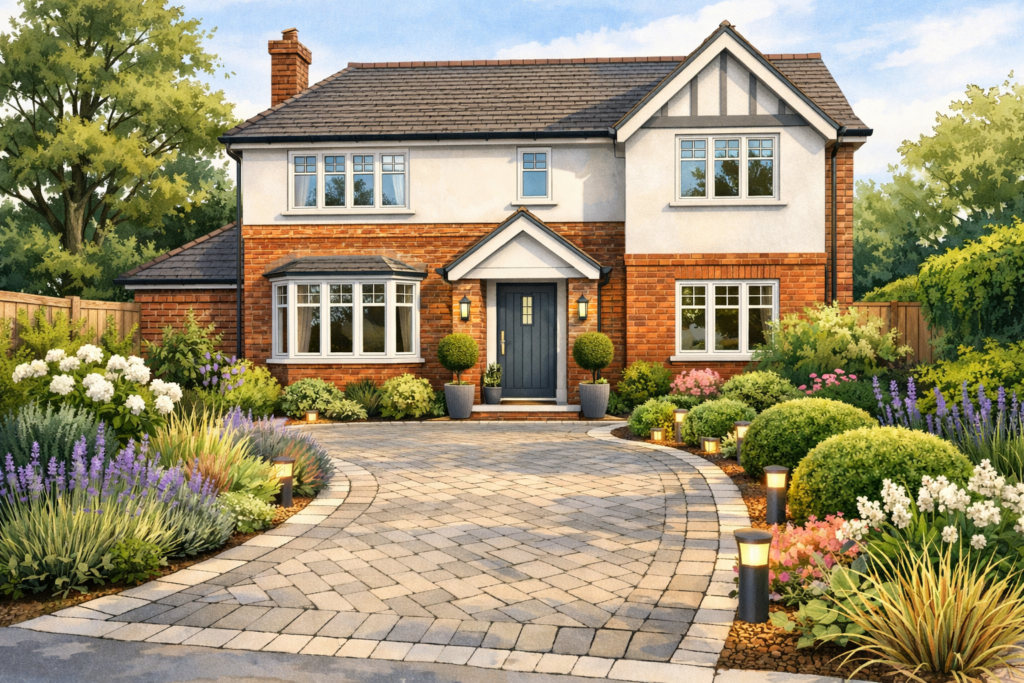
A landscaped driveway is usually more than a simple strip of paving or gravel. It often combines the driveway surface with planting, edging, lighting, boundary treatment, and wider front-garden design so the whole area feels cohesive. The aim is to create a functional entrance that also looks considered and well balanced.
That might mean softening hardstanding with borders, introducing planting beds to break up large expanses of paving, or using materials that echo the style of the house. In some cases, it may also involve reshaping levels, improving access, or making drainage work more effectively.
Done well, the result looks intentional rather than purely practical. Done poorly, it can feel cluttered, difficult to maintain, or awkward to use in bad weather.
Signs a landscaped driveway could suit your home
Some homes naturally lend themselves to a more landscaped approach. Period properties, detached homes with generous frontage, and houses with enough space to separate parking from planting often benefit most. The design can help the front of the house feel more welcoming and less dominated by parked cars.
If your current frontage looks tired or lacks structure, landscaping can bring order and character. It can also help if the driveway currently feels too exposed, too wide, or visually harsh against the house.
Homes with awkward boundaries, sloping plots, or a very plain entrance can also gain from thoughtful landscaping. The key is not just improving looks, but solving practical issues while doing so.
It may be a good fit if you want:
- a more attractive entrance with stronger kerb appeal
- better separation between parking and planting
- help with drainage or runoff management
- a driveway that complements the property’s style
- a front garden that feels more finished and balanced
When a landscaped driveway may not be the best option
Although landscaped driveways look appealing, they are not always the most sensible choice. Smaller properties with limited frontage can struggle to fit planting and parking without making the area feel cramped. In those cases, functionality often needs to take priority.
If you need maximum parking space, have frequent vehicle movement, or want the lowest possible maintenance burden, a highly landscaped design may create more work than it saves. Planting beds can be damaged by turning cars, and decorative features can become inconvenient if they interfere with access.
Budget is another important factor. Landscaping often adds to the overall cost because it includes more than surfacing alone, and the finish may require specialist design or ground preparation.
For homeowners who want something simpler and more robust, options such as driveway paving or a more straightforward gravel layout may be a better match.
The practical benefits of a landscaped driveway
A landscaped driveway can improve the everyday experience of arriving home, not just the appearance of the property. Good design can guide vehicles more clearly, make pedestrian access safer, and create a more pleasant transition from street to front door.
One of the biggest advantages is the ability to manage larger front areas more effectively. Instead of leaving a broad space looking like empty hardstanding, landscaping can break the area into logical zones for parking, movement, planting, and visual interest.
It can also help with resale appeal. Buyers often notice the front of a home first, and a driveway that feels tidy, attractive, and well considered can create a positive first impression.
Other practical benefits include:
- better surface definition and clearer traffic flow
- reduced visual impact of parked cars
- more opportunities to manage surface water
- space for lighting that improves safety at night
- a frontage that feels more private and less exposed
Material choices that affect the result
The success of a landscaped driveway depends heavily on the materials used. Some surfaces suit planting and soft edges far better than others. The wrong combination can make the frontage feel disjointed, while the right one creates a finish that feels calm and well integrated.
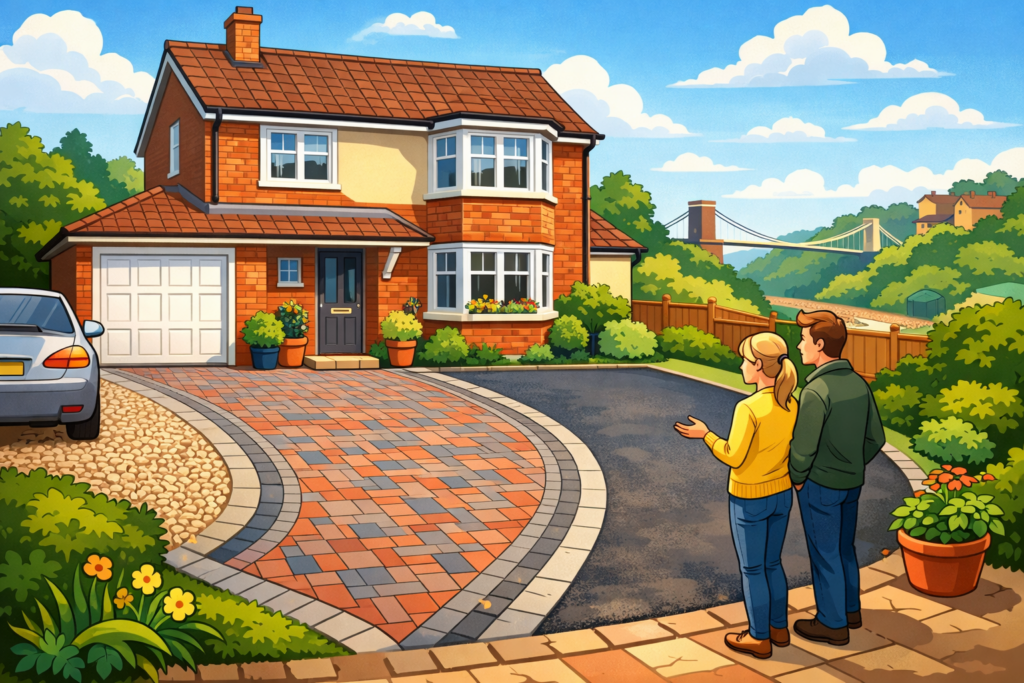
Natural materials often work especially well when the goal is to soften the look of the drive. Stone, setts, and textured paving can blend neatly with planting and older homes. More contemporary properties may suit cleaner lines, subtle edging, and restrained colour choices.
Gravel can also work well in landscaped schemes, particularly where the drive needs a softer appearance and good drainage. It is worth looking at how the surface behaves over time, though, because maintenance needs and movement under tyres can vary.
If you are comparing surface styles, the article on gravel driveway benefits is a useful place to understand how a looser surface compares with more structured finishes.
Materials to think about carefully:
- Block paving for structure, pattern and neat edges
- Natural stone for a premium, characterful look
- Gravel for a relaxed, permeable feel
- Concrete where durability and simplicity matter most
- Bricks or setts where detail and heritage character are important
Drainage and ground preparation matter more than the planting
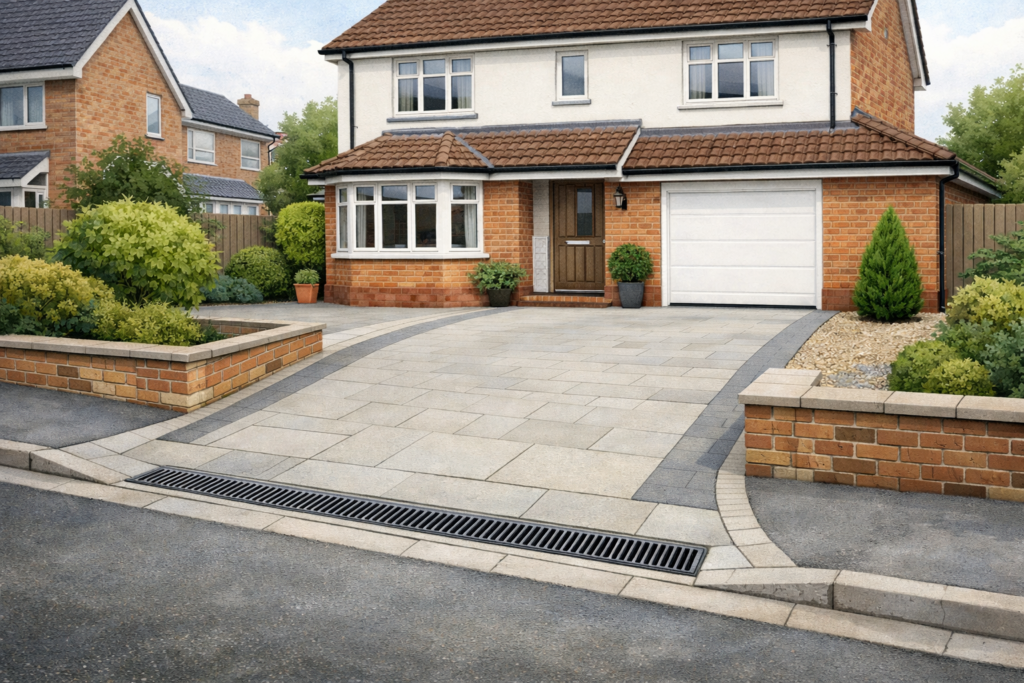
Many people focus on the planting scheme first, but drainage and ground preparation are usually the real foundations of a successful landscaped driveway. Without proper planning, even the most attractive design can suffer from puddling, soft spots, or runoff that moves towards the house.
This is especially important where the driveway meets paving, turf, borders, or steps. The finished design must allow water to escape in the right direction while keeping the surface stable and usable throughout the year.
If the area has clay soil, slopes, or a history of standing water, professional advice becomes even more important. A landscaped driveway should work with the site rather than against it.
For homes where the surface itself is a major deciding factor, it can help to compare with a more robust solution such as a concrete driveway, which may offer a simpler answer where long-term stability is the priority.
How planting should be used around a driveway
Planting can bring softness, colour, and seasonal interest, but it needs to be chosen with care. Driveway borders are exposed to vehicle movement, road salt, wind, and heat reflected from hard surfaces, so delicate plants may struggle.
Low-maintenance shrubs, grasses, and tough perennials often work better than highly ornamental plants that need regular attention. Plants should also be placed where they will not block sightlines or make it difficult to open doors, reverse safely, or walk around parked vehicles.
It is also wise to avoid designs that rely on too much lawn beside a driveway. Grass edges can quickly become worn, muddy, or difficult to mow if the driveway is heavily used.
Good planting usually does the following:
- frames the driveway without narrowing access
- adds structure through the year, not just in summer
- tolerates sun, shade, and exposure
- needs manageable levels of watering and pruning
- does not drop excessive leaves, fruit, or debris
Maintenance: the part many homeowners underestimate
Landscaped driveways often need more care than plain surfacing, and it is best to be realistic about that from the start. Borders need trimming, plants need occasional replacement, and weeds can appear between edging, gravel, or paving joints.
Leaves, petals, and soil can collect on the driveway surface, particularly if planting is dense or trees are nearby. That does not mean the design is a bad idea, but it does mean upkeep should be part of the decision.
For busy households, maintenance can be reduced by using hardy plants, simple borders, and materials that are easy to sweep or pressure clean. The more elaborate the design, the more time it is likely to demand.
If low maintenance is essential, a more straightforward surface may be worth comparing with driveway bricks, especially if you want a smart finish without an overly complex landscape scheme.
Common mistakes to avoid
One of the biggest mistakes is treating the driveway and garden as separate jobs. A landscaped driveway works best when the parking area, borders, lighting, drainage, and access all form part of one plan.
Another common error is using too many materials. A mix of paving, gravel, sleepers, borders, lighting, and decorative features can quickly feel busy if there is no clear design language running through the space.
It is also easy to overestimate how much planting the space can handle. If cars regularly reverse or swing tight corners, borders will need protection and enough clearance to survive daily use.
Other pitfalls include:
- choosing plants that are too delicate for the site
- ignoring drainage until after installation
- failing to think about winter mud, leaves, and runoff
- making the drive too narrow for comfortable parking
- designing for appearance alone and not day-to-day use
How to decide whether it is right for your home
The best way to judge the idea is to look at the whole property, not just the driveway itself. Think about the size of the frontage, how many vehicles need to park there, how often the space is used, and whether the current layout already has drainage or access issues.
Then consider the character of the house. A landscaped driveway usually suits homes where the front elevation deserves a softer, more intentional frame. If the property is relatively simple, the right landscape treatment can add depth without overwhelming it.
Budget and upkeep should be part of the final decision. A design that looks impressive but causes frustration every week is rarely a good investment.
If you are still comparing options, reading about landscaping driveways can help you understand the broader trade-offs between appearance, practicality, and value.
What to ask before you start work
Before committing to any design, it helps to ask a few straightforward questions about the space. These questions can quickly reveal whether the project is likely to be straightforward or more complicated than it first appears.
Useful questions to consider include:
- Will the design still work when two or more cars are parked there?
- Where will water go during heavy rain?
- Which parts of the frontage need to stay clear for safe access?
- How much time do I want to spend maintaining planting and edges?
- Will the chosen materials suit the style of the house over time?
Answering these questions early can prevent expensive changes later. It also helps you decide whether you need a simpler scheme or a more ambitious landscaped layout.
What We Get Asked…
Does a landscaped driveway add value?
A well-designed frontage can improve kerb appeal and make a property more attractive to buyers. The value increase depends on the home, the quality of the work, and whether the design improves practicality as well as appearance.
Is a landscaped driveway hard to maintain?
It can be, if the design uses lots of planting or mixed materials. A simpler layout with hardy plants and clear edges is usually much easier to look after.
Can landscaped driveways work for small homes?
Yes, but the design needs to be restrained. Small spaces often work best with subtle borders, compact planting, and a layout that protects parking space.
What is the biggest mistake people make?
Ignoring drainage and access is one of the most common problems. A driveway must still work well in wet weather and allow vehicles to move safely and comfortably.
Our Final Thoughts
A landscaped driveway can be an excellent choice when the goal is to improve both appearance and function. It works best where there is enough space to combine parking with planting, and where the design is planned around drainage, access, and maintenance from the outset.
It may not be the right answer if you need maximum parking, want a very low-maintenance surface, or have a tight frontage that would feel crowded with added features. In those cases, a simpler driveway design may serve you better in the long run.
If you are still unsure, compare the different surface options, look carefully at how you use the space, and think about the level of upkeep you are comfortable with. A thoughtfully designed driveway should make daily life easier as well as improving the look of your home, so take the time to choose the version that suits your property best.