The driveway sets the tone before anyone reaches the front door. A well-chosen surface can make a garden feel more organised, improve day-to-day parking, and bring the entrance into better balance with the house itself.
That is why driveway types ideas matter far beyond appearance alone. The right choice can help with drainage, reduce maintenance, and make a small frontage feel more generous, while the wrong one can leave you with puddles, weeds, or a layout that looks out of place.
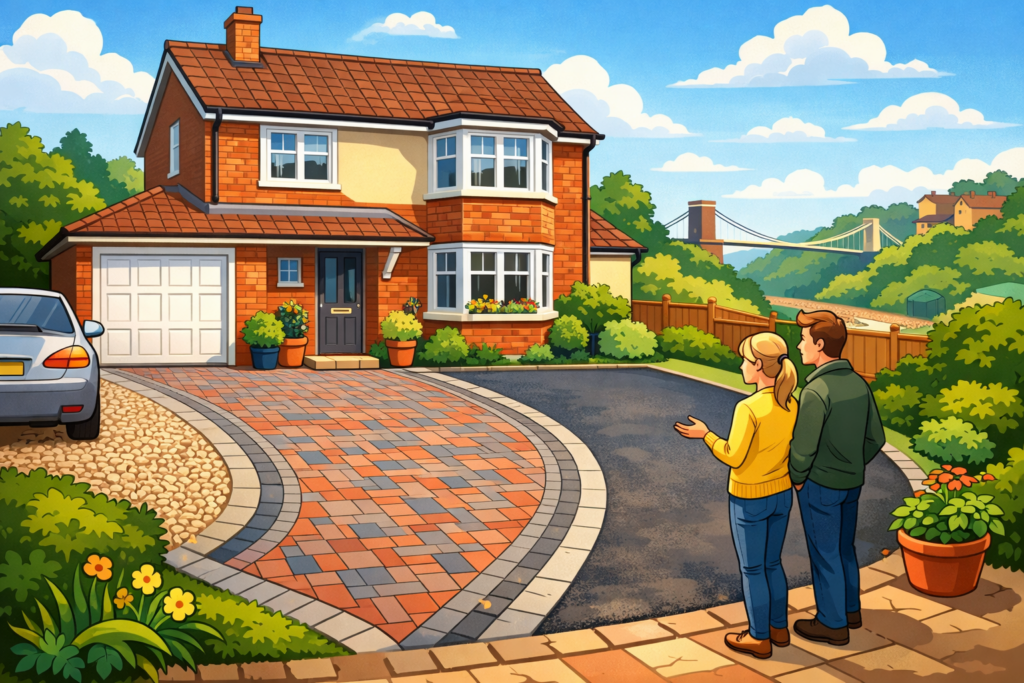
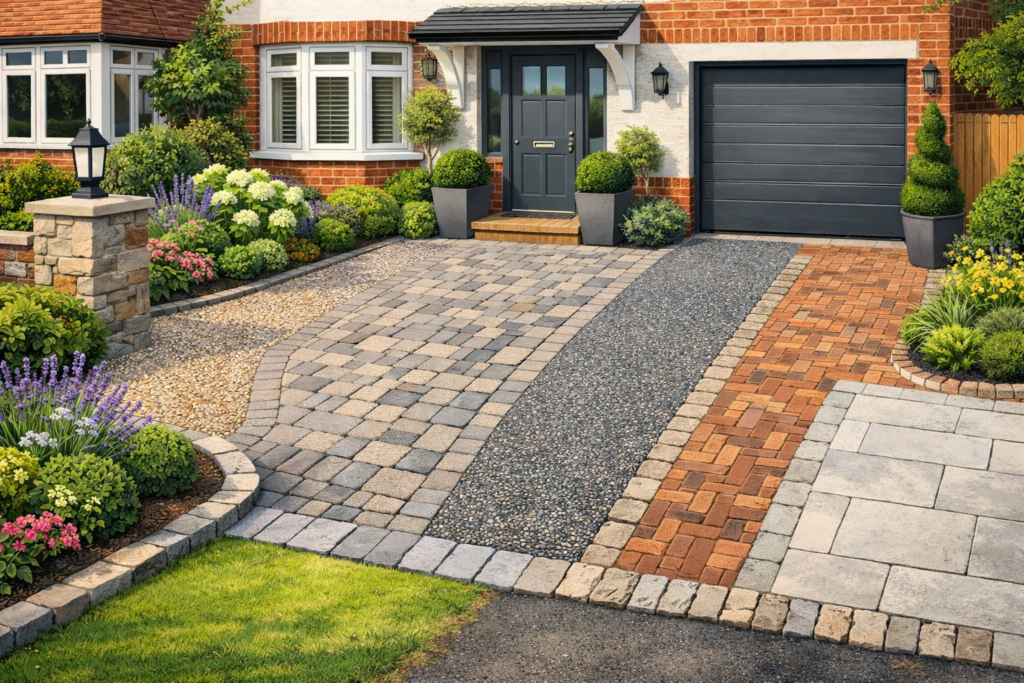
Different properties call for different solutions. A suburban semi may benefit from a neat block-paved layout, while a larger plot might suit resin, gravel, or a mixed design that softens the hard landscaping without losing practicality.
Before choosing materials, it helps to think about the way the space will be used every day. Parking needs, local drainage rules, budget, and the style of the house all play a part, and a little planning now can save a lot of frustration later.
If you are also weighing up the wider effect on your frontage, it is worth reading about driveway meaning ideas for a smarter frontage to see how layout and materials influence the whole garden.
What makes a driveway type work well
The best driveway types do more than support a car. They suit the property, cope with the local weather, and feel appropriate from the street as well as from the front door.
A practical surface should offer enough grip, remain stable under regular use, and avoid creating unnecessary upkeep. If a driveway looks attractive but constantly shifts, stains, or floods, it will quickly become a poor investment.
It also needs to sit comfortably within the overall design of the front garden. A driveway can either dominate the space or blend into it, and the difference often comes down to colour, edging, and how much planting is kept around the sides.
Key things to weigh up include:
- How many vehicles need to park there regularly
- Whether the surface must handle heavy use or occasional visitors
- Drainage and surface water management
- How much ongoing maintenance you are willing to do
- Whether the style matches the house and surrounding street
Driveway types ideas for different homes
There is no single best answer for every front garden. The most suitable material depends on space, budget, and the look you want to achieve, which is why it helps to compare the main options properly.
Block paving for a tidy, classic finish
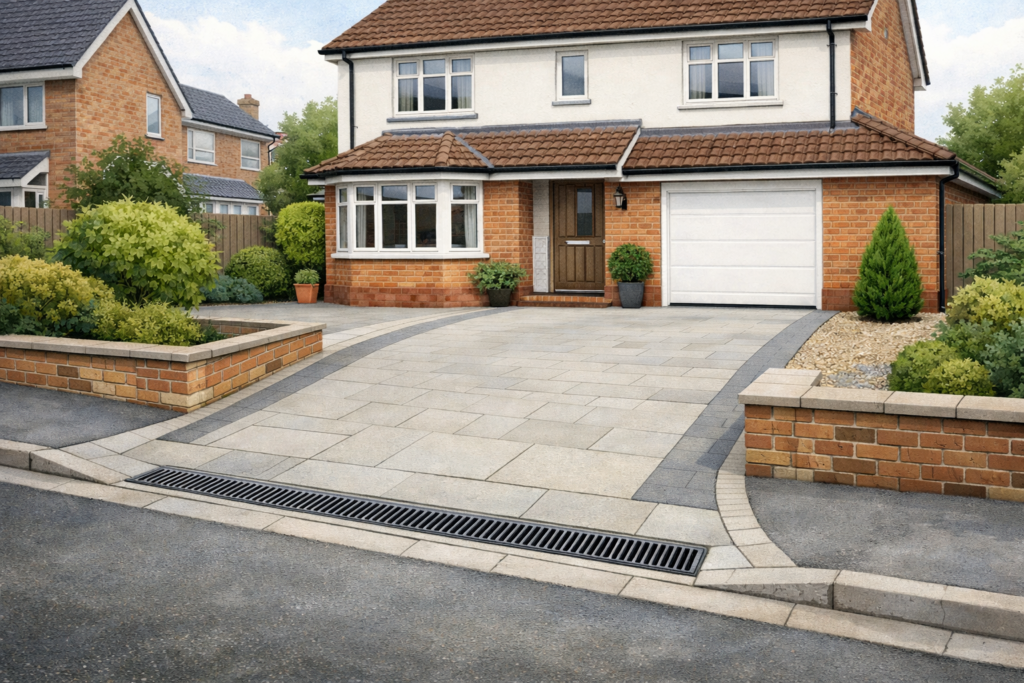
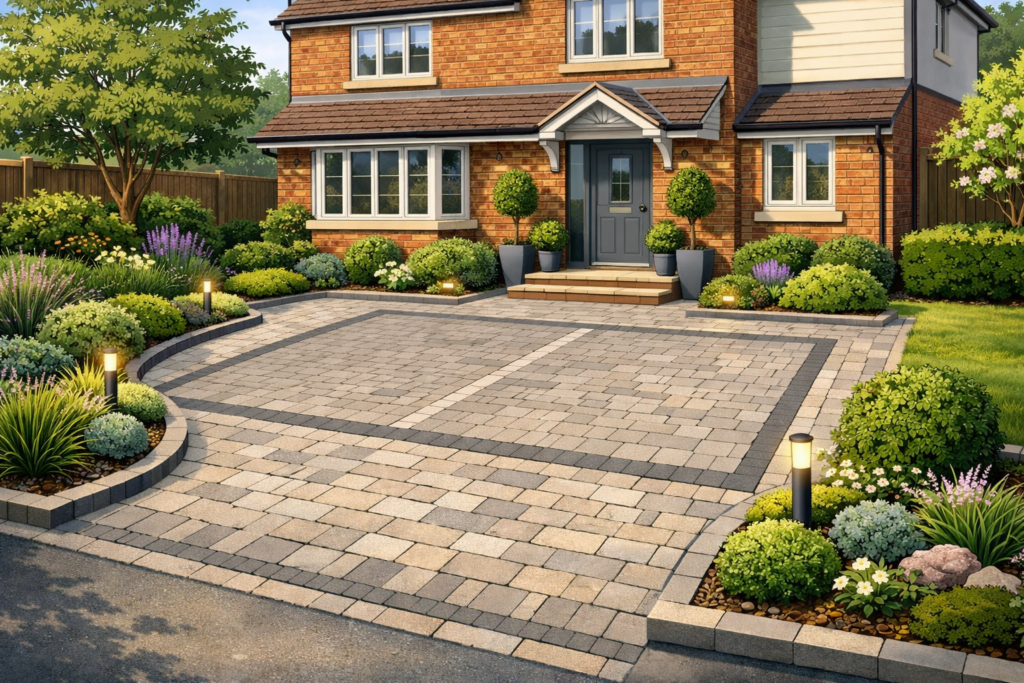
Block paving remains one of the most popular choices because it offers structure, colour variety, and a smart appearance. It can be laid in different patterns, which allows the driveway to feel bespoke rather than purely functional.
This option works especially well for homes that need a crisp, organised frontage. It can be edged neatly, shaped around planting beds, and designed to echo brickwork or window frames.
The trade-off is maintenance. Over time, weeds can appear in joints, and the surface may need occasional cleaning and re-sanding to keep it looking sharp.
Gravel for a softer, budget-conscious look
Gravel is one of the most flexible driveway types and can suit both traditional and rural properties. It offers a relaxed look that sits comfortably beside planting, making it a good match for front gardens where you want a less formal feel.
It can also be one of the more cost-conscious options, especially for larger areas. The texture helps discourage casual foot traffic, and many homeowners appreciate the sound it makes when approached, which can add a mild security benefit.
There are limitations, though. Gravel needs proper edging, can move under tyres, and may be less convenient for wheelchair users, pushchairs, or heavy deliveries.
If you are considering this surface in more detail, take a look at is a gravel driveway right for your home before making a final decision.
Resin-bound surfaces for a modern, low-maintenance finish
Resin-bound driveways have become popular because they provide a smooth surface and a clean, contemporary appearance. They are often chosen where homeowners want a smart finish without the jointing associated with paving blocks.
They are also available in a wide range of aggregate blends, so the colour can be tailored to the house and front garden. When installed properly, the surface can feel refined without looking harsh.
The main advantage is ease of upkeep. A well-installed resin surface is generally simple to clean, though it still depends on a stable sub-base and good installation standards.
Tarmac for a straightforward and durable option
Tarmac is often selected for practicality. It is resilient, relatively quick to install, and can suit homes where the priority is a clean, dependable parking area rather than a decorative statement.
It can look especially effective when softened with brick edging, planting borders, or a contrasting apron near the entrance. That small amount of detailing often lifts the overall appearance considerably.
The downside is that tarmac can feel plain if it is left completely unadorned. It is usually best treated as part of a wider front garden design rather than a stand-alone feature.
Permeable paving for better drainage
Permeable options are increasingly important because surface water management is now a major consideration for many households. These materials allow rainwater to pass through or between the surface, helping reduce run-off and pooling.
This can be particularly useful on larger driveways or where drainage is limited. It may also support planning compliance in some situations, depending on the size and layout of the project.
Permeable paving does need proper design and installation. If the sub-base is not suitable, the surface will not perform as intended, no matter how good it looks on top.
Choosing a driveway that suits the front garden
A driveway should not overpower the garden. The best designs balance hard landscaping with enough softness to keep the entrance welcoming rather than purely utilitarian.
That usually means thinking carefully about colour, borders, and the shape of the available space. Straight lines can make a small frontage feel more organised, while subtle curves can help a wider area look less rigid.
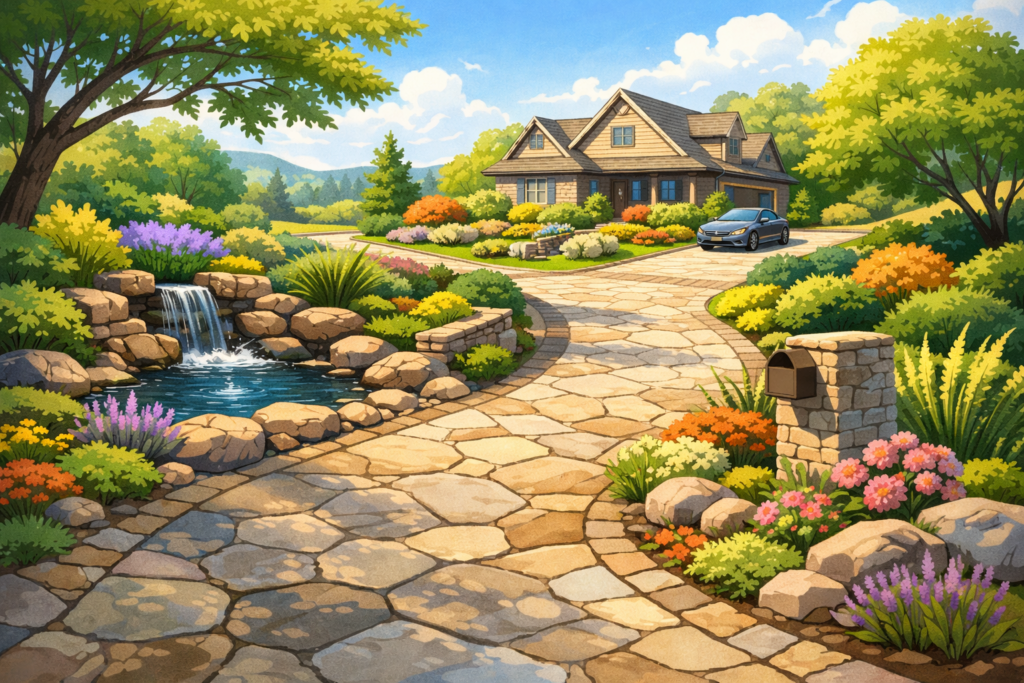
Planting is especially valuable where you want the driveway to feel integrated with the rest of the plot. Low shrubs, clipped hedging, and small specimen plants can break up the expanse of paving or gravel without getting in the way.
A more attractive frontage often comes from:
- Using edging to define parking and planting zones
- Keeping enough green space visible from the street
- Matching the surface colour to the house brick or render
- Avoiding overly busy patterns that date quickly
If you want to see how the wider layout affects design choices, the article on driveway ideas for a smarter frontage is a useful companion read.
Common mistakes to avoid
One of the biggest mistakes is choosing a surface purely because it looks good in a brochure. The front garden may seem simple, but it has to cope with turning tyres, rainwater, winter grime, and regular foot traffic.
Another common issue is underestimating drainage. Standing water can make a driveway unpleasant to use and may lead to staining, movement, or long-term damage if the base is not designed properly.
People also sometimes forget how the driveway will connect with the rest of the property. A surface that clashes with paths, steps, or the boundary wall can make the entrance feel disjointed, even if the material itself is high quality.
Other problems worth avoiding:
- Choosing a surface with too much ongoing maintenance for your lifestyle
- Leaving no room for borders or planting
- Ignoring access needs such as bins, mobility aids, or cycles
- Overfilling the front garden until it feels cramped
How to think about cost and value
The cheapest driveway type is not always the best value over time. A lower upfront cost can be outweighed by repairs, cleaning, or earlier replacement if the material is not suited to the site.
It is better to judge value by looking at the whole picture. That includes installation quality, expected lifespan, maintenance needs, and the effect on kerb appeal, which can matter if you are planning to sell in future.
Gravel may suit a tight budget, while resin or block paving may offer a more polished finish that adds more visual value. Tarmac often sits somewhere in the middle, especially when durability is the main concern.
If you are uncertain about specialist contractors, reading what a driveways company can offer can help you decide whether professional support makes sense for your project.
Practical design details that make a difference
Small details often separate an average driveway from a better-looking one. Edging, lighting, and plant placement all affect how finished the space feels once the work is complete.
Edging is especially important because it frames the surface and keeps materials where they should be. Brick, stone, or metal borders can make even a simple driveway appear more deliberate.
Lighting is another useful addition, particularly for longer driveways or shaded front gardens. Soft, well-placed lighting improves visibility without making the entrance look overdesigned.
Useful finishing touches include:
- Low-maintenance planting beds at the edges
- Discreet lighting near paths or access points
- Defined parking bays for multi-car households
- Matching materials on paths and steps
Planning for maintenance and long-term use
Every driveway type needs some level of care, but the amount varies widely. Understanding this before installation helps you pick a surface that fits your routine rather than one you will resent maintaining.
Gravel needs topping up and levelling from time to time. Block paving may need weed control and cleaning, while resin generally asks for less routine attention but still benefits from sensible maintenance and good drainage.
Think about seasonal use as well. Winter conditions, leaf fall, moss growth, and repeated turning in the same spot can all influence how a driveway ages and what it needs to stay presentable.
The easiest driveway to live with is often the one that matches your habits. If you prefer low fuss, it is usually wiser to choose a cleaner, more stable finish than a decorative surface that needs constant correction.
What We Get Asked…
Which driveway type is best for a front garden?
The best type depends on space, drainage, budget, and how formal you want the frontage to feel. Block paving, resin, gravel, tarmac, and permeable paving all work well in different settings.
Is gravel suitable for everyday parking?
Yes, but it suits some households better than others. It works well where you want a softer look and lower installation cost, though it can move under tyres and needs edging to stay tidy.
Do I need permeable paving?
Not always, but it is worth considering if surface water is a concern or if local rules affect drainage. It can be especially useful on larger driveways or sites with limited soakaway options.
How do I make a driveway look less harsh?
Use planting, edging, and colour choices that complement the house. Even a hard surface can feel more welcoming when it is broken up with greenery and carefully planned borders.
Can the right driveway add value?
It can improve kerb appeal and make the property feel better cared for. That does not guarantee a direct return, but it often makes the home more attractive to buyers.
Our Final Thoughts
Driveway types ideas are really about finding the right balance between appearance, use, and long-term practicality. A smarter front garden is not necessarily the one with the most expensive surface, but the one that suits the property and performs well over time.
Start by looking at the space honestly, then narrow the options according to drainage, maintenance, and the character of the house. From there, small design details such as edging, planting, and lighting can turn a simple parking area into a far more polished entrance.
If you are planning a new driveway or upgrading an existing one, compare the options carefully and think about how the space will feel every day, not just on installation day. The right choice should make coming home easier, improve the look of the front garden, and stand up to real life without constant effort.