
Driveway lighting does more than make a front entrance look polished. It helps people park safely, reduces trip hazards, and can make a home feel more secure and welcoming once the light fades.
The challenge is that not every light suits every driveway. A system that works beautifully on a wide block-paved entrance may be completely wrong for a narrow gravel drive, while a bright security floodlight can feel harsh on a neat period property.
Choosing well means thinking about purpose before style, then balancing both against the practical realities of installation, maintenance and running costs. The right setup should guide movement, avoid glare, complement the house and stand up to British weather.
Why driveway lighting matters
A well-lit driveway is one of the simplest ways to improve everyday life at home. It helps visitors see where to walk, makes reversing and parking easier, and gives you confidence when arriving home late or in poor weather.
There is also a security benefit. A dark entrance can hide movement, while a lit driveway removes concealment and makes it easier to spot people, vehicles or obstacles near the property boundary.
From a design perspective, lighting can also frame the entrance, highlight planting or wall features, and make the front of the home feel more complete. That is why driveway lighting often features in wider front garden improvements, alongside choices discussed in driveway ideas for a smarter front garden.
Security, safety and kerb appeal
Good driveway lighting usually performs three jobs at once. It improves visibility, supports security and makes the property look cared for after dark.
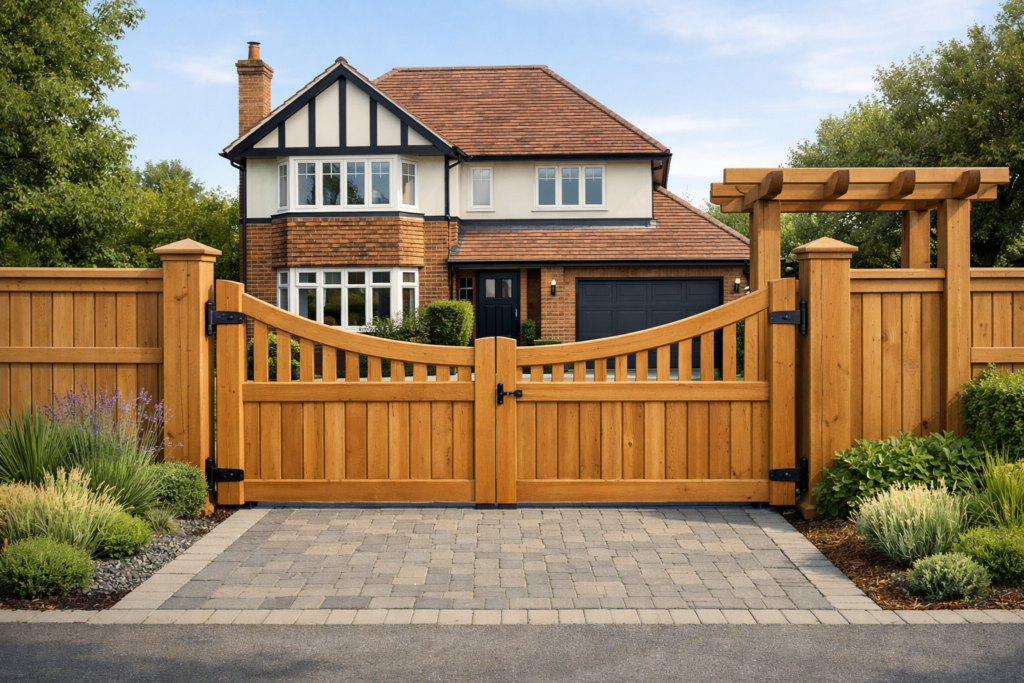
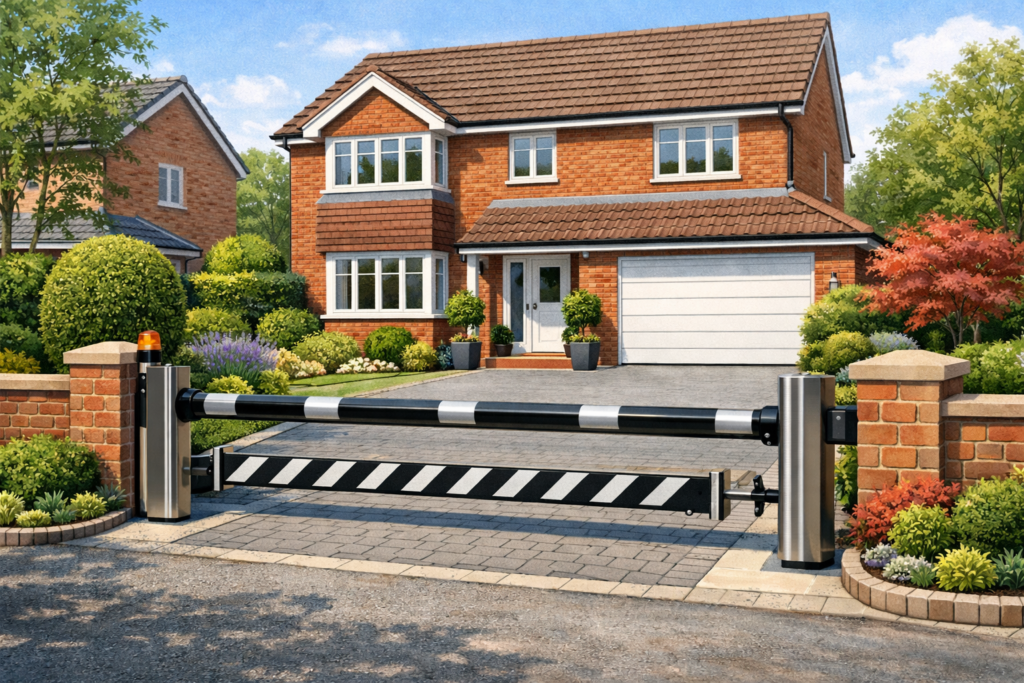
These benefits are strongest when the lighting is planned as part of the whole approach to the front of the home. If you are also considering entrance barriers, it can help to think about the lighting alongside driveway gates for added security, because the two features work best when they support each other.
For safety, the main goal is to light the route without creating bright patches and deep shadows. For kerb appeal, the aim is to give the entrance shape and definition rather than turning it into something overly theatrical.
Security lighting is most effective when it removes dark hiding places near doors, corners and boundary edges. Guide lighting is better for showing the route clearly, especially on longer or curved driveways. Accent lighting can then be used sparingly to emphasise planting, pillars or textures.
Types of driveway lights to consider
The best type of light depends on the driveway layout, the amount of light already present and how much maintenance you are willing to accept. Each style has strengths, but each also has limits.
Pillar and post lights create a classic entrance feel and work well at boundaries, gateposts and turning points. They are often chosen for decorative balance, though they need careful positioning so they do not shine directly into drivers’ eyes.
Recessed ground lights sit flush with the surface and provide low-level guidance. They are useful for marking edges or highlighting a route, but they need proper drainage and a robust fitting if they are to survive repeated vehicle use.
Wall lights suit driveways with boundary walls, garages or house fronts nearby. They can provide practical illumination around doors and parking areas, and they are usually easier to maintain than lights built into the surface.
Floodlights and security lights offer wide coverage and are useful where visibility is the main concern. They should be used carefully, because too much brightness can create glare and reduce the sense of comfort rather than improve it.
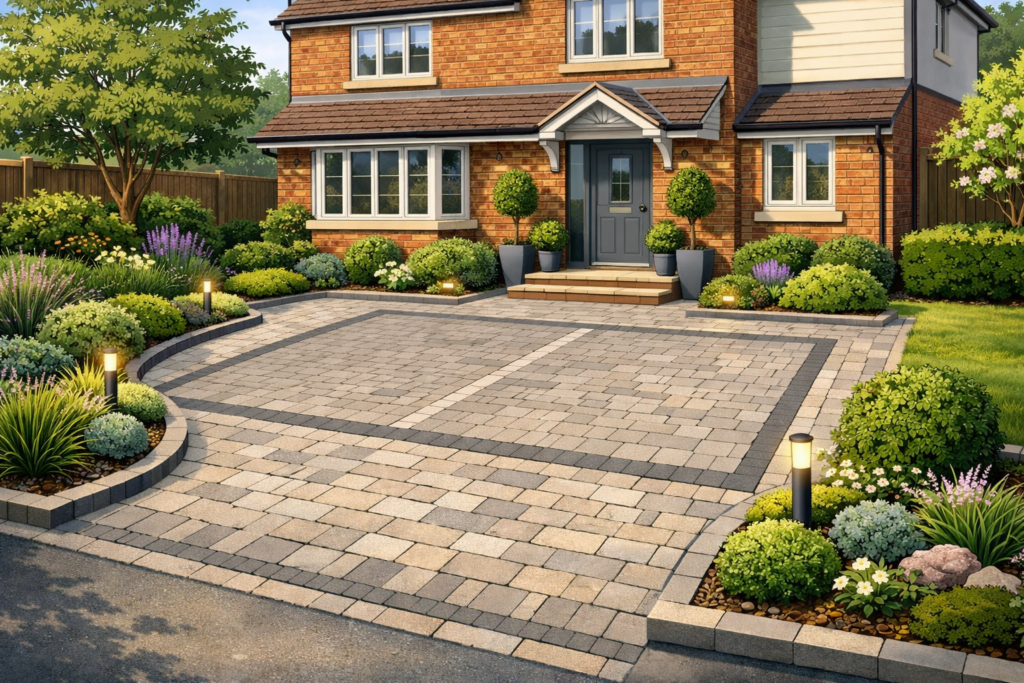
Low-level bollard lights are a good compromise for many homes. They provide clear route marking without overpowering the space, and they tend to suit modern entrances as well as more traditional homes.
Choosing the right lighting for your driveway layout
The layout of the driveway should shape the lighting plan, not the other way round. A narrow straight drive has very different needs from a wide turning circle or a long rural approach.
On a straight driveway, lights can usually be spaced evenly along the edges or placed near key stopping points. That gives a clear visual line and helps drivers judge distance without needing excessive brightness.
Curved driveways benefit from lights that follow the bend gently. A single bright source at the start is rarely enough, because the rest of the curve can remain hidden until the driver is already close to it.
For long drives, think in zones rather than trying to light everything equally. Use brighter lighting near the house, gate or parking area, then softer guidance further down the route.
If the driveway surface is loose, such as gravel, lighting placement matters even more. The route needs to stay visible without creating installation issues, and the surface itself can affect where light pools and shadows fall. For that reason, surface choice and lighting planning often go hand in hand, especially when comparing options such as a gravel driveway.
Practical buying advice before you choose
Shopping for driveway lighting can become overwhelming if you start with fittings instead of function. A better approach is to decide what the light needs to do, then narrow the options by source, style and installation method.
Brightness is one of the first things to consider. Too little light leaves hazards in the dark, but too much can look harsh and waste energy. Many homeowners are better served by several moderate sources than one very strong lamp.
Beam spread matters as well. A narrow beam is useful for highlighting a specific feature, while a wider beam helps cover a parking area or turning space. For most driveways, the ideal is controlled coverage rather than raw output.
Colour temperature affects the feel of the whole entrance. Warmer light tends to be softer and more welcoming, while cooler light can feel sharper and more clinical. The best choice depends on the look of the property and the surrounding materials.
Build quality should not be overlooked. Outdoor fittings must cope with rain, frost, dirt and impacts, so look for weather resistance that suits full external use and materials that will not deteriorate quickly.
Compatibility with the surface is also crucial. A heavy-duty ground light that works well in concrete may not be suitable for every paved or gravel surface, and the installation method should suit the driveway structure.
Power options and control features
Driveway lights can be mains powered, solar powered or battery based, and each option suits a different situation. The best choice depends on access to electricity, how much use the lights will get and whether you want a fully wired system or a more flexible setup.
Mains powered lights usually provide the most reliable performance and are a strong option where consistent brightness is needed. They are often the right answer for homes that want dependable lighting every evening, although installation is usually more involved.
Solar lights are appealing because they are simpler to install and have lower running costs. However, their performance depends on daylight exposure, so shaded driveways or winter conditions can reduce reliability.
Smart controls can make lighting more practical. Timers, dusk-to-dawn sensors and motion detectors help reduce wasted energy and ensure the lights only operate when they are useful.
Motion sensors are especially helpful on driveways because they support both safety and security. They can alert occupants to movement while still avoiding the constant glare that some people dislike in outdoor lighting.
Common mistakes to avoid
One of the most common mistakes is overlighting the space. More brightness does not automatically mean better security, and excessive light can create discomfort for residents, neighbours and drivers.
Another frequent issue is poor placement. Lights that shine into rear-view mirrors, bedroom windows or the driver’s direct line of sight can cause more problems than they solve.
People also underestimate maintenance. Any light exposed to rain, mud and road dirt will need occasional cleaning, and some fittings require more care than others to keep them looking and working well.
It is also easy to ignore the surrounding hard landscaping. A driveway surface and lighting scheme should work together, especially where the entrance needs to remain tidy and practical over time. Surface choice can affect water movement, reflectivity and the overall feel of the entrance, which is why lighting decisions often sit alongside decisions about whether a resin driveway suits your home.
Installation, planning and maintenance
Thoughtful planning makes the finished result look better and last longer. Before buying anything, look at where vehicles turn, where people walk, and where shadows currently fall in the evening.
It helps to think in terms of practical movement. Drivers need clear sight of edges and obstacles, pedestrians need a safe path to the door, and anyone standing near the entrance should not be dazzled by an overbright fitting.
If wiring is required, the installation should be properly designed for external use and protected from damage. This is particularly important on driveways that are resurfaced or updated later, because underground services and fixed fittings must be planned with access in mind.
Maintenance is usually straightforward, but it should not be ignored. Clean fittings regularly, check lenses for dirt and moisture, and replace failing lamps or damaged components promptly so the system stays effective.
If your driveway itself is due for improvement, it can be sensible to review lighting at the same time as the surface choice. A new entrance can benefit from a joined-up approach, whether the focus is practicality, appearance or long-term durability. Where paving is part of the plan, it is worth comparing how lighting will sit with driveway paving before work begins.
How to match driveway lights to your home style
The most successful lighting feels like a natural extension of the property. A contemporary home may suit clean lines, discreet fittings and low-level illumination, while a traditional house can often carry more decorative lantern-style lights.
Material choice matters here as much as the shape of the fitting. Black metal, brushed finishes and simple forms usually blend well with modern designs, while warmer-toned fixtures and more detailed profiles may suit older homes better.
Try to avoid mixing too many styles at once. A few consistent fittings usually look more refined than several different lamp types competing for attention.
Think about the daytime view as well. Good driveway lights should look tidy when switched off, not just impressive after dark.
What We Get Asked…
Are driveway lights worth the cost?
For most homes, yes, because they improve usability as well as appearance. The value comes from safer movement, better visibility and a more polished entrance.
Do driveway lights always need wiring?
No, solar and battery options exist, but mains lighting is usually more reliable. The right choice depends on how much light you need and how often the driveway is used.
Can driveway lights improve security on their own?
They can help, but they work best as part of a wider approach that may include gates, good visibility and secure boundaries. Lighting reduces concealment, but it is not a complete solution by itself.
How bright should driveway lights be?
Bright enough to show the route clearly, but not so bright that they cause glare. In most cases, controlled lighting is more effective than a single powerful fitting.
Our Final Thoughts
Driveway lighting is one of those features that quickly proves its worth when it is planned properly. It can make a home safer, easier to use and more attractive, but only if the lights suit the driveway size, surface, layout and style.
The best results usually come from choosing a modest, well-placed scheme rather than chasing maximum brightness. Focus on the parts of the drive that matter most, whether that is the gate, turning area, parking space or path to the front door.
If you are improving your entrance, take time to look at the driveway surface, boundaries and lighting together. A joined-up plan is far more likely to feel balanced, practical and inviting day after day.
When you are ready to move forward, compare lighting options against the way you actually use the space, then choose fittings that offer the right mix of safety, style and long-term reliability.