
Driveway lighting often gets treated as a finishing touch, yet it can shape how a home feels and functions every single day. A well-planned lighting scheme improves safety on foot, makes parking easier after dark and adds a polished look that lifts the whole front of the property.
It also has a security role that should not be underestimated. Dark entrances create hiding places, while good illumination can make a driveway feel monitored, easier to navigate and less appealing to opportunistic intruders.
The challenge is getting the balance right. Too much light can look harsh, annoy neighbours and waste energy, while too little will fail to do the job properly.
Why driveway lights matter
Driveway lights are about more than style. They support day-to-day convenience, especially during winter evenings, rainy weather and early mornings when visibility is poor.
They also reduce the risk of trips, vehicle scrapes and missed kerbs. If a driveway has changes in level, edges, steps or turning points, lighting becomes even more valuable.
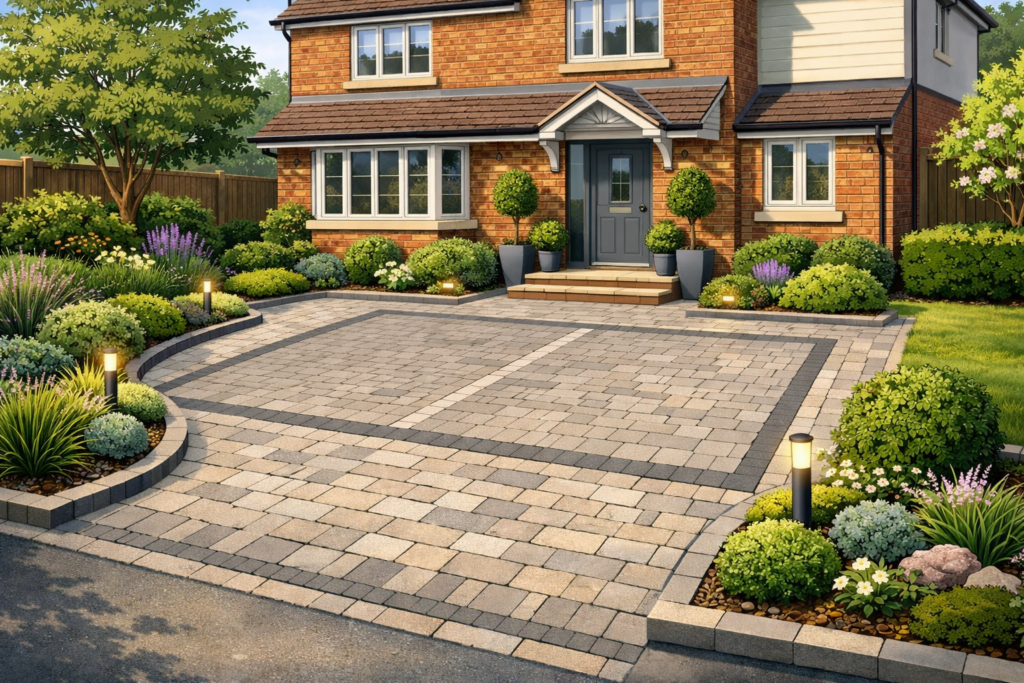
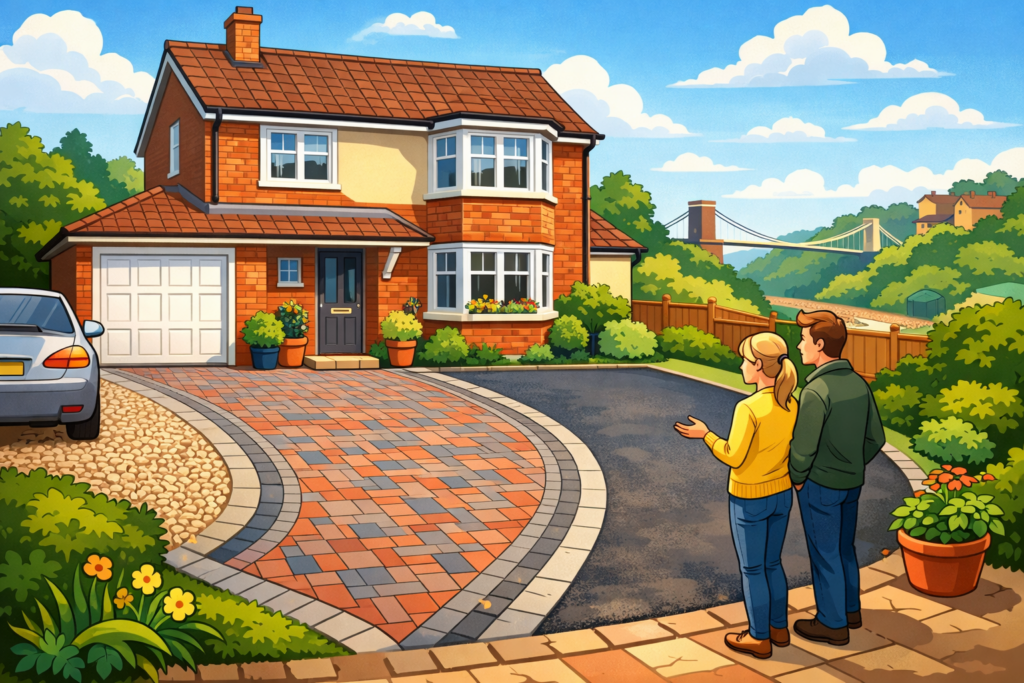
For many homes, lighting is part of the wider front-garden design rather than a stand-alone feature. If you are also thinking about surfacing, layout or visual flow, it can help to consider advice on driveway ideas for a smarter front garden alongside your lighting plan.
Security benefits without overdoing it
Good driveway lighting can make a property feel more secure because it removes dark pockets and improves visibility from inside the home. That does not mean every part of the driveway needs to be brightly flooded like a car park.
Subtle, well-positioned lighting is often more effective than a single powerful lamp. Intruders prefer concealment, and a layered lighting scheme makes it harder for anyone to approach unnoticed.
Useful security-minded features include:
- Motion sensors that switch lights on when movement is detected
- Timers or smart controls that suit your routine
- Downward-facing fittings that reduce glare and light spill
- Lights near entrances, gates and turning areas
Motion-sensor lights work particularly well where the driveway is long or partly hidden. They can be set to come on only when needed, which helps save energy and avoids leaving lights on all night unnecessarily.
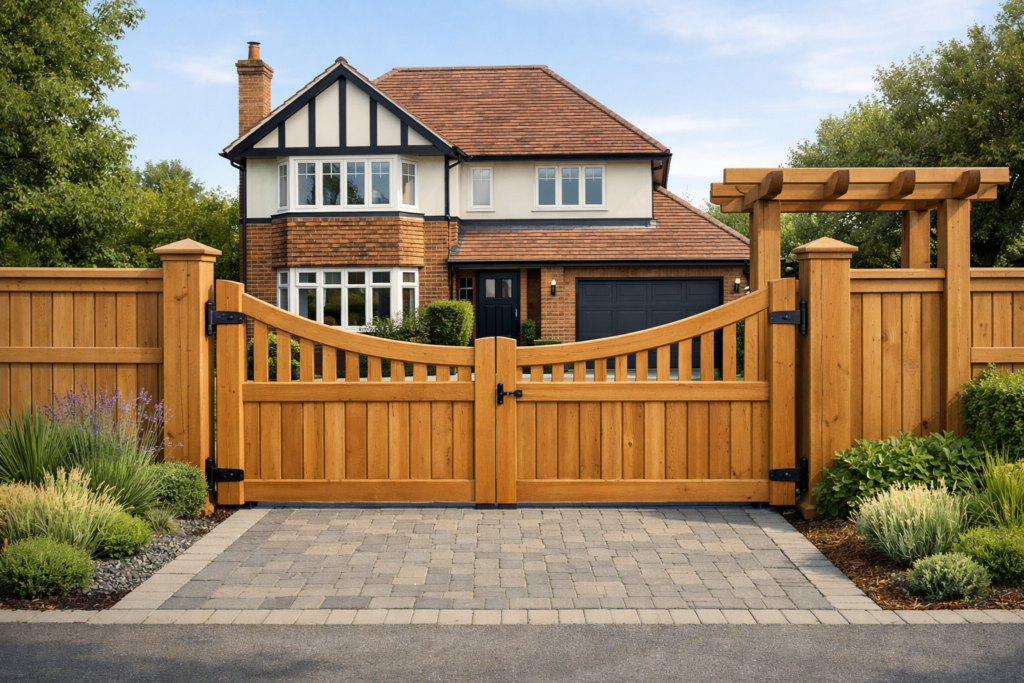
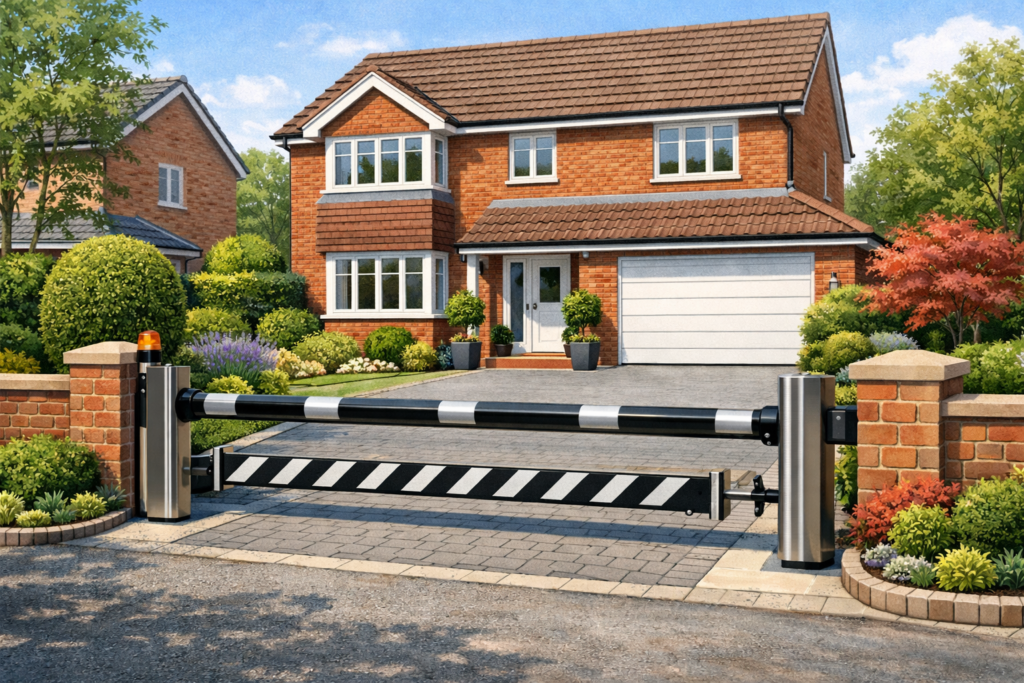
That said, a sensor light alone should not be relied on as the only security measure. It works best when combined with secure gates, sensible planting and clear sightlines from windows, especially if you are already considering driveway gates for added security.
Style choices that suit the property
Driveway lighting should feel like part of the architecture, not an afterthought. The best choices reflect the home’s character, the driveway surface and the overall style of the frontage.
On a modern property, slim bollards, recessed ground lights or discreet wall fittings often look most natural. Traditional homes may suit lantern-style fixtures, softer warm light and a more classic arrangement.
Popular driveway lighting types include:
- Wall lights for porches, gates and garage fronts
- Bollard lights to define edges and guide movement
- Recessed lights for a clean, minimal appearance
- Spike lights for planting beds and boundary features
- Sensor floodlights for functional security lighting
It is worth thinking about how the lights will look both on and off. Fixtures that are attractive in daylight and unobtrusive at night usually age better than trend-led designs that dominate the frontage.
Colour temperature matters as well. Warm white light usually feels more welcoming around homes, while very cool white can appear stark unless there is a strong contemporary design reason to use it.
Planning the right lighting layout
Driveway lighting works best when it follows the route people and vehicles actually use. Start with the main approach, then add illumination where the eye and the wheels need guidance.
Think about the areas where visibility is most important. These often include the entrance from the road, bends, parking spaces, gates, steps, and any narrow section where a driver needs confidence.
Common layout principles include:
- Marking the edges without overwhelming the entire surface
- Creating pools of light rather than one continuous glare
- Making transitions clear between driveway, path and entrance
- Using lighting to guide movement, not distract drivers
If the driveway is long, spaced-out lights can lead the way without making the whole entrance feel overlit. On a shorter drive, a pair of wall lights or a single well-placed sensor light may be enough.
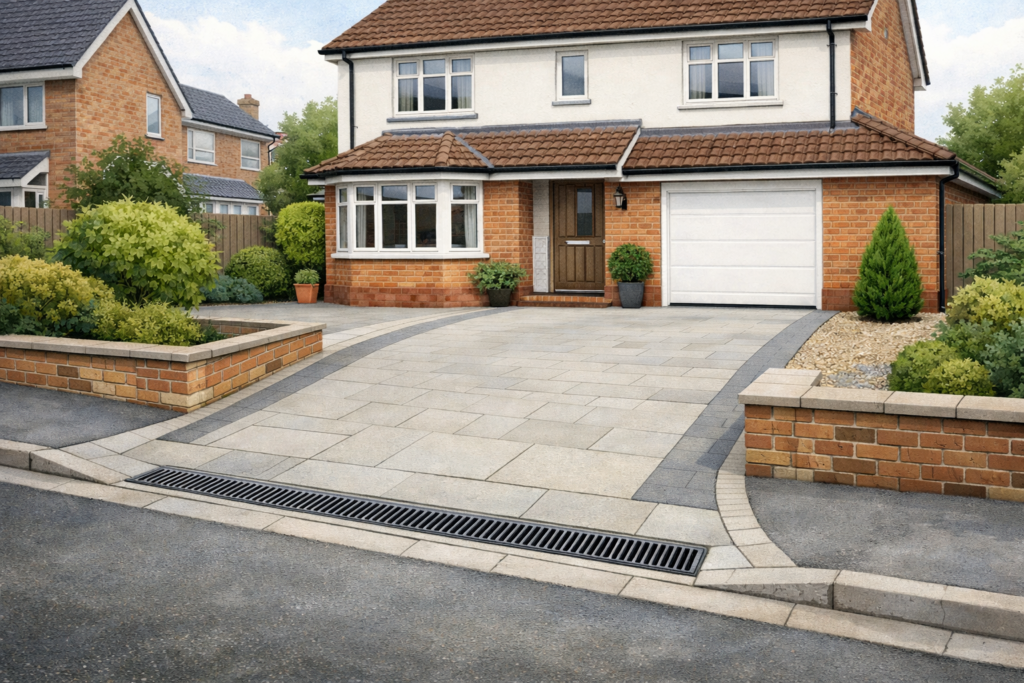
It is also sensible to consider the driveway material itself. Reflective surfaces, darker finishes and light-coloured paving all behave differently once lit, which is one reason it can help to compare options such as driveway paving for your home or a more textured surface before finalising the lighting design.
Choosing fittings for British weather
Driveway lights need to cope with rain, frost, wind and seasonal temperature changes. Exterior fittings should be suitable for outdoor use and chosen with durability in mind, not just appearance.
Look for robust materials such as stainless steel, aluminium or properly treated outdoor-grade finishes. Plastic fittings can work in some situations, but cheaper versions may fade, crack or become brittle over time.
Practical durability checks include:
- Appropriate weatherproofing for exposed locations
- Resistance to corrosion, especially near coastal areas
- Strong fixings and stable mounting points
- Easy-to-replace lamps or integrated LEDs with long lifespans
It is also important to think about maintenance access. A light that looks elegant but is awkward to clean or service can become frustrating, particularly where dust, cobwebs and road grime build up.
If the driveway surface itself needs regular care, it helps to align lighting placement with cleaning routines. For example, low-mounted fittings should not make it harder to wash the area or reach the edges when using a suitable driveway cleaner without damage.
Energy use, controls and long-term running costs
Modern driveway lights can be surprisingly economical if selected and controlled well. LED fittings are now the obvious choice for most homes because they use less electricity and typically last far longer than older lamp types.
Controls make a big difference too. A light that only comes on when motion is detected will cost less to run than one left on from dusk to dawn, although constant low-level lighting may still suit some properties.
Ways to keep running costs sensible:
- Choose LED fittings with suitable light output rather than oversizing
- Use sensors where full-time lighting is not necessary
- Set timers to match actual use patterns
- Avoid over-lighting decorative features that do not need it
Smart controls can be useful if the household has a varied routine. App-based systems, dusk-to-dawn sensors and adjustable timers allow you to adapt the lighting to short winter days, holidays or late arrivals.
Be careful, though, not to let technology complicate a simple job. The best driveway lighting is often the system people actually use consistently, not the most advanced one on paper.
Practical buying advice before you commit
Before buying driveway lights, work out what problem each fitting is meant to solve. A light for security is not the same as a light for guidance, and a decorative feature should not be asked to do every job at once.
It helps to assess the driveway in daylight and at night. Look at where people walk, where drivers turn, where shadows fall and where there may be glare from neighbouring properties or car windows.
Questions worth asking yourself:
- Do I need brighter light at the entrance, or more subtle guidance along the drive?
- Will the fittings be exposed to wind, rain or vehicle splash?
- Do I want a decorative effect, a security function or both?
- Will the lights suit the driveway surface and the style of the house?
If you are updating the whole frontage, it can be useful to think about the driveway surface at the same time. A neat, well-finished entrance such as a resin driveway for your home may pair differently with lighting than a rougher or more traditional finish.
Budget matters, but so does lifespan. Paying slightly more for a better fitting, better seal or more reliable control gear often makes sense when the lights are exposed every day to weather and movement.
Common mistakes to avoid
One of the biggest mistakes is using too much light. Strong glare can make it harder to see, flatten the appearance of the frontage and create discomfort when arriving by car.
Another common issue is poor placement. Lights placed too low may not provide enough coverage, while lights mounted too high can fail to illuminate the areas that matter most.
Other avoidable mistakes include:
- Choosing fittings that clash with the property style
- Ignoring neighbour impact and light spill
- Using cheap fixtures that weather badly
- Overlooking maintenance access
- Assuming decorative lights are enough for safety
It is also easy to overlook how lighting changes the appearance of the driveway surface. A finish that looks calm in daylight may become highly reflective at night, while a textured surface can absorb more light than expected.
If the surface itself is still under consideration, comparing lighting plans with choices such as a tarmac driveway or concrete can prevent awkward surprises later.
Installation and maintenance considerations
Some driveway lights are straightforward to fit, while others require proper planning and electrical work. Fixed mains-powered lighting should be installed safely and in line with applicable electrical standards, so this is not the place to cut corners.
Solar lights can be convenient for simple accents, but performance varies with daylight, season and shade. They may be useful for low-level marking, yet they often struggle as the sole source of reliable driveway lighting in British winters.
Maintenance should be simple enough that it actually gets done. Cleaning lenses, checking seals and replacing failed lamps matters because dirty fittings produce less light and can make the entrance look neglected.
Think too about future changes. If you may later add gates, alter paving or extend the parking area, it is sensible to leave room for extra circuits or additional fittings.
What We Get Asked…
Do driveway lights need to be very bright?
Not usually. The best driveway lights provide enough visibility without causing glare or waste, and the right brightness depends on the length, width and layout of the drive.
Are motion sensor lights a good idea?
Yes, especially for security and convenience. They work best when placed carefully so they detect movement at the right moment without triggering unnecessarily.
Can solar driveway lights work well in the UK?
They can, but performance is often mixed in darker months. They are best treated as supplementary lighting rather than a complete solution for safety or access.
Which colour light is best for a driveway?
Warm white is usually the most welcoming choice for homes. Cooler white can look sharper, but it is not always the most comfortable or attractive option.
How many lights does a driveway need?
There is no fixed number. A small drive may only need one or two well-placed fittings, while a longer or more complex driveway may benefit from a layered scheme.
Our Final Thoughts
Driveway lights can make a real difference to how a home works and feels after dark. They improve safety, support security and add a refined finish when they are chosen with the property’s layout and style in mind.
The most successful schemes are usually the ones that stay practical first and decorative second. Focus on the places where light is genuinely needed, choose durable fittings and avoid the temptation to over-light the frontage.
If you are planning broader improvements to the entrance as well, think about the driveway surface, gates and landscaping alongside the lighting so everything works together. A well-designed front approach is easier to use, easier to maintain and far more welcoming day after day.
If you are ready to refine your entrance, start by assessing where light is most useful, then choose fittings that suit both the house and your routine. That approach will give you a driveway that looks better, feels safer and performs more effectively throughout the year.