A front garden does a lot of work before anyone reaches the front door. It sets the tone for the property, affects parking ease, influences drainage, and often decides whether the entrance feels polished or cluttered.
That is why driveway choices deserve proper thought. The best option is not simply the one that fills the space, but the one that works with the house, supports day-to-day use, and improves the overall look of the frontage without creating future maintenance headaches.
Homeowners often start by looking at colours or finishes, but the smarter approach is to begin with function. The amount of space available, how the land slopes, the level of traffic, and local planning or drainage rules all matter just as much as appearance.
Well-planned driveway ideas for a smarter front garden can make even a modest entrance feel more generous. The right surface can also improve safety, reduce mud and puddles, and make the whole property easier to maintain.
There is no single best driveway style for every home. The real aim is to choose a surface and layout that suits the property’s age, character and practical demands, while still leaving room for planting, lighting and a clear route to the front door.
Why driveway options matter more than many people expect
A driveway is one of the first large surfaces people notice at the front of a home. If it is poorly chosen, it can dominate the garden, make the entrance feel harsh, or create awkward runoff problems after heavy rain.
Good driveway planning improves both kerb appeal and usability. It can help a small front garden feel ordered, make large spaces feel less empty, and support a better balance between parking and greenery.
There is also a practical side that should not be overlooked. The wrong finish can rattle under tyres, stain easily, crack under load, or require more upkeep than expected.
For many properties, a driveway is also tied to access. Families, delivery drivers and visitors all need a clear and sensible route, and that is where thoughtful design makes a measurable difference.
Start with the shape and behaviour of the front garden
Before choosing a surface, look carefully at the space itself. The width of the frontage, the slope of the ground, the position of the house, and the location of existing trees or drains all influence what will work well.
If the garden is narrow, a simple layout may be best, with clean lines that avoid making the entrance feel cramped. If the frontage is deep, there may be room for turning space, planting beds, or contrasting materials that break up a large paved area.
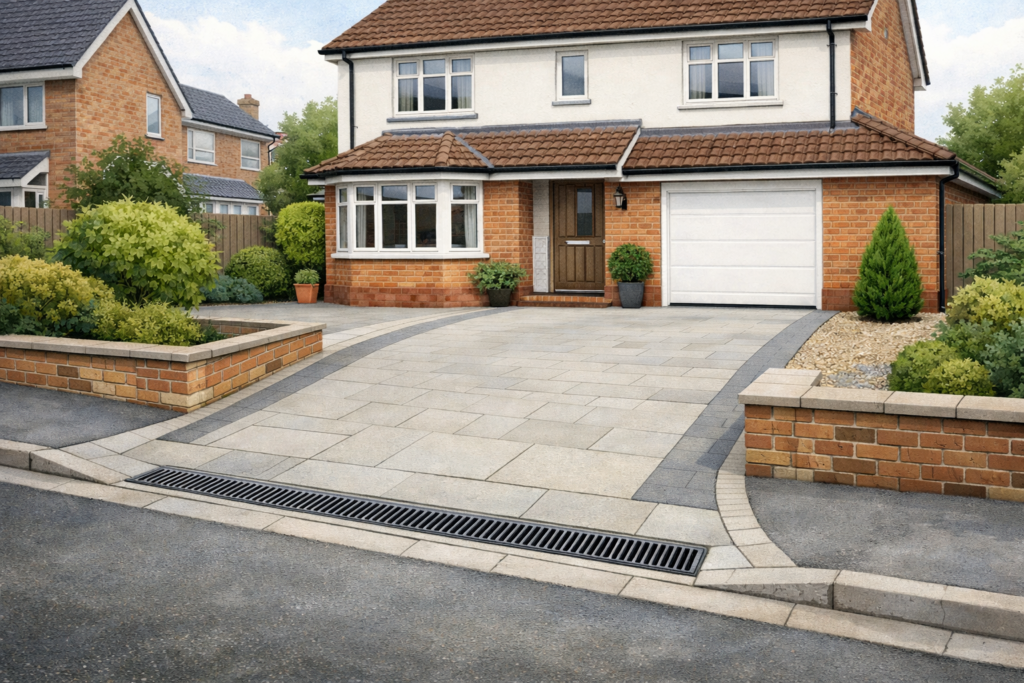
Drainage is especially important. Water should not run towards the house, collect against walls, or spread across the pavement, so any plan should include suitable falls, channels or permeable surfacing where needed.
If you are weighing up different driveway approaches, it can help to compare them alongside driveway types ideas to see how each one handles space, drainage and appearance.
The front garden should also feel proportionate. A driveway that takes over every inch of space can make the house feel set back and disconnected, while one that is too small may leave vehicles awkwardly positioned on the lawn or verge.
Popular driveway options and where they work best
Different driveway finishes suit different homes, and each has strengths and limitations. The most sensible choice depends on how much traffic the surface will face, how much maintenance you are comfortable with, and the look you want to achieve.
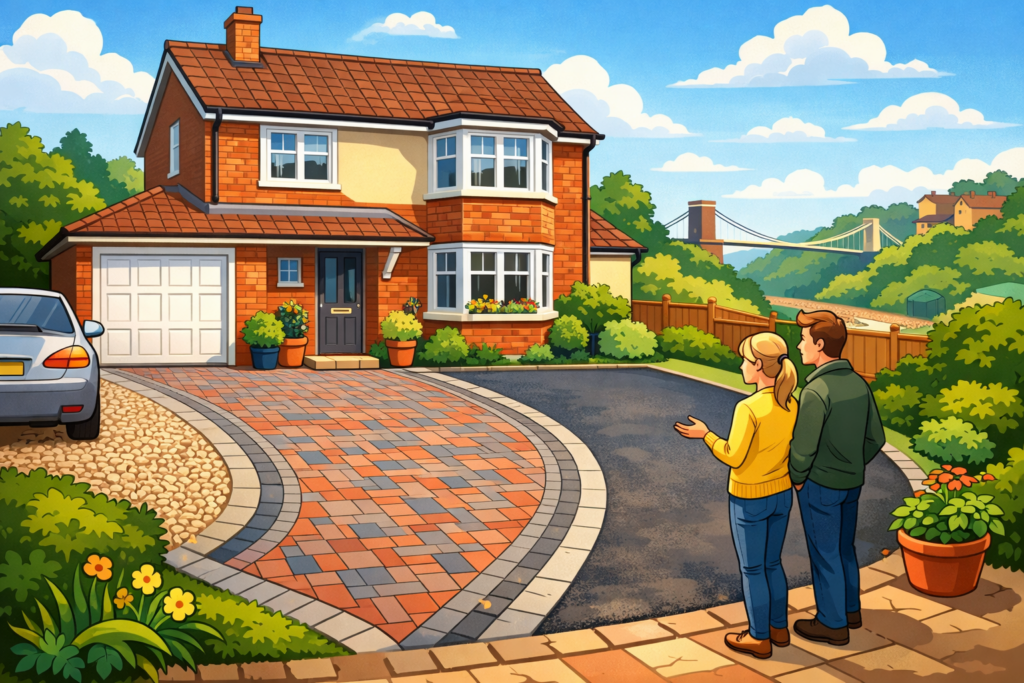
Block paving remains a popular option because it is neat, versatile and available in many colours and patterns. It suits both traditional and modern homes, although proper installation is essential to avoid sinking or weeds appearing between joints.
Gravel can be attractive and cost-conscious, especially for larger front gardens or rural properties. It gives a softer appearance than hard paving, but it needs edging and occasional raking to stay tidy, and it may not suit homes where a very smooth parking surface is needed.
Resin-bound surfaces create a clean, contemporary look and can be a strong option where drainage matters. They work well when installed over a suitable base, though the finish should be chosen carefully to ensure it complements the property rather than feeling overly stark.
Tarmac is practical, durable and often straightforward for heavy use. It can be a good fit for simpler schemes, but some homeowners prefer to soften its appearance with brick edging, planting or decorative borders.
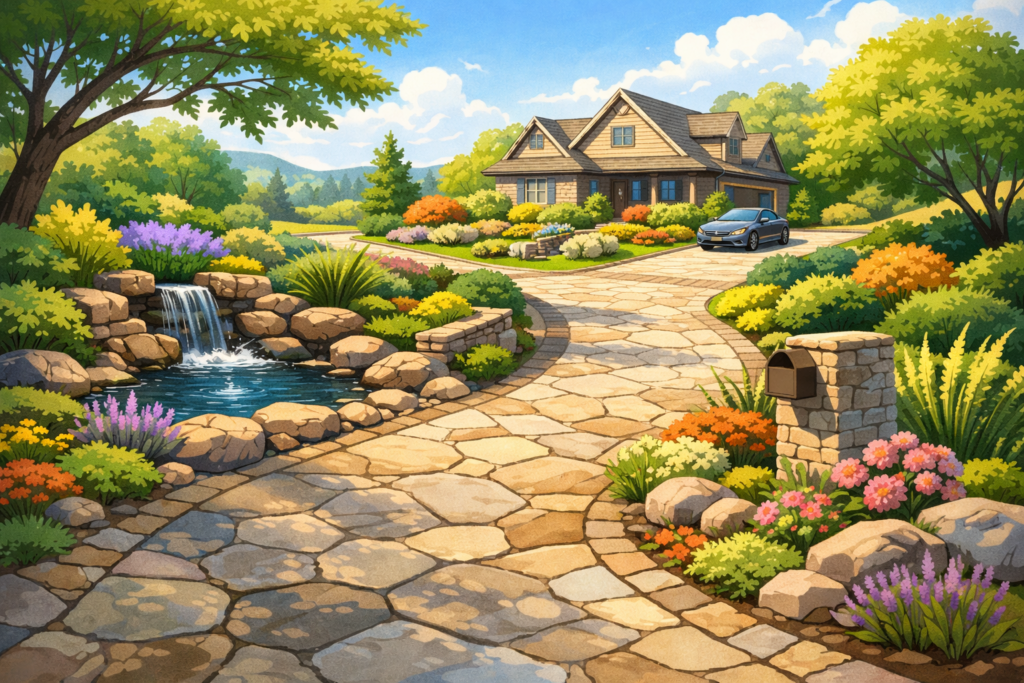
Natural stone offers a more characterful, premium finish. It can look especially good on older or period properties, although it usually comes with a higher cost and more attention to detailing.
For a deeper look at one of the most characterful choices, see whether a stone driveway right for your home before committing to a natural finish.
How to match the driveway to the style of the home
The best driveway does not compete with the house. It supports the building’s style, the planting scheme, and the overall feel of the frontage.
For period homes, softer colours, traditional paving shapes and natural materials often work better than high-gloss finishes. A busy pattern or overly bright aggregate can make the frontage feel disconnected from the architecture.
For modern homes, cleaner lines and restrained colour choices usually look more coherent. Large-format paving, simple edging and a limited material palette often create the smartest result.
It is also worth considering the roof colour, brick tone and window frames. A driveway that gently echoes these elements can make the whole front garden feel intentional, rather than assembled in separate parts.
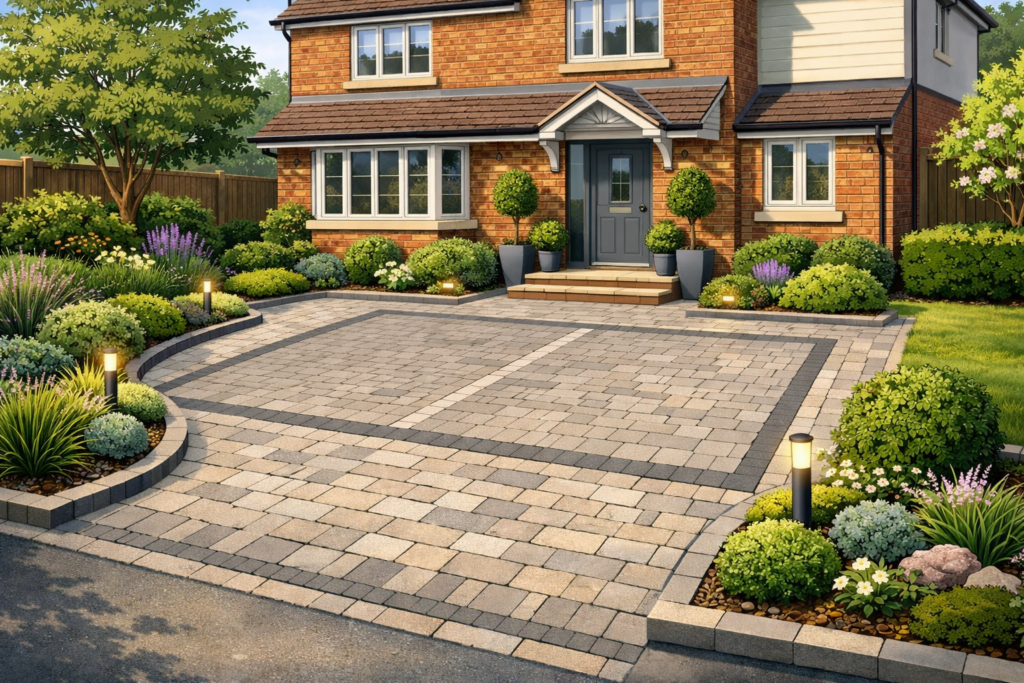
Planting plays a major role too. Beds, small trees and structured borders can soften the hard surface and help the driveway sit more comfortably within the landscape.
Practical design details that make a big difference
Small design decisions can have a surprisingly large impact on how a driveway looks and functions. Edging, borders, lighting and access points often decide whether the result feels polished or unfinished.
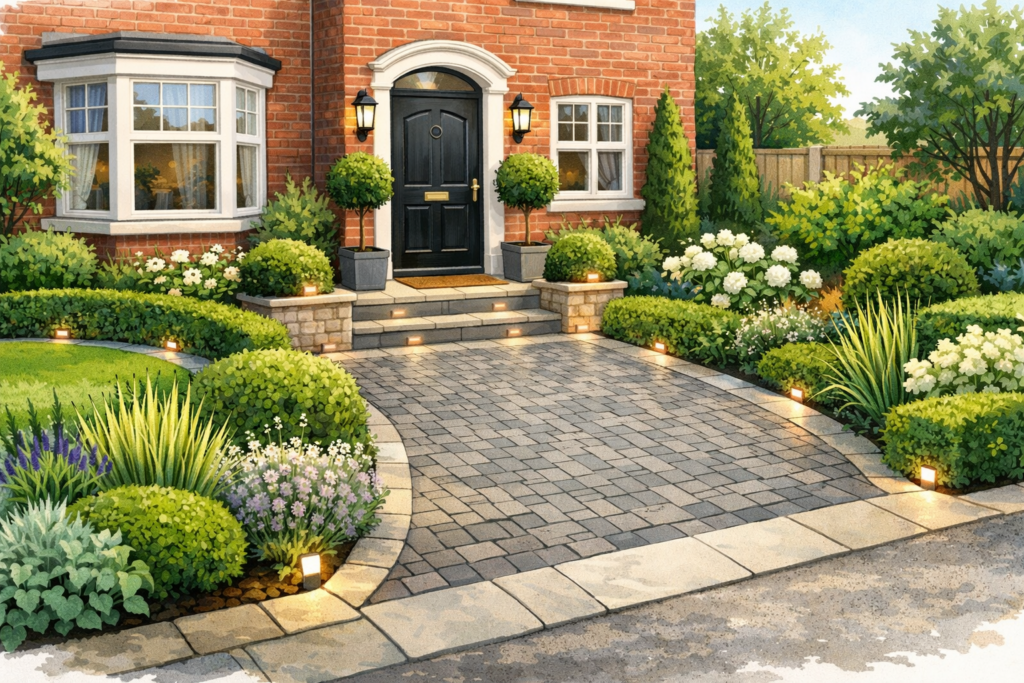
Edging keeps materials contained and gives the layout a crisp outline. Brick, stone or metal edging can also help separate the parking area from planting beds or footpaths.
Lighting improves safety and makes the frontage more welcoming after dark. Subtle lighting along the route or close to the front door is often better than bright, harsh floodlights.
Turning space can be invaluable if reversing into traffic is awkward. Even a modest change in layout may make daily use much safer and easier.
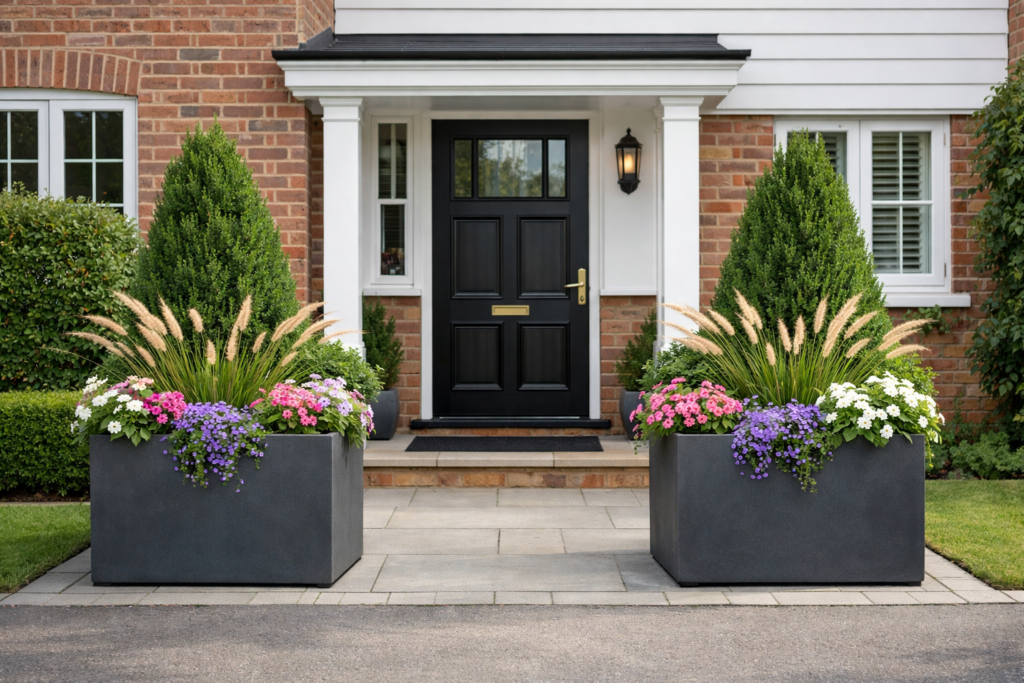
Planting strips can soften the amount of paving without compromising function. Low-maintenance shrubs, grasses or clipped hedges can make the entrance feel greener while still leaving enough usable surface.
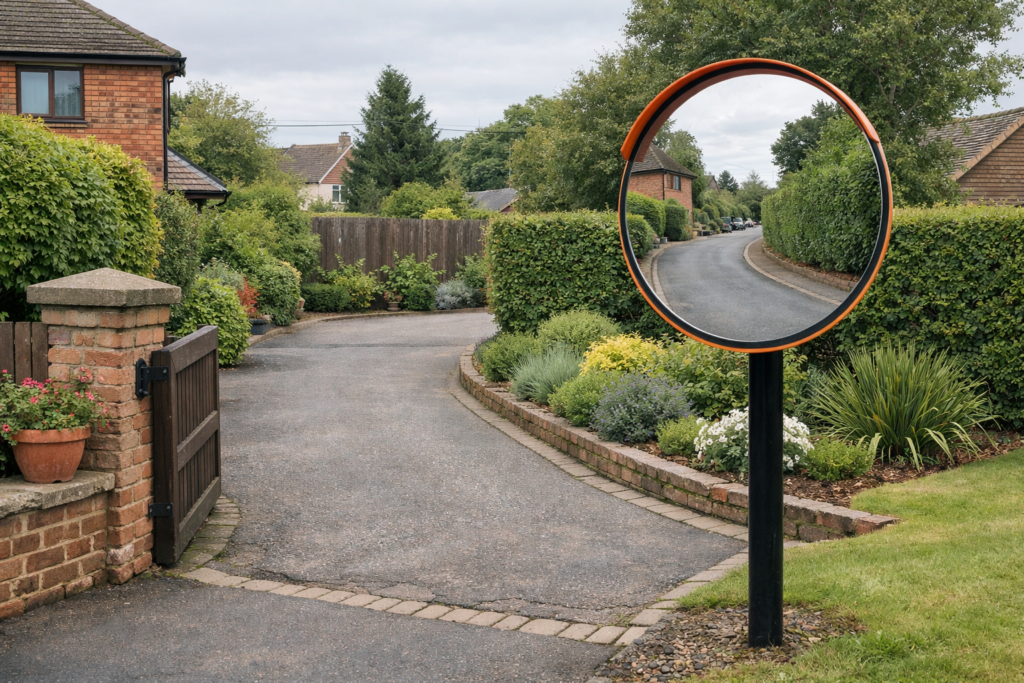
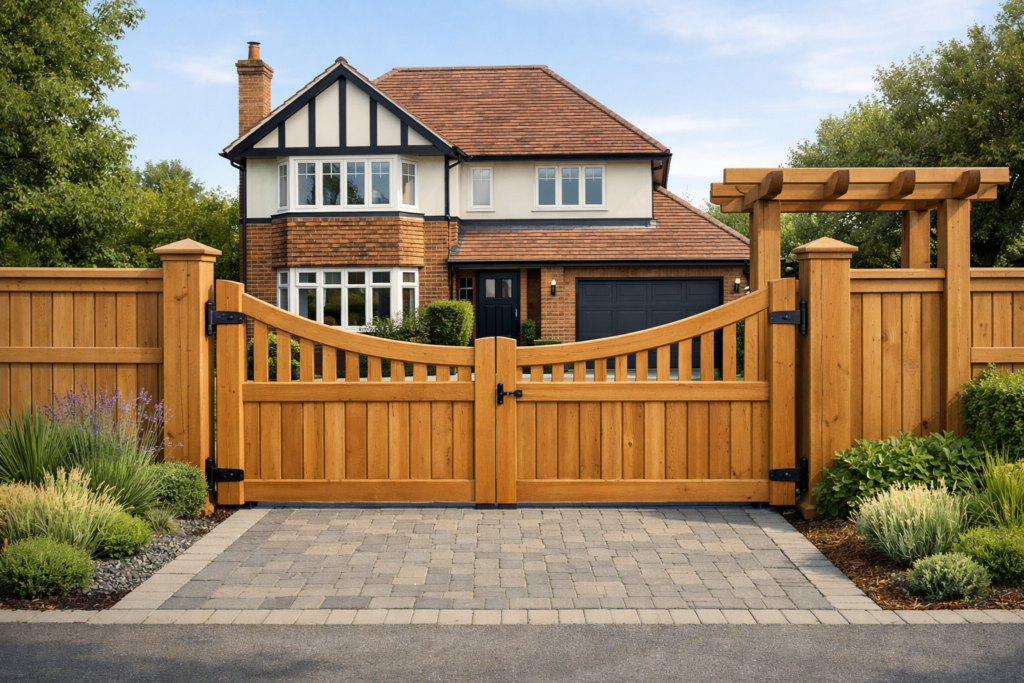
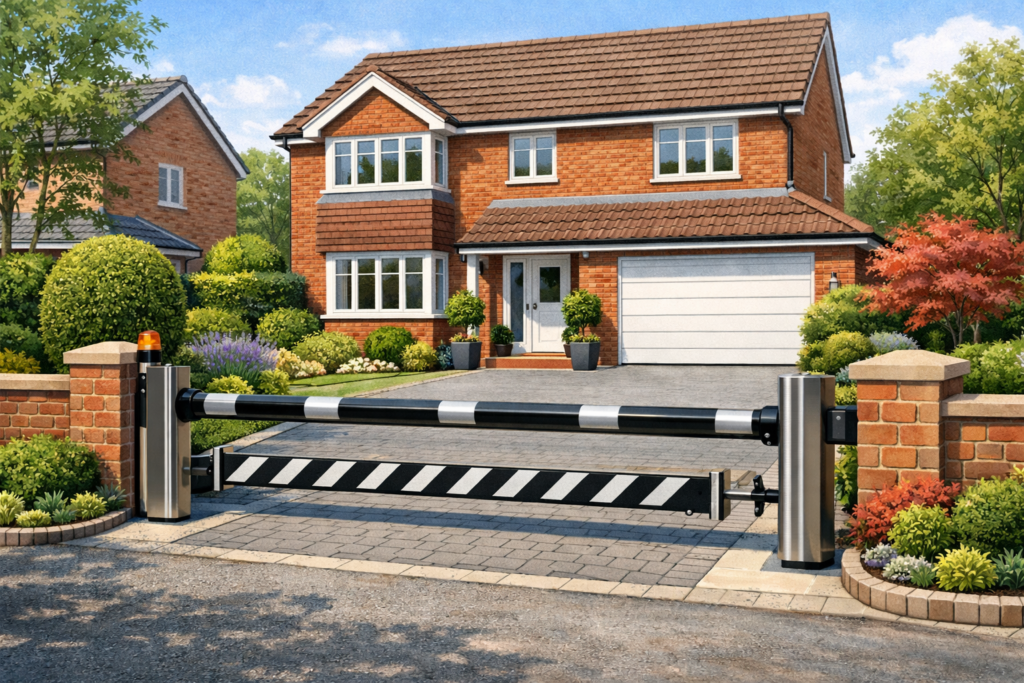
Many homeowners also value security and boundary control. In those cases, features such as gates or posts can help, and it may be worth exploring driveway bollards security style if you need a cleaner way to manage access.
Common mistakes to avoid when planning a new driveway
One of the biggest mistakes is choosing a finish based only on appearance. A surface may look attractive in isolation but feel wrong once vehicles, drainage and boundary lines are taken into account.
Another common issue is underestimating the importance of the base. A driveway is only as reliable as the ground preparation beneath it, and shortcuts here often lead to movement, cracking or standing water.
Some homeowners also make the frontage too hard and flat. A completely paved area without any planting or variation can make the entrance feel cold and overdeveloped, especially on smaller plots.
Other mistakes include:
- Failing to allow for drainage and runoff
- Ignoring local access needs or turning space
- Choosing a colour that clashes with the house
- Leaving no clear route to the front door
- Using a finish that is too high-maintenance for the household
It is also easy to overlook how the driveway will age. Some materials develop character over time, while others show tyre marks, weeds or staining more quickly than expected.
Balancing low maintenance with good looks
Many people want a driveway that looks smart without becoming a regular weekend chore. That balance is achievable, but it usually depends on choosing the right combination of surface, edging and planting.
Gravel can be relatively simple to install, but it may need top-ups and weed control. Block paving can look refined, yet it benefits from occasional cleaning and joint maintenance.
Resin-bound surfaces often appeal to homeowners who want a tidy finish with less visible loose material underfoot. Even so, they still need care, and the quality of installation matters greatly.
Low-maintenance front gardens usually work best when planting is controlled and purposeful. Rather than filling every spare corner, use a few strong plant choices that can handle the conditions and frame the driveway neatly.
If you are still deciding whether a paved entrance is worthwhile, it may help to compare your options against a new driveway right for your home before committing to a layout.
What to think about before getting quotes
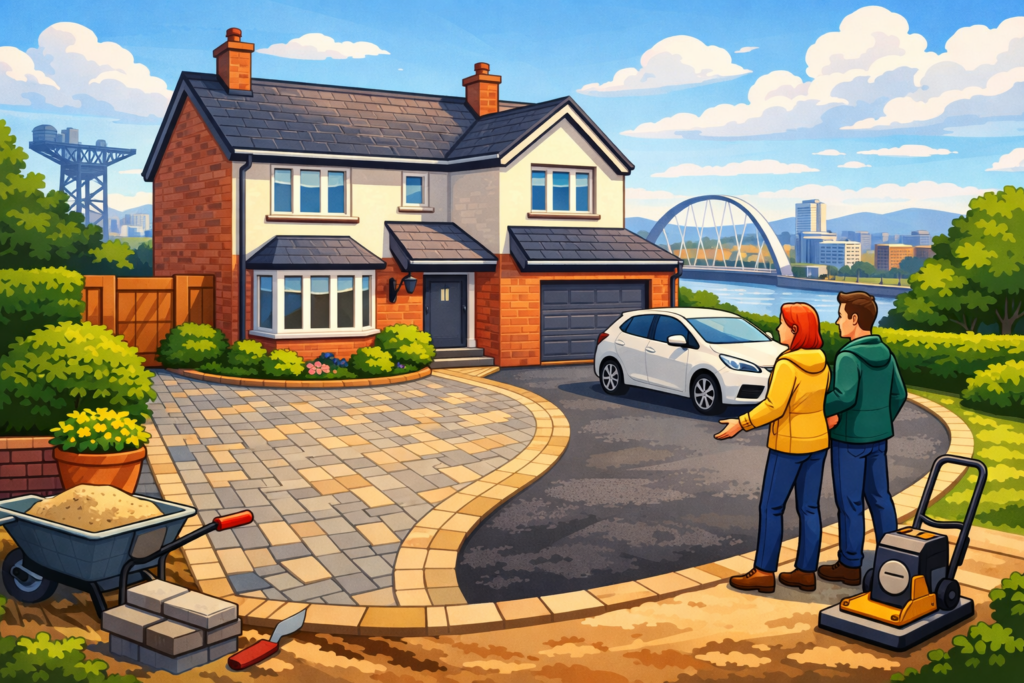
Before speaking to contractors, be clear about how you use the space. Consider how many vehicles need to park there, whether a bin store or side access is needed, and whether the area should also guide people safely to the front door.
It also helps to decide what matters most to you. Some homeowners prioritise drainage and ease of maintenance, while others want a softer look or a surface that suits a period property.
When comparing quotes, ask what is included in the preparation work, the base depth, the edging, and the drainage solution. A lower price can sometimes mean corners are being cut where it matters most.
You should also ask how the finished driveway will connect to the surrounding garden. The most successful projects consider the full frontage, not just the parking area, which is why some homeowners look at landscaping driveway options alongside the hard surface itself.
What We Get Asked…
Which driveway option is best for a small front garden?
Block paving and resin-bound surfaces are often strong choices for smaller spaces because they can look neat and structured without feeling bulky. The key is to keep the layout simple and avoid overcomplicated patterns.
Is gravel still a sensible choice?
Yes, especially for larger or more traditional properties. It can be attractive and economical, but it needs edging and regular tidying to stay in good condition.
Do permeable surfaces really matter?
They often do, particularly where runoff is a concern. Permeable or well-drained solutions can help manage surface water more responsibly and reduce puddling.
How can I make a driveway look less harsh?
Use planting, lighting and edging to soften the space. Even a small border or a few well-placed shrubs can make a large difference to the overall feel.
Our Final Thoughts
Choosing driveway options for a smarter, better-looking front garden is about more than picking a surface that looks nice on day one. The best result balances appearance, drainage, access, maintenance and the character of the property itself.
When those elements work together, the front of the home feels calmer, more practical and better connected to the rest of the garden. That is why it is worth planning carefully, comparing materials honestly, and looking at the whole frontage rather than the parking area alone.
If you are ready to improve your entrance, start by assessing how the space is used now and where it falls short. Then choose a driveway option that solves those issues while lifting the look of the property in a lasting, natural way.