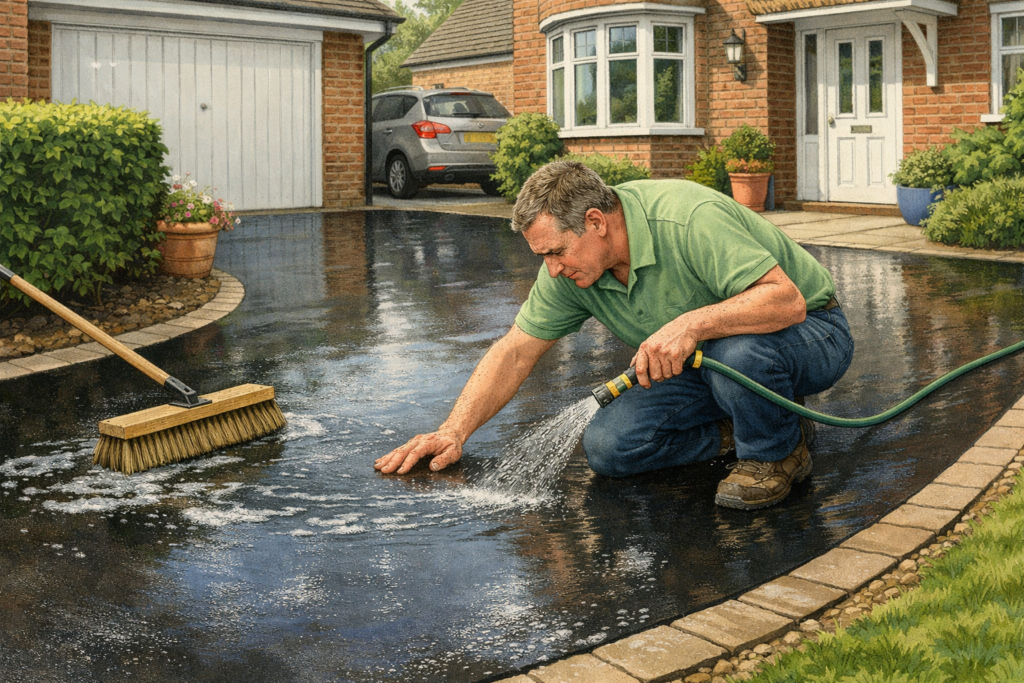
Sealing a driveway can make a noticeable difference to how it looks and how well it stands up to daily use. It helps reduce staining from oil, mud and leaves, and it can slow down the effects of rain, frost and general wear. The challenge is that a sealed surface needs the right kind of care, because heavy-handed cleaning or unsuitable products can wear the sealant down just as quickly as neglect.
Many homeowners assume a sealed driveway is almost maintenance-free. In reality, the surface still needs regular attention, just in a gentler way than an unsealed driveway. Good maintenance keeps the finish looking smart for longer and helps you avoid the cost and hassle of resealing sooner than necessary.
Different driveway materials react in different ways to cleaning, foot traffic and weather. A sealed block paving drive will not need the same treatment as sealed concrete or resin-bound surfacing, and using the wrong approach can lead to patchiness, streaking or a dull finish. If you are also comparing surface types, our guide on whether driveway paving is right for your home can help you understand how upkeep varies by material.
Why sealed driveways still need regular care
Sealing is a protective layer, not a permanent shield. Over time, dirt sits on the surface, vehicles drip fluids, and the weather gradually breaks down the coating. Without regular maintenance, the driveway can lose its uniform appearance and become more vulnerable to staining.
Routine care also helps you spot problems early. Small areas of wear, minor cracks or localised dull patches are much easier to deal with before they spread. Once the seal begins to fail in isolated spots, water and grime can get in more easily and create uneven patches.
A well-maintained sealed driveway also performs better in practical terms. It is easier to sweep, less likely to develop slippery build-up and more likely to keep its colour and finish for longer. That is especially important on busy drives where cars, bikes, prams and foot traffic all pass over the same area every day.
Start with gentle cleaning methods
The safest way to look after a sealed driveway is to remove loose dirt before it has a chance to settle in. Regular sweeping with a soft-bristled brush is often enough for day-to-day upkeep, particularly during autumn when leaves and debris build up quickly. If dirt is left to collect, it can trap moisture and encourage algae growth.
For a more thorough clean, use a hose or low-pressure rinse before applying any detergent. This removes grit that could otherwise act like sandpaper when you scrub the surface. It also means you need less cleaning product, which helps preserve the seal.
When washing, stick to mild, non-abrasive cleaners made for the driveway material you have. A diluted pH-neutral solution is often a sensible choice for routine maintenance. If you are using a product on a freshly sealed area, always check the sealant manufacturer’s guidance first, because some coatings need a curing period before they can tolerate washing.
Pressure washing can be useful, but only when used carefully. Too much force can strip sealant, open joints in block paving or create an uneven appearance. Keep the pressure low, hold the lance at a sensible distance and test a small area first. If you are weighing up cleaning products as well as the surface itself, our article on looking after driveway cleaner without damaging the surface explains how to avoid common product-related mistakes.
Protect the sealant as you clean
The aim is to clean the driveway without scrubbing away the very protection you are trying to preserve. That means avoiding stiff wire brushes, harsh bleach mixes and aggressive degreasers unless the manufacturer specifically approves them. These products can dull the finish, soften the seal or leave a visible mark.
It is also wise to keep cleaning sessions as targeted as possible. Treat the stained area rather than soaking the whole drive in product when only a small patch needs attention. This reduces unnecessary wear and helps the surface keep a consistent look.
If you notice moss or algae, remove it carefully rather than scraping at it. A soft brush and an appropriate outdoor cleaner are usually safer than sharp tools. On textured surfaces, take extra care not to drag debris across the top layer, because that can cause tiny scratches that become more visible once sunlight hits the surface.
Deal with spills quickly
Fresh spills are much easier to remove than stains that have had time to soak in. Oil, brake fluid, fertiliser, paint and even bird droppings can all affect the finish if they are left sitting on the seal. The sooner you act, the less likely they are to leave a lasting mark.
Blot liquid spills rather than rubbing them across the surface. For thicker deposits, lift away as much as possible with a plastic scraper or disposable cloth before washing the area gently. Avoid metal tools, as they can scratch the seal and the driveway beneath it.
For recurring vehicle drips, try using a drip tray or absorbent mat while you wait for a repair. Prevention is far easier than trying to restore a stained section later. If you also want ideas for improving how the front of your property functions day to day, our piece on driveway parking and drainage advice includes practical planning points that can reduce wear over time.
Keep an eye on weather and seasonal wear
British weather puts sealed driveways under constant pressure. Rain, frost, algae growth and changes in temperature all affect the coating differently, so seasonal checks are worthwhile. After a cold spell, look for signs of flaking, whitening or small cracks that may need attention.
In autumn and winter, organic debris becomes a bigger issue. Wet leaves left on a sealed driveway can leave tannins behind, while standing water can encourage slippery growth in shaded areas. Clearing the surface regularly helps prevent both staining and slipping.
In summer, the main concern is prolonged sun exposure and vehicle heat. These can gradually dry out some sealants and make faded patches more obvious. If your driveway gets strong sun for most of the day, you may need to inspect it more often and plan for resealing slightly sooner.
Pay attention to these seasonal warning signs:
- Patchy dull areas where the sheen has faded
- Small cracks or open joints that collect dirt
- Green or black growth in shaded sections
- White haze or cloudy marks after cleaning
- Water soaking in rather than beading on the surface
Use the right approach for your driveway material
The best maintenance method depends on what your driveway is made from. Block paving, concrete, tarmac and resin-bound surfaces all behave differently, even when sealed. A technique that is fine for one surface may cause damage on another.
Sealed block paving needs particular care around the joints. Too much pressure can blast out kiln-dried sand and weaken the interlocking structure. Sweep regularly, clean with a gentle solution and top up jointing sand if needed after deeper cleaning.
Sealed concrete is often more robust, but it can still discolour if cleaned with harsh chemicals. Watch for hairline cracks and avoid anything that could etch the finish or leave swirl marks.
Sealed tarmac can be sensitive to aggressive solvents and excessive pressure. Keep cleaning products compatible with bitumen-based surfaces and avoid heavy scraping. If you are deciding whether this material suits your property, our guide on whether a tarmac driveway is right for your home may be useful.
Sealed resin-bound surfaces need especially gentle treatment. These can be damaged by harsh chemicals and high-pressure washing if the nozzle is too close. Regular brushing and light washing are usually enough for day-to-day upkeep.
Know when resealing is needed
Even well-cared-for sealant will not last forever. Eventually it begins to wear thin, and the driveway loses some of its protection. If water no longer beads on the surface, stains are appearing more quickly or the colour looks uneven, it may be time to reseal.
Resealing too early is not ideal either. Applying new sealant before the old layer has broken down can sometimes trap dirt or moisture and create an uneven finish. It is better to inspect the surface properly and only reseal when the existing coating is genuinely reaching the end of its useful life.
If you are unsure, look for isolated areas rather than judging the whole drive at once. A driveway that gets heavy vehicle use at the entrance may need attention sooner than the sections near the house. That is normal and does not always mean the whole surface has failed.
Common mistakes that damage sealed surfaces
Most damage comes from trying to clean too hard or using the wrong product. Once you know the usual errors, they are easy to avoid. That can save both the appearance of the driveway and the cost of early repairs.
Common mistakes include:
- Using high pressure too close to the surface
- Scrubbing with stiff or wire brushes
- Applying bleach or strong solvents without checking compatibility
- Leaving spills, leaves or mud to sit for long periods
- Ignoring small cracks or failing seal patches
- Cleaning in direct heat and allowing product to dry too fast
Cleaning in very hot weather can be a hidden problem. Product can dry before it has time to work properly, leaving marks or residue behind. Early morning or a cooler part of the day is usually a better choice, especially for larger driveways.
It is also worth avoiding the temptation to use one treatment for everything. A muddy area, an oil spot and a patch of algae each need a different level of treatment. Taking the time to use the right method is much safer than trying to blast every problem away at once.
Practical maintenance habits that make a difference
Looking after a sealed driveway is mostly about consistency. A little regular care prevents the need for more aggressive intervention later. That approach is especially useful if the driveway is part of a wider front garden layout that also includes planting, edging or lighting.
Useful habits to build into your routine:
- Sweep off grit, leaves and litter once or twice a week
- Rinse the surface after messy weather or heavy use
- Remove bird droppings and oil spots as soon as possible
- Check shaded corners for moss and algae growth
- Inspect the surface after frosts, storms and hot spells
- Keep nearby planting trimmed back so debris does not build up
Good driveway care also works well alongside other front-of-house improvements. For example, if you have installed lighting, it becomes easier to notice stains or surface changes at night. Our article on driveway lights for security and style shows how lighting can support both safety and maintenance.
What We Get Asked…
How often should a sealed driveway be cleaned?
Light sweeping should happen regularly, while a more thorough clean is usually needed only when dirt, stains or seasonal debris start to build up. The right frequency depends on traffic levels, shade and weather exposure.
Can I pressure wash a sealed driveway?
Yes, but only with care. Use a modest pressure setting, keep the nozzle moving and avoid holding it too close, especially on block paving or resin-bound surfaces.
Will cleaning remove the sealant?
It can if the cleaning method is too harsh. Mild washing and gentle brushing are usually fine, but aggressive pressure washing and strong chemicals may shorten the life of the seal.
How do I know if resealing is due?
If water stops beading, stains become harder to remove or the surface starts to look patchy, the seal may be wearing out. A close inspection will usually show whether it needs localised repair or a full reseal.
Our Final Thoughts
Looking after a sealed driveway is really about protecting the finish without overworking it. Gentle cleaning, quick spill removal and seasonal inspections will usually keep it looking smart and performing well for much longer than occasional deep cleans with harsh products.
If you treat the seal as part of the driveway’s working surface rather than a one-off finish, maintenance becomes much simpler. Small, regular tasks are far less damaging than heavy cleaning at the first sign of dirt.
If your driveway is already sealed, start by reviewing how you clean it now and see where you can be gentler. If you are still planning a driveway project, consider the surface material, drainage and maintenance needs together so the finished drive is easier to care for from day one.
For more practical driveway advice, explore our related guides and choose the approach that suits your property, your surface and the amount of upkeep you are comfortable with.